Dental Practice Valuation: How Practices Are Valued and What Moves the Number

A dental practice is worth a multiple of its verified earnings. The word doing the heavy lifting in that sentence is verified.
What dental practice valuation actually measures
When a buyer values your practice, they are not buying your production, your patient count, or your reputation in the abstract. They are buying a future stream of cash, and everything in the valuation process is an attempt to figure out how reliable that stream is.
That means the valuation rests almost entirely on your financial records, and specifically on whether those records hold up under scrutiny. A practice with strong collections and clean, verifiable books commands a materially better price than an otherwise identical practice with messy or unprovable numbers. The dentistry is the same. The confidence is not.
The methods buyers use
Most dental practice valuations come down to a small number of approaches, and in practice they converge.
The income approach is the one that matters most. A buyer normalizes your earnings, typically adjusted EBITDA or seller's discretionary earnings, by adding back owner compensation and one-time expenses to find what the practice actually generates. That normalized earnings figure is then multiplied by a market multiple. This is where DSOs and most sophisticated buyers live.
The percentage of collections approach is the rule of thumb still used for smaller solo practices, where a practice trades at some percentage of annual collections. It is a shortcut, and its weakness is obvious the moment you ask whether those collections are real.
The asset approach values the equipment, technology, and leasehold improvements, and it usually sets a floor rather than a price. Practices are rarely worth only their equipment.
Notice what every single method depends on. Earnings, collections, and cash flow. All three are downstream of your financial records being accurate.
What moves the multiple up
Buyers pay more for practices that reduce their risk. The factors that reliably lift a valuation are consistent.
Stable and growing collections, not just production, because collections are what actually converts to cash. A healthy payer mix that is not dangerously concentrated in one plan. Low, well-managed accounts receivable, since bloated AR signals a collection problem the buyer will inherit. A team that stays after the sale. And clean, verifiable financial records, which quietly influence everything else, because they determine how much of your claimed performance the buyer is willing to believe.
Overhead matters too, but as a symptom rather than a lever. A practice with high overhead has lower earnings, and lower earnings mean a lower price regardless of how good the top line looks.
What quietly costs you at the closing table
Here is where sellers lose money, and it happens in diligence rather than in negotiation.
Every serious buyer performs financial due diligence. They will not take your practice management reports at face value. They will ask to tie your reported collections to your actual bank deposits, and they will ask you to explain your adjustments. This is standard, and it is exactly the exercise most practices have never performed on themselves. Our guide on what buyers should ask about collections walks through it from the buyer's side.
Two things tend to surface. The first is that reported collections do not fully match deposits, usually because of posting errors accumulated over years. The second is a pattern of adjustments nobody can explain. Neither necessarily means fraud, but both mean the same thing to a buyer: the numbers cannot be trusted, so the offer comes down or the deal drags while everything gets re-verified.
The cruelest version is when diligence surfaces actual embezzlement that had been running quietly. Now you are not negotiating a price, you are managing a crisis in the middle of a transaction, and the discount is severe. Given that industry estimates put embezzlement exposure at 60 to 70 percent of practices, this is not a remote scenario. Our pre-acquisition financial audit guide covers what that process looks like.
Preparing your practice to be valued
The work that raises your valuation is the same work that makes the practice better to run, which is what makes it worth doing early rather than in the six months before a sale.
Verify your collections against your bank, consistently, so the number you present is one you can prove. Clean up AR so the buyer is not discounting for a collection problem. Document your adjustments so the pattern is explainable. And start this two to three years out if you can, because buyers look at trailing performance, and a practice that can show several years of clean, verified financials is buying itself credibility that shows up directly in the multiple.
The practices that get the best outcomes are not the ones with the best story. They are the ones whose numbers survive diligence without a single surprise.
If a sale is the goal rather than just a number, our guide to how to sell a dental practice walks through the full process and the preparation timeline that produces the best outcome.
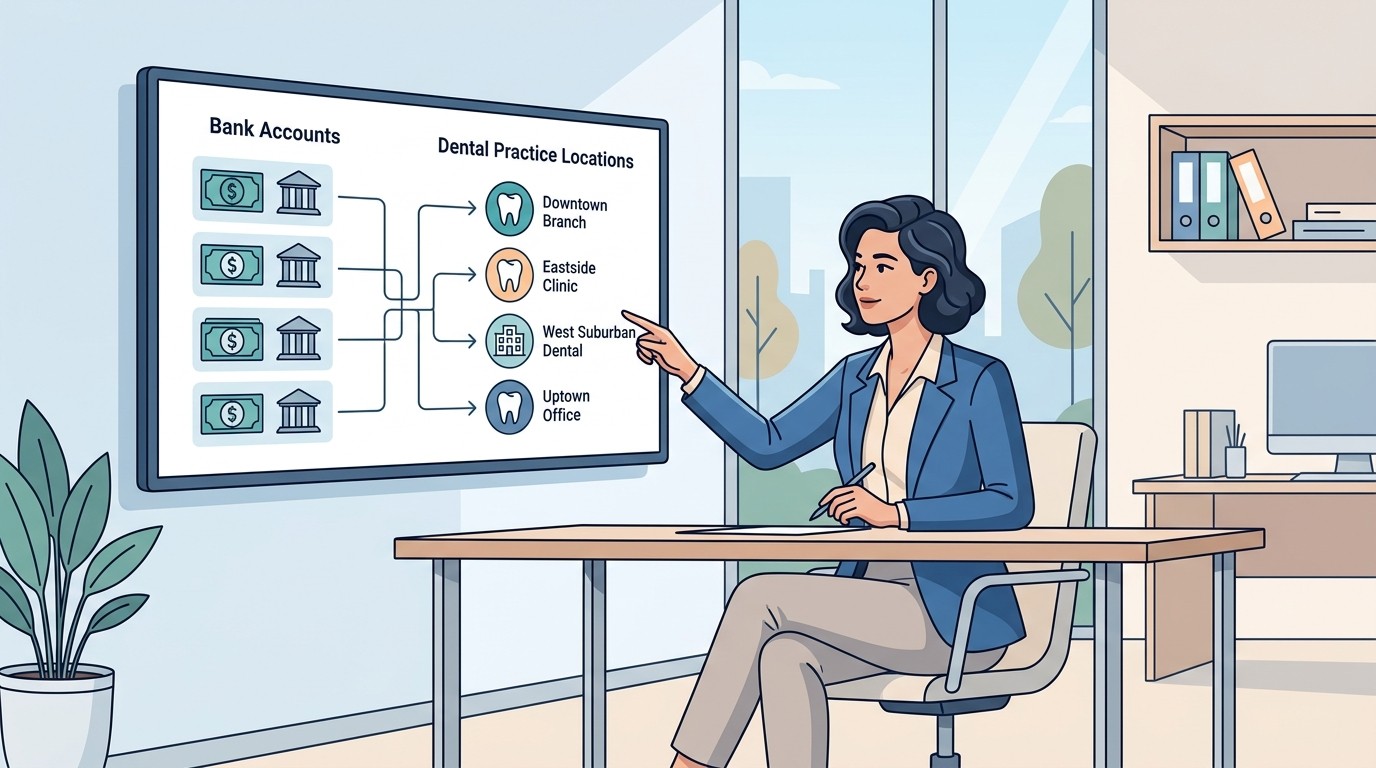
Buyers and their auditors increasingly expect a revenue-to-cash waterfall that ties reported collections to actual deposits, which is worth preparing before you go to market.
A dental CPA who understands practice transitions is worth engaging well before a sale, since valuation expertise is exactly where a generalist accountant falls short.
Frequently Asked Questions
How are dental practices valued?
Most valuations use an income approach, normalizing earnings such as adjusted EBITDA or seller's discretionary earnings and applying a market multiple. Smaller solo practices are sometimes valued as a percentage of annual collections, and an asset approach typically sets a floor rather than a price.
What is a dental practice worth?
It depends on normalized earnings, collections stability, payer mix, AR health, team retention, and how verifiable the financials are. Two practices with identical production can be worth meaningfully different amounts if one has clean, provable numbers and the other does not.
What increases the value of a dental practice?
Stable and growing collections, a diversified payer mix, low and well-managed accounts receivable, a team that stays through the transition, controlled overhead, and financial records that hold up under buyer due diligence.
Why do buyers verify collections against bank deposits?
Because practice management reports reflect what was posted, not necessarily what was received. Tying reported collections to actual deposits is how a buyer confirms the earnings they are paying a multiple for are real. Gaps found in diligence lower offers or delay closings.
How far in advance should I prepare for a valuation?
Ideally two to three years, because buyers evaluate trailing performance. Verified collections, clean AR, and documented adjustments across multiple years give a buyer confidence, and that confidence shows up in the multiple.
Zeldent reconciles your practice management ledger against your actual bank deposits every day, so the collections you report are collections you can prove. Whether you are selling in three years or just want numbers you trust, verified books are worth more than clean-looking ones. Book a demo to see what diligence would find in your practice today.