Adjustment Audits: Catching Suspicious Write-Offs
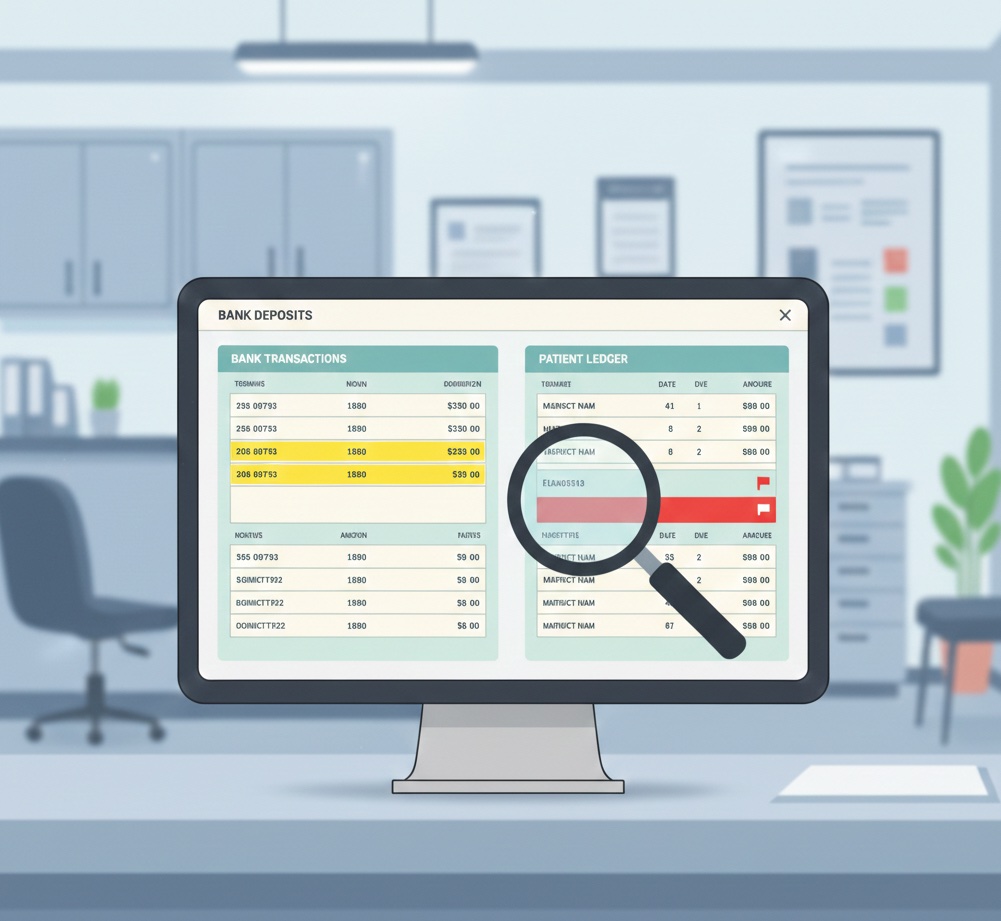
Last month your practice wrote off $47,000 in adjustments. How much of that was legitimate, and how much was covering something else?
Why Adjustments Deserve Scrutiny
Adjustments are a necessary part of dental practice finance. Insurance contractual adjustments, professional courtesy discounts, and write-offs for uncollectible accounts all have legitimate purposes.
But adjustments are also the easiest way to hide problems. Embezzlers use adjustments to zero out accounts after stealing payments. Sloppy practices use adjustments instead of proper collection efforts. Poorly trained staff use adjustments when they cannot figure out what else to do.
Without adjustment audits, you have no way to know which adjustments are appropriate and which are costing you money, or worse.
This guide covers how to audit adjustments effectively, what patterns indicate problems, and how to build controls that catch issues before they accumulate.
The Adjustment Audit Framework
Gather Your Data
Pull comprehensive adjustment data for the period being audited:
Adjustment report: All adjustments by date, patient, amount, reason code, and user who made the adjustment.
Adjustment totals by category: Sum of adjustments by reason code.
Adjustment totals by user: Which staff members are making adjustments.
Production and collection totals: Context for evaluating adjustment percentages.
Establish Baselines
Before looking for anomalies, establish what normal looks like:
Normal adjustment percentage: Typically 15-30% of production, depending on payer mix. Practices with more insurance have higher contractual adjustments.
Normal category distribution: Most adjustments should be insurance contractual. Discretionary categories should be small.
Historical patterns: How do current adjustments compare to prior months and prior years?
Apply Audit Tests
Use specific tests to identify suspicious items:
- Percentage analysis: Are overall adjustments in normal range?
- Category analysis: Is each category appropriate in size?
- User analysis: Are adjustments reasonably distributed among staff?
- Pattern analysis: Are there suspicious patterns in timing or amounts?
- Sample testing: Do individual adjustments have proper support?
Red Flag Patterns
Adjustment Percentage Too High
What to look for: Total adjustments exceeding 30-35% of production without clear explanation.
What it might mean:
- Fee schedule is unrealistic
- Collection efforts are weak
- Insurance adjustments are being estimated rather than taken from ERAs
- Fraud is occurring
How to investigate: Break down by category. If insurance contractual is high, review fee schedules and contracts. If discretionary categories are high, dig into those specifically.
Adjustment Percentage Too Low
What to look for: Adjustments below 15% of production.
What it might mean:
- Contractual adjustments are not being posted
- Collections are inflated (payments posted that should have been adjusted)
- Something unusual in payer mix
How to investigate: Verify insurance payments are being posted with appropriate adjustments. Check that contracted fee schedules are being applied.
Round-Number Adjustments
What to look for: Adjustments in round amounts: $100, $250, $500, $1,000.
What it might mean:
- Adjustments are being estimated rather than calculated
- Fraudulent adjustments to cover theft
- Lazy write-off practices
How to investigate: Pull a list of all round-number adjustments. Review source documentation. Legitimate insurance adjustments are almost never round numbers.
Concentration in Vague Categories
What to look for: Large totals in categories like "Other," "Miscellaneous," "Courtesy," or "Manager Adjustment."
What it might mean:
- Staff using catch-all categories to avoid scrutiny
- Adjustments that do not fit policies
- Potential fraud hiding in vague buckets
How to investigate: Review individual adjustments in these categories. Require specific reason codes going forward.
One Person Making Most Adjustments
What to look for: Single staff member responsible for 50%+ of all adjustments.
What it might mean:
- Inadequate segregation of duties
- Potential fraud scheme
- Training issues concentrated with one person
How to investigate: Compare that person's adjustment volume to their role. Does it make sense? Review their adjustments in detail.
Timing Patterns
What to look for: Adjustment spikes at certain times:
- End of month (hitting targets)
- Before audits or reviews (cleanup)
- Specific days of week (when supervision is limited)
What it might mean:
- Manipulation to meet metrics
- Cleanup of accumulated problems
- Fraud timed to avoid detection
How to investigate: Chart adjustments over time. Look for patterns. Understand what was happening during spike periods.
Adjustments Immediately After Payments
What to look for: Payments posted and then immediately adjusted off.
What it might mean:
- Refund processed but adjustment used instead
- Potential fraud: payment received, money stolen, adjustment hides it
- Posting error corrected via adjustment
How to investigate: Review patient account history. Why was the payment reversed? Where did the money go?
Sample Testing Procedures
Beyond pattern analysis, test individual adjustments for documentation and appropriateness.
Select Your Sample
Choose adjustments to test using multiple methods:
Random sample: Select 20-30 adjustments randomly from the period.
Targeted sample: Select specific adjustments that match red flag criteria:
- Large amounts (above threshold, e.g., $500)
- Round numbers
- Vague categories
- Specific users of concern
- Timing of concern
Test Each Adjustment
For each sampled adjustment, verify:
Authorization: Was the adjustment approved according to policy? Is there documentation of approval?
Reason: What is the stated reason? Does it make sense for this patient and situation?
Documentation: Is there supporting documentation? EOB for insurance adjustment? Note explaining write-off reason?
Calculation: For insurance adjustments, does the amount match the ERA?
Pattern: Is this patient or account showing other unusual activity?
Document Findings
For each tested adjustment, record:
- Adjustment details (date, amount, category, user)
- Test results (appropriate/questionable/improper)
- Issues identified
- Follow-up needed
Calculate Error Rate
Summarize results:
- What percentage of adjustments had issues?
- What is the estimated dollar impact?
- What patterns emerge?
An error rate above 5-10% suggests systemic problems requiring attention.
Common Legitimate Adjustments
Not every adjustment is suspicious. Understand what should be normal.
Insurance Contractual Adjustments
The difference between your fee and the insurance allowed amount. These should:
- Match the ERA exactly
- Be the largest adjustment category for insured patients
- Vary based on payer contracts
Write-Offs for Uncollectible Accounts
Balances deemed not worth pursuing. These should:
- Be supported by collection effort documentation
- Follow a written policy (e.g., accounts over 180 days with no activity)
- Be approved by management
Professional Courtesy Discounts
Discounts for employees, family, or colleagues. These should:
- Follow a written policy
- Be applied consistently
- Be documented with reason
Small Balance Write-Offs
Tiny balances not worth billing. These should:
- Be truly small (under $5-10)
- Follow a written policy
- Not accumulate to significant totals
Building Adjustment Controls
Audits catch problems after the fact. Controls prevent problems in the first place.
Written Adjustment Policies
Document what adjustments are allowed and when:
- Who can make each type of adjustment?
- What approval is required?
- What documentation is needed?
- What categories should be used?
Approval Requirements
Require approval for adjustments above thresholds:
- Adjustments over $100: manager approval
- Adjustments over $500: owner approval
- Any adjustment zeroing large balance: documented reason plus approval
Segregation of Duties
Separate adjustment authority from payment handling:
- Person posting payments should not make discretionary adjustments
- Person making adjustments should not reconcile accounts
- Owner or manager should review adjustment reports
Proper Reason Codes
Configure PMS with specific adjustment reason codes:
- Insurance contractual by payer
- Small balance write-off
- Professional courtesy
- Collections write-off
- Patient hardship (with approval)
Avoid vague categories that hide what is really happening.
Regular Review
Review adjustment reports regularly:
- Weekly: High-level review of totals
- Monthly: Detailed review with pattern analysis
- Quarterly: Full audit with sample testing
When Audits Reveal Fraud
If your adjustment audit reveals potential fraud:
Preserve Evidence
Do not alter records. Do not confront the suspected employee yet. Document what you found with screenshots and printouts.
Engage Professionals
Consult with:
- Attorney (understand legal options and obligations)
- Forensic accountant (quantify the loss and build evidence)
- HR advisor (handle employment implications properly)
Investigate Thoroughly
Before taking action, understand the full scope:
- How long has it been happening?
- What is the total amount?
- What is the evidence?
- Are others involved?
Take Appropriate Action
Based on findings and professional advice:
- Terminate employment if warranted
- Report to law enforcement if appropriate
- Pursue recovery options
- Strengthen controls to prevent recurrence
The Cost of Not Auditing
Practices that do not audit adjustments face ongoing costs:
Fraud losses: Theft hidden by adjustments continues undetected.
Collection leakage: Legitimate revenue written off instead of collected.
Compliance risk: Inappropriate adjustments may violate payer contracts.
Inaccurate financials: Adjustment errors distort your true financial picture.
Regular adjustment audits are an investment that pays for itself many times over.
Monitoring adjustments across your practice—or multiple practices—requires visibility you cannot get from manual reviews. Zeldent tracks adjustment patterns alongside payment reconciliation, flagging anomalies that deserve attention. Whether you are a practice owner, a bookkeeper protecting clients, or a DSO finance team overseeing a portfolio, automated monitoring catches what manual audits miss. Schedule a demo to see comprehensive financial oversight.