Common Dental Reconciliation Issues Bookkeepers Inherit
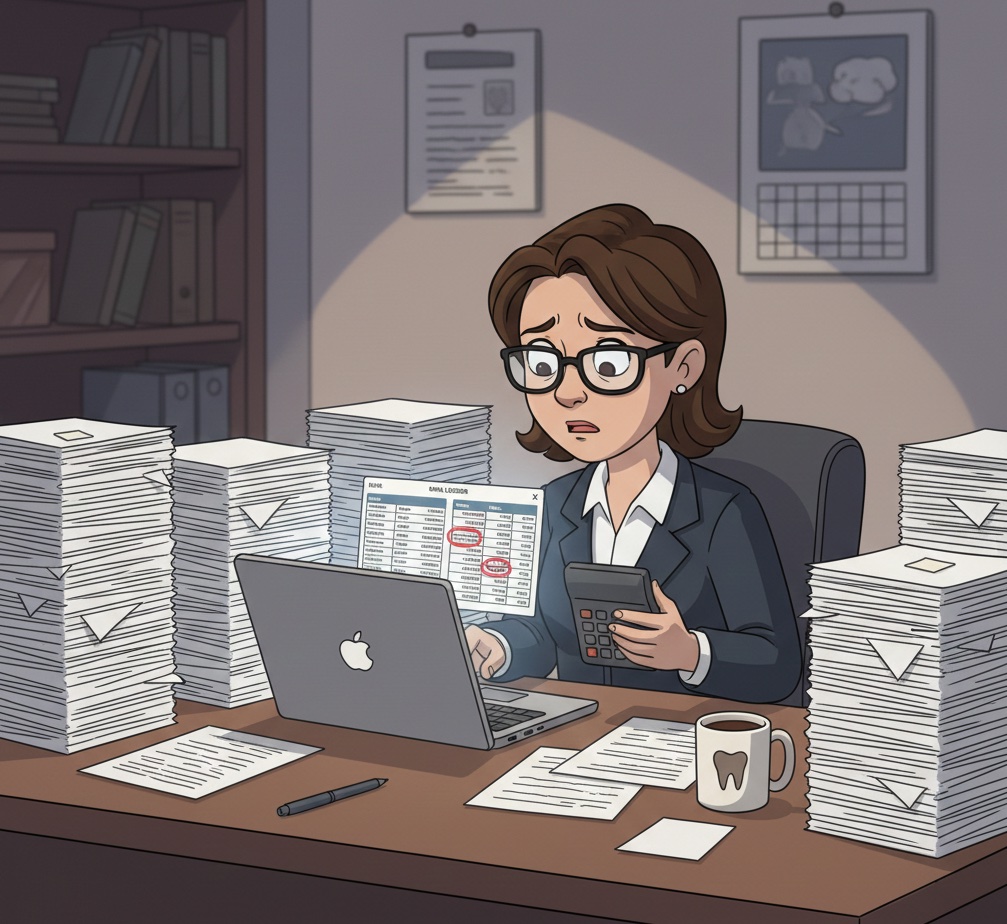
You just took over a dental practice account. The prior bookkeeper left, and now you are staring at months of unreconciled statements. Welcome to the cleanup.
📚 Part of our reconciliation series: This article is part of The Complete Guide to Dental Practice Reconciliation, our comprehensive resource on closing your books accurately and preventing revenue leakage.
The Inherited Mess
Every bookkeeper who takes over dental practice accounts faces the same moment of truth. The prior bookkeeper is gone. The practice owner cannot explain the accounting. The bank statements have not been reconciled in months. There are mystery deposits no one can identify.
This is normal. Dental practice accounting is complex, and many practices operate with inadequate bookkeeping for years before problems become undeniable.
Your job is to untangle the mess, establish clean books going forward, and build processes that prevent recurrence.
Unreconciled Bank Accounts
The most common inherited problem is months of unreconciled bank statements. The prior bookkeeper may have reconciled occasionally but let things slip, or may never have reconciled properly at all.
Start with the oldest unreconciled month and work forward. Reconcile each month before moving to the next. Document everything you find as you go.
You will likely discover deposits that were not recorded, payments that were recorded but never cleared, duplicate entries that inflated or deflated the book balance, and timing differences that compounded over time.
Work through each item methodically. Record missing transactions. Void or delete duplicates. Adjust for errors. By the time you reach the current month, your books should match reality.
Unidentified Deposits
Dental practices often have significant unidentified deposits, meaning money in the bank that cannot be traced to specific patient or insurance payments. This happens when insurance EFTs arrive without matching ERAs, when checks are deposited without proper posting, and when combined deposits are not broken down into components.
Resolving unidentified deposits requires research. Pull bank statements showing the deposit details. Contact insurance companies to request copies of ERAs for EFT deposits. Review PMS records for payments that were posted but not matched to deposits.
Some old unidentified deposits may be unresolvable. If research is exhausted, document your efforts and book the remaining amounts appropriately. Going forward, ensure all deposits are identified at the time they occur.
Insurance Posting Backlog
Insurance payments often accumulate without proper posting. ERAs sit unprocessed. Payments are deposited but not applied to patient accounts. The practice knows money arrived but patient balances do not reflect it.
Clear the backlog by working through unposted ERAs from oldest to newest. Match each ERA to its corresponding bank deposit. Post payments and adjustments to the correct patient accounts.
Going forward, establish a process requiring same-day or next-day posting of all insurance payments.
Patient Credit Balances
Many dental practices carry significant patient credit balances. Some are legitimate overpayments awaiting refund. Many are posting errors, insurance payments applied incorrectly, or duplicate payments never corrected.
Review aged credit balances and research the source of each. Refund legitimate overpayments. Correct posting errors by moving payments to where they belong. Write off small uncorrectable amounts with proper documentation.
Large credit balance totals suggest systemic posting problems that need process correction.
Accounts Receivable Issues
Inherited AR often contains balances that are not collectible. Insurance claims were never submitted. Timely filing deadlines passed. Patients moved away without paying. Yet the balances remain on the books, inflating reported AR.
Review AR aging and identify truly uncollectible amounts. Write off bad debt with proper documentation. Adjust for any claims that were actually paid but not posted.
Going forward, work AR actively so uncollectible amounts are identified and addressed promptly rather than accumulating indefinitely.
Inconsistent Recording Practices
Prior bookkeepers may have recorded things inconsistently. Revenue might be recorded when billed versus when collected. Adjustments might be categorized randomly. Payment types might be confused.
Establish clear recording policies going forward. Document how revenue, expenses, and adjustments should be categorized. Apply consistent treatment so the books become meaningful for analysis.
Building Clean Processes
Once cleanup is complete, establish processes that prevent recurrence. Monthly bank reconciliation should be required and verified. All deposits should be identified within forty-eight hours. Insurance payments should be posted same-day. AR should be reviewed weekly. Credit balances should be researched monthly.
Document these processes so they survive staff turnover. The goal is books that stay clean rather than requiring periodic heroic cleanup efforts.
Taking over a dental practice account? Zeldent provides automated reconciliation that verifies PMS records against bank deposits daily. Clean data from day one. Schedule a demo to start with accurate books.