Dental Embezzlement: 8 Warning Signs to Watch
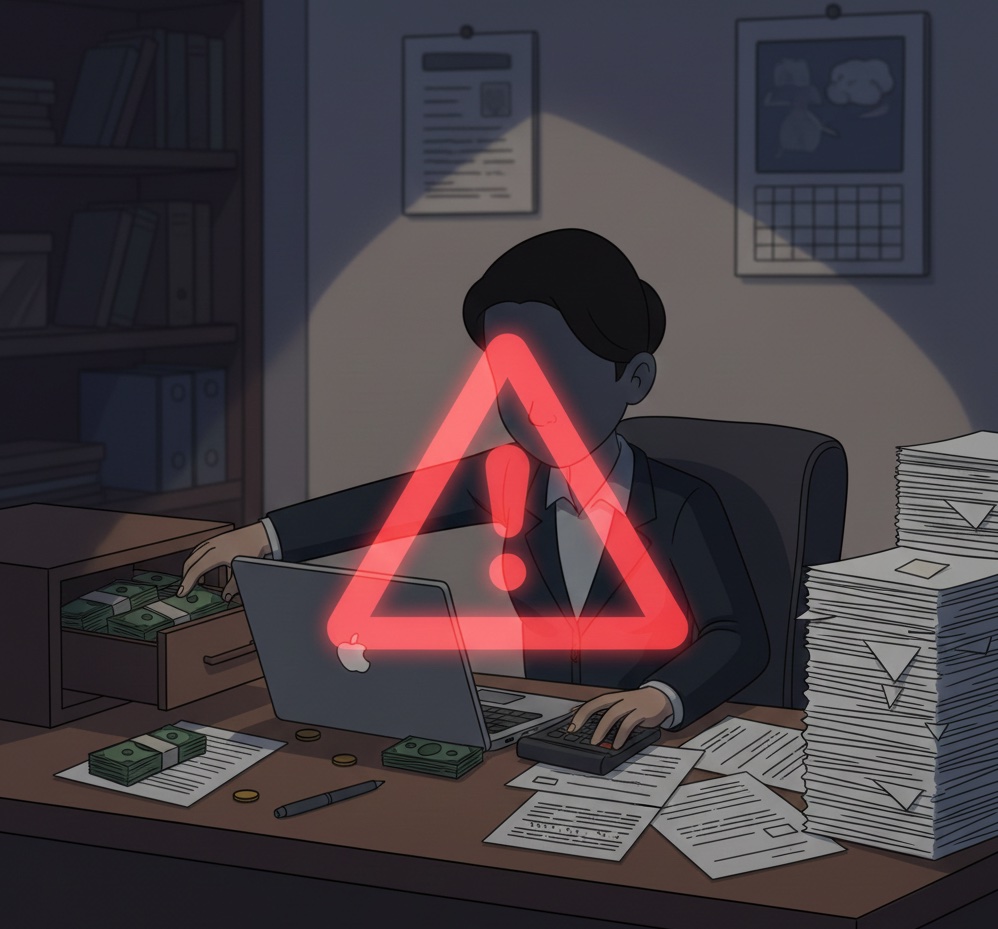
The American Dental Association estimates that 60% of dentists will be victims of embezzlement at some point in their careers. Most never see it coming.
📚 Part of our reconciliation series: This article is part of The Complete Guide to Dental Practice Reconciliation, our comprehensive resource on closing your books accurately and preventing revenue leakage.
The Uncomfortable Truth
Her name was Linda. She had been with Dr. Patterson's practice for fourteen years. She ran the front office, managed the billing, handled the deposits, and reconciled the books. She remembered the birthdays of every patient's children. She stayed late when things got busy. She was, Dr. Patterson would tell anyone who asked, the best employee he had ever had.
She had also stolen $287,000 over eight years.
The story is common enough that dental consultants have stopped being surprised by it. The trusted employee. The complete access. The gradual escalation. The devastating discovery. The practice that never quite recovers financially or emotionally.
This guide is about seeing what Dr. Patterson missed. It is about recognizing the warning signs before the losses mount, before trust becomes the thing that destroys you.
Why Dental Practices Are Perfect Targets
Dental practices combine everything an embezzler needs: cash, complexity, and distraction.
The cash is obvious. Patients pay at the point of service, often in cash, always through multiple payment types that create confusion and opportunity. Insurance companies send checks and EFTs that must be matched to claims, creating another layer where money can disappear between arrival and posting.
The complexity matters because it provides cover. A dental practice handles hundreds of transactions monthly across insurance, patient payments, credit cards, financing programs, and refunds. Nobody, including the owner, fully understands how every dollar moves through the system. That confusion is where embezzlers operate.
The distraction is perhaps the most important factor. Dentists spend their days doing clinical work. They are thinking about treatment plans and patient care, not about whether yesterday's deposit matched the collection report. They hire people they trust precisely so they do not have to think about money. That delegation of trust, without corresponding verification, is the vulnerability that gets exploited.
Most embezzlers are not criminal masterminds. They are ordinary people who discovered that nobody was watching and that the opportunity was too easy to resist. The schemes start small and grow because there are no consequences for the initial theft.
How Embezzlement Actually Works
The Cash Scheme
The simplest approach is the oldest: take money before it gets recorded.
A patient comes to the front desk after their cleaning, pays the $150 copay in cash, and leaves with a smile. The person behind the desk pockets $50 and records a $100 payment. The deposit slip shows $100 was collected. The books balance perfectly. The patient has no idea. The owner has no idea. The only person who knows is the person who just pocketed fifty dollars.
Scale this up across months and years. Take twenty dollars here, fifty there. Skim from cash payments because cash leaves no external trail. Be consistent enough to not raise suspicion but opportunistic enough to take more when it is safe. A competent skimmer can extract $20,000 to $30,000 annually from a busy practice without ever creating an obvious discrepancy.
The Payment Diversion
Insurance checks arrive in the mail or EFTs hit the bank. Someone has to match these to claims and post them to patient accounts. What happens if that person decides not to post a payment?
The insurance company shows the claim was paid. The bank shows the deposit. But the patient account still shows an outstanding balance. The embezzler processes a refund for the overpayment to themselves, or simply diverts the physical check to a personal account before anyone knows it arrived.
Modern banking makes this easier, not harder. Mobile deposit means a check can hit a personal account before it ever reaches the office. EFT information can be changed to route payments to the wrong bank. The schemes that used to require walking into a bank now require only a smartphone.
The Adjustment Cover-Up
Every embezzler eventually needs to make the books balance. The tool of choice is the adjustment.
When money is stolen, the patient account shows an outstanding balance that should not exist. The patient paid, but the payment was never recorded or was diverted. If that balance sits on the books, someone might eventually notice. But if the balance disappears through an adjustment, there is nothing to notice.
Adjustment codes like "professional courtesy," "write-off," or simply "miscellaneous" become the embezzler's eraser. Each adjustment makes a stolen payment disappear from the books. Over time, adjustment totals creep up, but if nobody is watching adjustment patterns, the scheme continues indefinitely.
The Refund Racket
Patient credit balances represent money the practice owes to patients. A legitimate credit might result from an insurance payment that exceeded the patient's responsibility. The proper response is to refund the patient.
An embezzler sees credit balances as an opportunity. Create fake credits through posting manipulations, then process refunds. The refund checks go not to patients but to the embezzler's address, to accounts the embezzler controls, to anywhere except where they belong.
Some schemes are more sophisticated. Process a legitimate refund for a patient, but print two checks and void one in the system while keeping the paper. Alter the name on a refund check after it prints. Create a patient account with your own name, post fake payments to create a credit, then refund yourself.
Warning Signs in the Numbers
Adjustments That Grow Without Reason
If your practice's adjustment percentage has been creeping up over time, ask why. Legitimate explanations exist. Maybe you renegotiated fee schedules. Maybe you took on more PPO patients. Maybe you implemented a new discount policy.
But if adjustments are growing and nobody can explain it, that growth might represent payments that were stolen and then erased. The adjustment makes the theft invisible, but the pattern, if you look for it, tells the story.
Pay particular attention to adjustment categories that seem vague. "Miscellaneous" adjustments should be rare and explainable. "Professional courtesy" should correspond to actual courtesy policies. Round number adjustments, like exactly $500 or exactly $1,000, are unusual for legitimate insurance processing and should prompt questions.
Collections That Lag Behind Production
A healthy practice collects between 96% and 98% of what it produces, adjusted for contractual write-offs. If your collection rate is declining and nobody can explain why, money might be leaving before it gets counted.
Cash skimming directly reduces collections. Payment diversion reduces collections. Both schemes result in reported collections falling short of what the practice actually received. The money came in the door, but it never made it to the bank, at least not to your bank.
Declining collection rates have innocent explanations too, like billing problems or insurance challenges. But the first question to ask when collections drop is whether all payments are actually being recorded.
The Bank Never Matches the Books
Reconciliation compares what your practice management system says you collected to what actually appeared in your bank account. In a well-run practice, these numbers match, or the differences can be fully explained by timing.
If your books consistently show higher collections than your bank deposits, money is disappearing between receipt and deposit. If your bank shows deposits that nobody can trace to specific patient payments, something is being hidden or mishandled.
Persistent reconciliation variances are one of the clearest signals that something is wrong. The variance might be theft. It might be incompetence. Either way, it demands investigation.
Credit Balances That Accumulate
Patient credit balances should turn over regularly. Credits get created through overpayments and resolved through refunds. If your total credit balance keeps growing month after month, either nobody is processing refunds or refunds are being processed but diverted.
Check whether refunds recorded in your system actually cleared the bank. Check whether refund checks were sent to patient addresses or somewhere else. A growing credit balance is not inherently concerning, but a growing credit balance combined with regular refund processing that never reduces the total is a red flag.
Warning Signs in Behavior
The Employee Who Never Takes Vacation
Embezzlement schemes require active maintenance. Payments have to be intercepted. Adjustments have to be made. Cover stories have to be maintained. An embezzler who takes two weeks off risks someone else discovering the scheme while covering their duties.
The employee who has not taken a real vacation in years, who comes in on days off, who calls in to check on things even when they are supposedly away, might simply be dedicated. Or they might be protecting something that cannot survive their absence.
Mandatory vacation policies are not about generosity. They are about control. Requiring every financial employee to take continuous time off while someone else handles their duties is one of the most effective fraud prevention measures available.
Defensiveness About Financial Questions
When you ask questions about money and get evasion, deflection, or hostility instead of answers, pay attention. Honest employees explain. They show you the records. They walk you through the transactions. They welcome questions because they have nothing to hide.
Employees with something to hide change the subject. They get emotional. They make you feel bad for asking. They provide answers that do not quite address what you asked. They blame the system, the software, the insurance companies, anyone except themselves.
If asking about the finances of your own practice creates conflict, that conflict is telling you something.
Lifestyle That Does Not Match Salary
The front desk coordinator earning $45,000 a year who suddenly drives a new luxury car deserves a question. Maybe they inherited money. Maybe their spouse got a raise. Maybe they won the lottery.
Or maybe they have access to your cash and discovered you were not watching.
Lifestyle changes do not prove theft. But lifestyle changes in employees who handle money, combined with any other warning signs, should prompt a closer look at the books.
Resistance to Systems and Oversight
Embezzlers need control. They need to be the only ones who handle deposits, or reconciliation, or adjustments. They resist changes to procedures because new procedures might expose old schemes. They resist new software because new software might have audit trails they cannot manipulate. They resist outside accountants because outside eyes might see what internal eyes have missed.
An employee who fights every attempt to implement controls, who has a reason why every proposed change will not work, who needs to be the only one who understands how the money flows, is either protecting incompetence or protecting theft. Neither is acceptable.
What To Do If You Suspect Embezzlement
The worst thing you can do is confront the suspected embezzler directly. They will deny everything. They will destroy evidence. They will have time to construct cover stories and move money. They might even file a harassment complaint against you.
Instead, start by quietly documenting what you have observed. Gather the evidence before anyone knows you are looking. Change passwords to banking and software systems, limiting access without explanation. Consult an attorney before taking any action, because employment law and criminal procedure create traps for the unwary.
If the evidence warrants it, engage a forensic accountant. They know how to trace money, quantify losses, and document schemes in ways that hold up in court. They also know how to preserve evidence and maintain chain of custody for criminal prosecution.
When you have enough evidence, you will face choices. Criminal prosecution. Civil recovery. Termination. Insurance claims. Each path has implications. Your attorney and forensic accountant can guide you through the options.
Prevention Is Cheaper Than Discovery
The practices that avoid embezzlement are not luckier than the ones that suffer it. They are more careful.
Separate duties so that no single person controls an entire financial process. The person who collects payments should not be the person who makes deposits. The person who posts payments should not be the person who makes adjustments. The person who reconciles the bank should not be the only person who sees the bank statement.
Verify everything. Look at your own bank statements. Spot check deposits against collection reports. Review adjustment totals monthly. Ask questions about anything unusual. Be present in the financial life of your practice even when you would rather focus on clinical work.
Use technology that creates audit trails. Modern systems track who did what and when. These trails deter theft because thieves know they will leave traces. They also enable investigation when something does go wrong.
And most importantly, remember that trust is not a control. The person you trust completely might be trustworthy. Or they might be the next Linda, the employee who seems perfect until the day you discover otherwise. Trust but verify is not cynicism. It is wisdom earned by every dentist who ever trusted too much.
Related Resources
For a comprehensive overview of embezzlement prevention, see our Complete Guide to Dental Embezzlement Prevention. You can also review current embezzlement statistics and learn from recent 2026 cases.
Protecting your practice from embezzlement starts with visibility. Zeldent automatically reconciles your bank deposits to your PMS daily, creating an independent audit trail that makes theft harder to hide and easier to detect. Schedule a demo to see how Zeldent protects revenue.