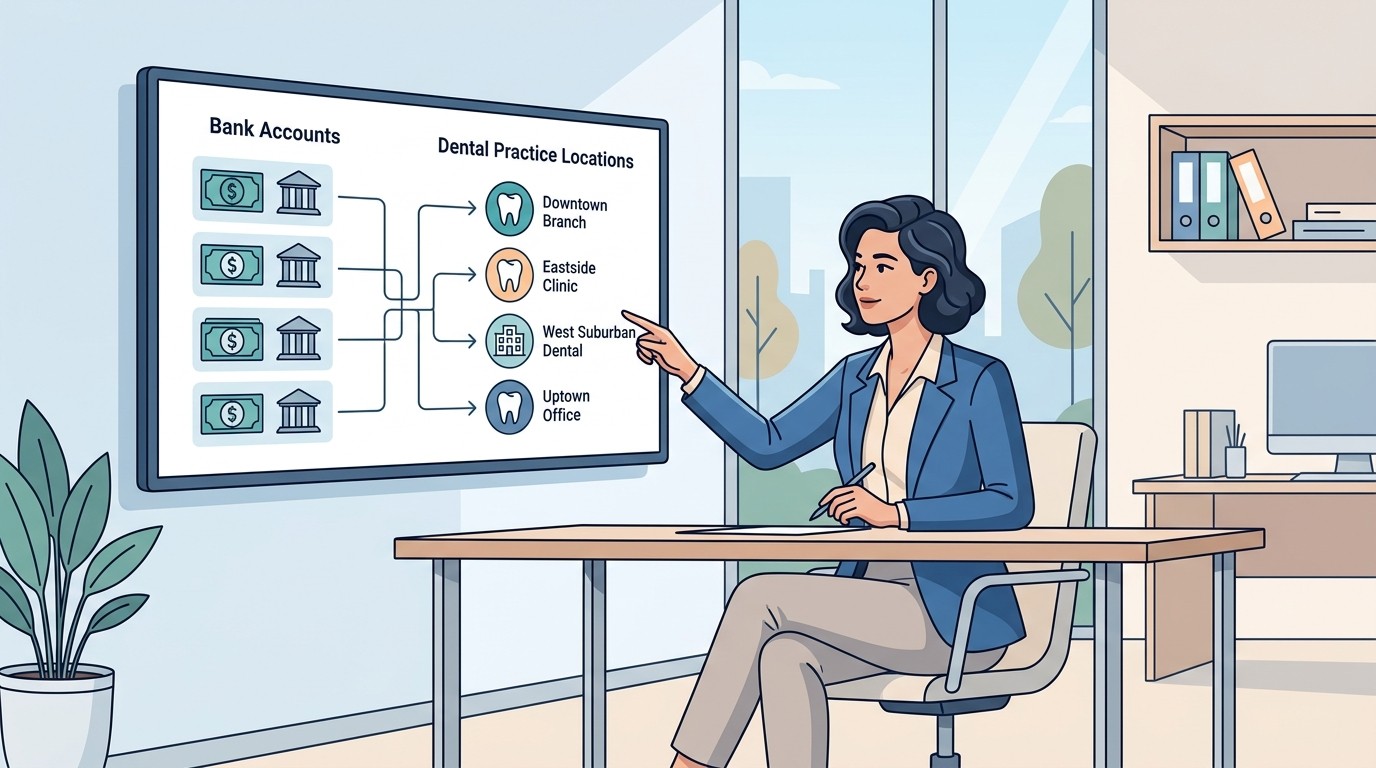
How to Audit a Dental Client's Revenue Cycle in 30 Minutes
Revenue Leakage Audit Worksheet
Download the complete audit worksheet with benchmarks to find the $25K-$50K your practice loses annually.
You do not need a week-long engagement to spot revenue cycle problems. A focused thirty-minute review reveals whether your dental client needs help.
📚 Part of our reconciliation series: This article is part of The Complete Guide to Dental Practice Reconciliation, our comprehensive resource on closing your books accurately and preventing revenue leakage.
The Purpose of a Quick Audit
A thirty-minute revenue cycle audit is not a comprehensive examination. It is a diagnostic that identifies whether significant problems exist and where they might be hiding.
Think of it like a doctor's checkup rather than a full diagnostic workup. You are looking for symptoms that warrant deeper investigation, not performing definitive diagnosis of every issue.
This quick audit helps you identify clients who need intervention, focus detailed work where problems actually exist, and demonstrate value by spotting issues the practice did not know about.
Before You Start
Gather the materials you need to make the thirty minutes productive. Request the last three months of bank statements for all practice accounts. Request monthly production and collection reports from the practice management system. Request the current accounts receivable aging report. Request the most recent bank reconciliation.
If the practice cannot provide these quickly, that itself is a finding worth noting.
Minutes 1-10: Bank Reconciliation Review
Start with bank reconciliation because it reveals the most in the shortest time.
Check whether reconciliation is current. If the most recent bank reconciliation is more than thirty days old, the practice has a fundamental process problem. Note this and continue, but recognize that other findings may be symptoms of this root cause.
Review outstanding items by looking at the reconciling items on the most recent reconciliation. Deposits in transit should be recent, typically within a few days. Outstanding checks should be reasonable in age and amount. Any items outstanding more than thirty days warrant investigation.
Calculate the unidentified deposit balance by asking what deposits in the bank have not been matched to specific patient or insurance payments. A large or growing unidentified balance indicates posting or tracking problems.
Note any red flags including reconciliation not performed, long-outstanding items, large unidentified balances, and reconciling differences that are simply written off.
Minutes 11-20: Collection Rate Analysis
Next, examine whether the practice is collecting what it earns.
Calculate gross collection rate by dividing total collections by total production for the period. A healthy dental practice typically achieves eighty to ninety percent gross collection rate, though this varies by specialty and payer mix.
Calculate net collection rate by dividing collections by adjusted production where adjusted production equals production minus contractual adjustments. This rate should exceed ninety-five percent for a well-run practice.
Review the trend by comparing current collection rate to prior periods. Declining collection rate indicates worsening problems even if the absolute rate looks acceptable.
Note any red flags including gross collection rate below seventy-five percent, net collection rate below ninety percent, declining trend over time, and large variance between gross and net rates suggesting excessive adjustments.
Minutes 21-25: AR Aging Review
Examine accounts receivable to understand collection effectiveness.
Calculate AR days by dividing total AR by average daily production. This shows how many days of production sit uncollected. Healthy practices maintain AR days between thirty and forty-five.
Review the aging distribution to see what percentage of AR is current, thirty to sixty days, sixty to ninety days, and over ninety days. AR over ninety days is often uncollectible.
Separate insurance and patient AR if possible. Insurance AR aging over sixty days suggests claim problems. Patient AR aging suggests collection process weakness.
Note any red flags including AR days over sixty, over-ninety-day AR exceeding fifteen percent of total, growing AR relative to production, and large credit balances in AR.
Minutes 26-30: Quick Deposit Comparison
Finally, spot-check whether deposits match what should have been deposited.
Pick a random week in the review period. Compare PMS collection totals for that week to bank deposits for the same period. They should match closely.
Large variances in either direction indicate problems. PMS exceeding deposits suggests posting errors or diversion. Deposits exceeding PMS suggests unposted payments.
Note any red flags including material variance between PMS and bank for sampled period, inability to quickly reconcile the difference, and pattern of consistent variance in one direction.
Interpreting Your Findings
Green flags indicate a healthy practice showing current reconciliation with reasonable outstanding items, collection rate above ninety-five percent net, AR days under forty-five with minimal over-ninety balance, and deposits matching PMS records.
Yellow flags indicate a practice that needs attention showing reconciliation current but with some aged items, collection rate between ninety and ninety-five percent, AR days forty-five to sixty, and small unexplained variances.
Red flags indicate a practice that needs immediate intervention showing reconciliation behind or not performed, collection rate below ninety percent net, AR days over sixty or significant over-ninety balance, and material variances between deposits and PMS.
After the Quick Audit
Share findings with the practice owner, including both concerns and positives. Recommend next steps based on severity. A green practice may just need ongoing monitoring. A yellow practice needs process improvement. A red practice needs immediate comprehensive review.
Propose specific services if problems warrant your involvement. Frame recommendations around the value of catching problems early.
Want to give your dental clients automated revenue cycle monitoring? Zeldent performs continuous reconciliation and alerts you to problems as they develop. Schedule a demo to see accountant-friendly oversight.
Revenue Leakage Audit Worksheet
Download the complete audit worksheet with benchmarks to find the $25K-$50K your practice loses annually.