Long Weekends and Dental Revenue: The Hidden Cost of Short Weeks

A long weekend sounds like a small thing. One fewer day. Twenty percent fewer chairs filled. But the revenue impact of a four-day week is rarely just one fifth, and the structural reasons matter.
The Math Is Not What You Think
Most practice owners do the long-weekend math in their head as one-fifth less revenue. Four days instead of five, twenty percent off. If a typical week produces $25,000, the holiday week produces $20,000, and the practice absorbs the difference.
The actual math is usually worse. Not by an alarming amount, but by enough that the cumulative effect across a year matters.
A long-weekend week typically loses more than its fifth of production for several converging reasons. Patients reschedule disproportionately around the surrounding days, particularly the day before the holiday, when families are traveling or starting their long weekend early. Hygiene blocks shift, but some patients simply do not reschedule, becoming attrition. Fixed costs do not scale down. Rent, payroll for non-clinical staff, and overhead run on a five-day calendar regardless of how many days the chairs are open. The denominator on overhead absorption gets smaller, which compresses margin even when revenue holds.
For a practice with healthy economics, a long weekend probably costs closer to a quarter of weekly revenue than a fifth, before any structural recovery. Across the year, the United States has roughly six federal holidays that produce three-day weekends, plus the days surrounding Thanksgiving, Christmas, and New Year's. Adding it up, somewhere between three and four percent of annual production is at risk to long-weekend dynamics if the practice does not actively manage them.
Where Long-Weekend Revenue Actually Goes
Some of the missing revenue is genuinely lost, and some of it is merely delayed. Knowing which is which determines what the practice should do about it.
Genuinely lost. Hygiene visits that the patient never reschedules. Treatment plans that were on the verge of acceptance and lose momentum during the gap. Emergency visits that go to another practice because yours was closed. New patient inquiries that arrive over the long weekend and never get a callback because the office reopens on Tuesday with a backlog.
Delayed but recoverable. Routine treatment that just shifts to a later week. Insurance claims that are submitted on Tuesday instead of Monday, paying a few days later but at full value. Patient payments that come in slightly later.
The delayed category cleans itself up in the following weeks. The genuinely lost category requires the practice to do something specific, either before the long weekend to capture demand, or after to recover what slipped.
What Practices Should Do Before a Long Weekend
The most effective long-weekend revenue protection happens before the holiday, not after.
Schedule aggressively in the lead-up. Practices that book the Friday before a long weekend as full as a normal Friday, including hygiene, capture demand that would otherwise scatter. This requires the schedule to lean in rather than relax in the lead-up, and it tends to be the difference between a four-day week that nets four-fifths of normal revenue and one that nets two-thirds.
Send confirmation outreach earlier than usual. Patients are more likely to forget or shuffle appointments around long weekends. A confirmation call or text two days out, instead of one, catches the patients who would otherwise no-show on the Thursday or Friday flanking the holiday.
Pre-stage the post-holiday week. Treatment plans, follow-up calls, and insurance verifications that can be done before the long weekend should be done before the long weekend. The first day back is going to be chaotic; whatever the team has prepped in advance does not have to compete for attention.
Get statements out the week before. Patient billing cycles that land in the long-weekend window often slip a full week. Statements sent on Wednesday or Thursday before a Friday holiday land while patients still have time to act on them.
What Practices Should Do After a Long Weekend
The post-holiday week has its own dynamics, mostly around capacity and attention.
The Tuesday back is the most operationally fragile day of the month. Voicemails, emails, new appointment requests, and emergency calls have stacked up across four days. Staff are catching up on personal life. Insurance verification work that did not get done is now overdue. The risk is that the practice spends Tuesday and Wednesday in reactive mode and stops doing the things that capture revenue.
Have a written first-day-back priority list. What gets done first, who does it, and what can wait. Without one, the team works on whatever feels most urgent, which is rarely what protects revenue best. Outreach to patients who tried to reach the practice during the weekend should be near the top of the list, because that is where new-patient and treatment-acceptance revenue lives.
Watch the no-show rate. No-shows tend to spike in the post-holiday week, partly because confirmation calls did not happen on Monday and partly because some patients are still traveling. A practice that monitors this metric specifically, and follows up quickly on missed appointments, recovers some of the revenue that would otherwise be lost to attrition.
The Reconciliation Risk
There is a quieter risk during long-weekend weeks that owners rarely think about. The practice's daily reconciliation discipline tends to slip when the schedule is irregular. The person who normally does end-of-day cash counts may be off Friday. The Monday-morning deposit might cover three days of cash. The denial work that normally happens on Friday gets pushed to Tuesday and never quite gets caught up.
For practices with reconciliation discipline that depends on a regular weekly rhythm, long weekends are a discipline-erosion event. The dollar amounts at risk in any one weekend are small, but the pattern compounds across multiple long weekends per year and becomes meaningful.
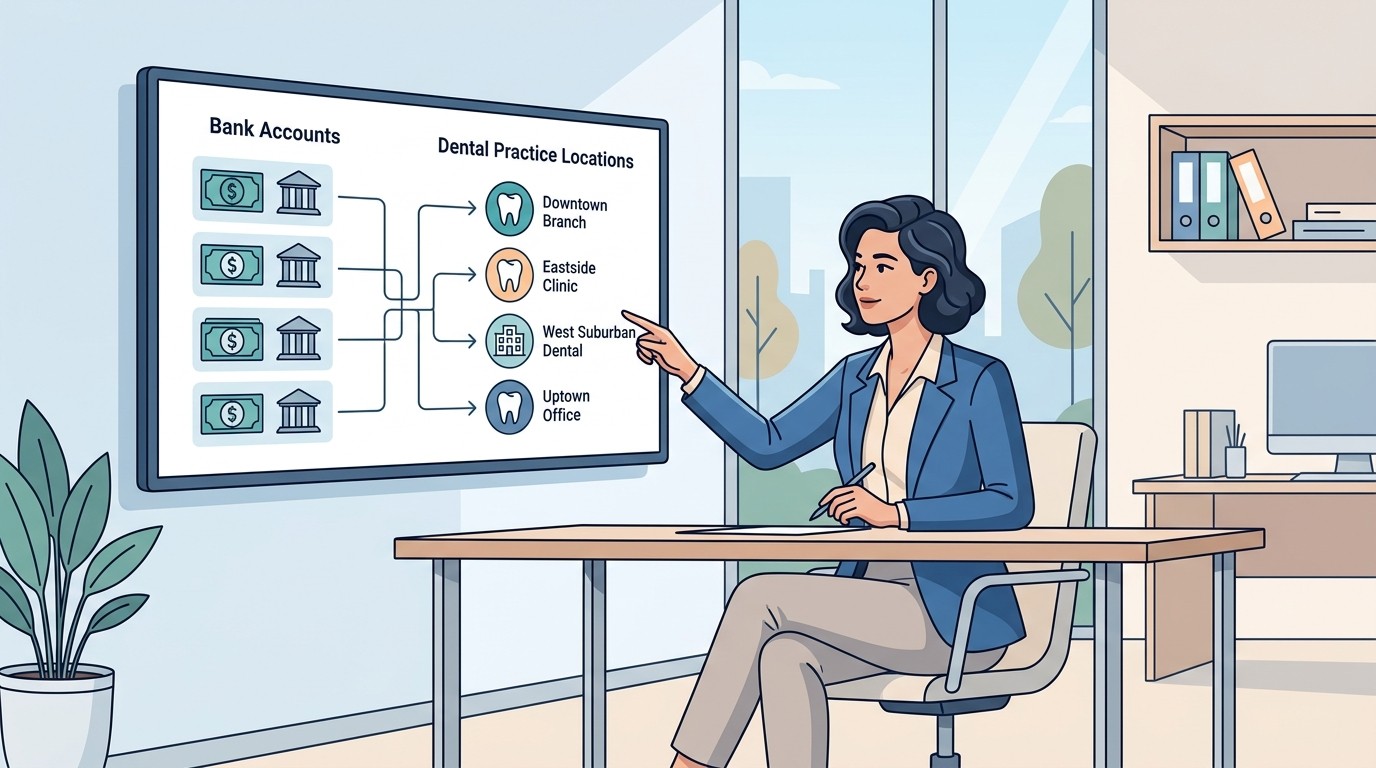
The structural fix is the same one that protects against any seasonal discipline gap: reconciliation that operates independent of the practice's weekly rhythm, so that whether the week is five days or four, the verification still happens.
Frequently Asked Questions
How much revenue does a dental practice lose during a long weekend?
The simple math is one-fifth fewer days, but the practical loss is usually larger because patients reschedule disproportionately around the surrounding days, fixed costs do not scale down, and some attrition happens. A practice that does not actively manage the long weekend often loses closer to a quarter of weekly revenue rather than a fifth. Across the year, roughly three to four percent of annual production can be at risk to long-weekend dynamics.
Should dental practices stay open during long weekends?
Most practices are better off closing for the federal holiday and aggressively scheduling the surrounding days, rather than staying open on the holiday itself. Patient demand on the actual holiday is low and staffing is expensive. The recovery happens by booking the Thursday and Friday before, and the Tuesday and Wednesday after, more aggressively than a normal week.
What should a dental practice do before a long weekend?
Schedule aggressively in the lead-up days, particularly hygiene and any treatment that has been waiting on a slot. Send confirmation outreach earlier than usual to reduce no-shows. Get patient statements out before the holiday so they land while patients can still act on them. Pre-stage treatment plans, verifications, and outreach for the post-holiday week so the first day back is not entirely reactive.
Why is the Tuesday after a long weekend so chaotic?
A four-day backlog of voicemails, emails, appointment requests, emergency calls, and insurance verification stacks up. Staff are returning from time off and catching up on personal life. Without a written priority list for the first day back, the team tends to spend it in reactive mode, which means revenue-protecting work like patient outreach and confirmation calls gets crowded out.
Do long weekends affect dental practice reconciliation?
Yes, indirectly. Reconciliation discipline that depends on a regular weekly rhythm tends to slip during long-weekend weeks because the people who do daily cash counts, deposit reconciliations, and denial work may be off or backlogged. The dollar amounts at risk in any single long weekend are small, but the pattern compounds across multiple long weekends per year. Continuous, automated reconciliation that runs independent of the weekly schedule is the structural fix.
Zeldent's reconciliation runs daily regardless of the calendar, so long weekends do not create a discipline gap. The system continues comparing collections, deposits, and remittances through holiday weeks just as it does in normal ones. Schedule a demo to see how continuous reconciliation removes calendar risk from your practice's books.