The Real Cost of Dental No-Shows in 2026
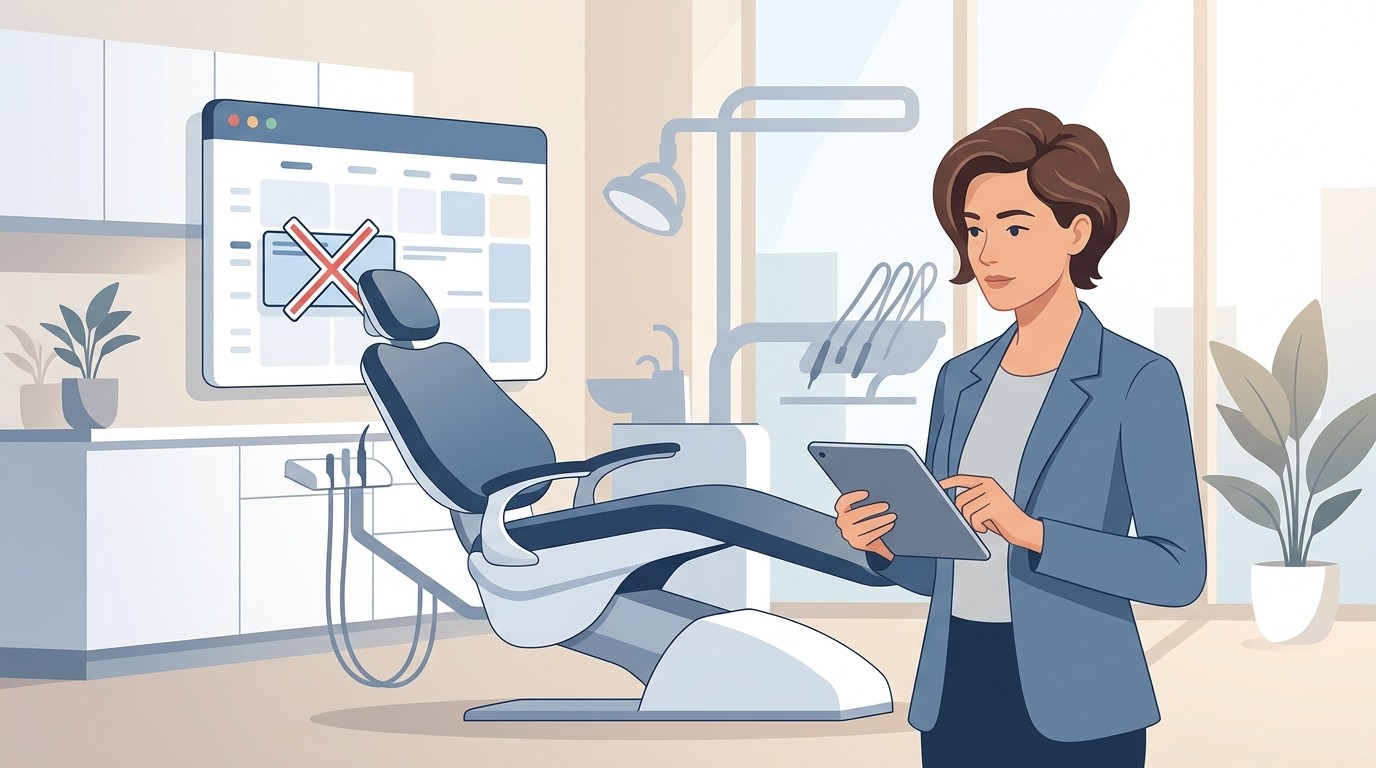
A no-show looks like one missing patient. The actual cost is the production that did not happen, the staff who were paid to be there for it, the patients who could have filled the slot, and the cascading disruption to a schedule built around the assumption that everyone shows. Multiply that by the typical no-show rate, and the annual cost is well into six figures for most practices.
What a No-Show Actually Costs
The intuitive way to value a no-show is by the production that was supposed to happen. A patient scheduled for a crown does not come in, the practice loses the $1,400 the crown would have generated. This is the visible cost, and it is the smallest part of the real cost.
The fully-loaded cost of a no-show includes the missed production from that visit, the cascading schedule disruption when the hygienist or dentist has unfilled time that day, the labor cost of the staff who were scheduled and paid for the appointment that did not happen, the opportunity cost of the patient who could have been seen in that slot if it had been offered to a waiting list, the missed comprehensive exam and treatment plan presentation that often accompanies the missed visit, and the lifetime value impact when no-show patients drift away from the practice.
For a typical practice with an average no-show rate, the cumulative annual cost is meaningful. A practice running a 10 percent no-show rate on 1,500 patient visits per month is losing 150 appointments per month, or 1,800 per year. At a blended average of $250 per visit across hygiene and operative, the direct missed production alone is $450,000 per year. Even discounting heavily for some of that being recovered through rescheduling, the practical loss runs in the low to mid six figures.
The 10 percent rate is not unusual. Many practices run higher, especially in markets with high transient populations or significant Medicaid presence, where no-show rates can reach 20 to 25 percent. Practices with strong systems often run 3 to 5 percent. The variance across the same procedure mix in similar geographies is almost entirely driven by what the practice does, not what the patients do.
Why No-Show Rates Vary So Much
The wide range of no-show rates across superficially similar practices points to the answer about whether no-shows are controllable. They are. Some specific drivers are well-established.
Confirmation timing. Practices that confirm 24 to 48 hours in advance with a personal touch have lower no-show rates than practices that send automated reminders only. Automated text confirmations capture the patients who would have shown anyway. The patients on the edge need a real interaction to commit.
Patient mix and payer mix. Some patient populations have structurally higher no-show rates regardless of practice systems. This is real, but it is not a complete explanation. Practices serving the same patient population can vary widely in no-show rate based on the systems they have built around the appointment.
Scheduling lead time. Appointments booked four months out have higher no-show rates than appointments booked next week. Long lead times invite cancellation, rescheduling, and forgetting. Practices that compress lead times for recall appointments specifically tend to see lower no-show rates on those visits.
The cancellation policy and its enforcement. Practices with documented cancellation policies that actually charge fees see lower no-show rates over time as patients adjust to the policy. Practices with policies on paper that are never enforced have the same no-show rates as practices with no policy.
The relationship the patient has with the practice. Patients who feel known by name, who have a consistent provider, and who have had positive previous experiences no-show at meaningfully lower rates than patients who feel like they are processed through a rotating cast. The clinical and operational details affect how the patient experiences the appointment, which affects whether they prioritize showing up.
Same-day appointment policies. Practices that allow same-day cancellations without penalty, even verbally, signal that the appointment is flexible. Patients respond to that signal. Practices that maintain that appointments are commitments tend to have patients who treat them as commitments.
What Practices Should Actually Do
The systems that reduce no-show rates are not mysterious, but they do require the practice to do them consistently rather than aspirationally.
Run a real confirmation process. This means a phone call or a personalized message 24 to 48 hours in advance for high-value or chronic-no-show patients, not just an automated text. For routine hygiene patients with a good history, automated confirmation is fine. The triage is what matters.
Maintain a short-call waiting list. When a patient cancels with less than 24 hours notice, or fails to confirm, the slot should be offered to a maintained list of patients who would like to come in sooner than their scheduled date. This converts no-shows from lost time into filled production. The waiting list has to be maintained, not just nominally exist.
Charge for documented no-shows. Not aggressively. A documented policy with a modest fee, applied consistently and waived for legitimate emergencies, changes patient behavior over time. The fee is not the revenue point; the behavior change is.
Reduce lead times for recall. Patients who book hygiene six months out should be confirmed two weeks out with a chance to reschedule into a closer date if their preference has changed. The patient who has been thinking about their appointment for five months is more likely to no-show than the patient who scheduled it three weeks ago.
Identify chronic no-show patients and treat them differently. Some patients no-show repeatedly. Tracking this in the practice management system, and applying enhanced confirmation, prepayment for major appointments, or fee structures appropriate to the pattern, addresses the leverage without alienating reliable patients.
Measure and report no-show rates by provider, hygienist, and appointment type. A no-show rate that is invisible cannot be managed. Visibility creates accountability and the practice's natural improvement.
Tighten cancellation policy enforcement. Policies that exist only when convenient have no behavioral effect. Policies that are applied consistently, with documented exceptions for genuine reasons, do.
The Reconciliation Connection
No-show rates are not directly a reconciliation problem, but they connect to Revenue Integrity in a specific way. The production that should have happened, did not, and that gap, accumulated across the year, is a category of revenue leakage that does not show up in any standard report. The practice management system shows the unfilled appointments as cancellations or no-shows. It does not quantify them as lost revenue. Most practices have no idea what their annual no-show cost actually is.
A Revenue Integrity discipline that tracks the gap between expected and actual chair productivity surfaces this leakage in dollars. The practice can then make informed decisions about how much investment in confirmation systems, waiting list management, and policy enforcement is worth, because the size of the underlying problem is visible.
Frequently Asked Questions
What is a normal dental no-show rate?
No-show rates vary widely. Typical practices run 8 to 12 percent. Practices with strong systems often run 3 to 5 percent. Practices in markets with high transient populations or significant Medicaid presence can reach 20 to 25 percent. The variance across practices in similar markets is mostly driven by the systems each practice has built, not by the patient population.
How much does a no-show cost a dental practice?
The intuitive cost is the missed production from the appointment, often $200 to $400 for hygiene and $1,000 to $2,500 for operative. The fully-loaded cost adds staff labor for the slot that did not happen, opportunity cost of the patient who could have been seen, cascading schedule disruption, and lifetime value impact. A practice running a 10 percent no-show rate on 1,500 monthly visits is losing $400,000 or more per year in direct missed production alone.
Should dental practices charge for no-shows?
Yes, with caveats. A documented cancellation policy with a modest fee, applied consistently and waived for legitimate emergencies, changes patient behavior over time. The revenue from the fees is not the point. The behavior change is. Practices that have policies on paper but never enforce them have the same no-show rates as practices with no policy.
Are automated text reminders enough to reduce no-shows?
For routine hygiene patients with reliable history, yes. For high-value appointments, chronic no-show patients, or new patients, automated reminders capture the patients who would have shown anyway. The patients on the edge need a personal interaction, usually a phone call, to commit to showing up.
How can a dental practice fill canceled or no-show appointments?
A maintained short-call waiting list, where patients who want to come in sooner than their scheduled date can be called when slots open, converts no-shows into filled production. The list has to be actively maintained, not just nominally exist, and the front desk has to have time to make the calls when slots open up.
Do dental no-shows hurt revenue beyond the missed appointment?
Yes. The full cost includes the missed comprehensive exam and treatment plan presentation that often accompanies the visit, the opportunity cost of patients who could have been seen, staff labor paid for unfilled time, cascading disruption to the rest of the schedule, and the eventual loss of patients who drift away from the practice after multiple missed appointments. The full annual cost for most practices is in the low to mid six figures.
Zeldent quantifies the no-show cost as part of overall Revenue Integrity, surfacing the gap between expected chair productivity and actual collected revenue. Schedule a demo to see what your no-show rate is actually costing your practice annually.