Buying a Dental Practice: How to Verify the Numbers Before You Sign

You are not buying a building, a patient list, or a schedule. You are buying a cash flow, and the only honest question is whether that cash flow is real.
What you are actually buying
When you buy a dental practice, the equipment and the lease are incidental. What you are paying a multiple for is the practice's ability to generate collected revenue after you take over.
That makes verification the central task of the entire acquisition. Everything else, the tour, the team introductions, the equipment inspection, is secondary to one question: does the money the seller says comes in actually come in?
Most buyers underweight this. They evaluate the practice's potential carefully and accept the seller's reported performance at close to face value. That is backwards. Potential is speculative. Performance is verifiable, and verifying it is where you either protect your investment or overpay for it.
Production, collections, and why the difference matters
Sellers often lead with production, because production is the bigger number. Production is the value of dentistry performed at full fee. It is not revenue.
Collections is what the practice actually received after insurance adjustments, write-offs, and whatever the patient paid or did not pay. The gap between the two is normal, but its size and its composition tell you a great deal. A widening gap suggests deteriorating collections, growing write-offs, or aging AR that will never convert. We break this down in the production versus collections gap.
Ask for collections, by month, for at least three years. Then ask what those collections were verified against.
The verification that most buyers skip
Here is the step that separates careful buyers from optimistic ones.
The seller's practice management system produces a collections report. That report reflects what was posted into the system. It does not independently confirm that the money arrived in the practice's bank account. Those are two different claims, and only one of them is checkable.
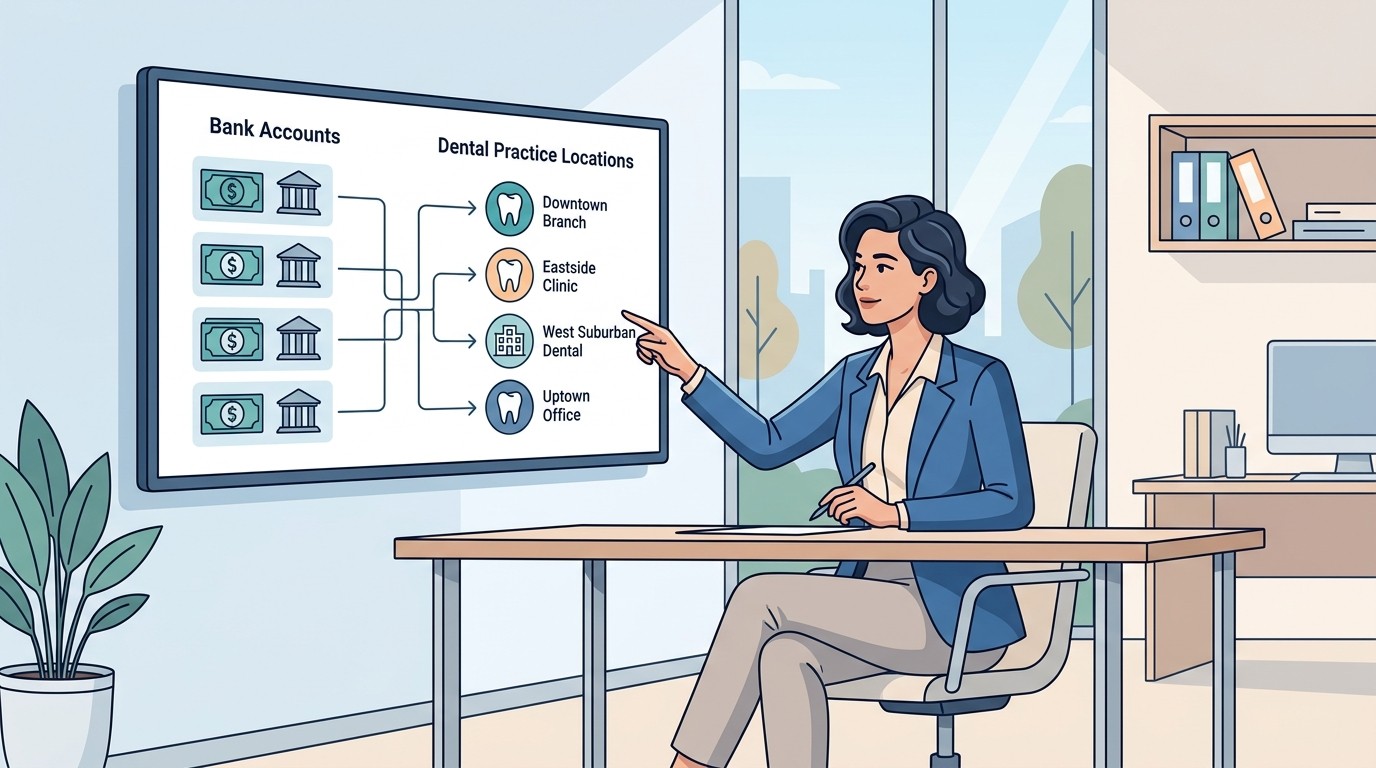
Tie reported collections to actual bank deposits, month by month, across the trailing period. If they reconcile cleanly, you have real confidence in the earnings you are pricing. If they do not, you need to understand why before you proceed, because everything downstream, the valuation, the loan, your projections, rests on that figure.
Discrepancies here are common and usually mundane, accumulated posting errors rather than anything sinister. But sometimes they are not. Industry estimates suggest 60 to 70 percent of practices experience embezzlement at some point, and acquisitions are a frequent moment of discovery, because it is often the first time anyone examines the books independently. Our embezzlement prevention guide covers what those patterns look like.
What else to examine
Beyond the collections reconciliation, a few areas repay close attention.
Adjustments and write-offs deserve real scrutiny, not a glance at the total. A pattern of large or undocumented adjustments can mask uncollected revenue or worse. Our guide to adjustment audits covers what to look for.
Accounts receivable tells you what you are inheriting. A large balance skewed toward the over-90-day bucket is not an asset, it is a collection problem with a number attached. See our accounts receivable management guide.
Payer mix matters because concentration is risk. A practice heavily dependent on one plan is one contract renegotiation away from a different business.
Overhead structure tells you what the earnings actually look like once you normalize for the seller's compensation and any one-time expenses.
And the team, because in dentistry the staff often carries the patient relationships. A practice whose key people leave at closing is a different asset than the one you evaluated.
Structuring the diligence
Good diligence follows a simple order. Request three years of collections, production, adjustment reports, AR aging, and bank statements. Reconcile collections to deposits yourself or through an advisor. Investigate any month where the two disagree materially. Review adjustment patterns for anything unexplained. Then build your valuation on the verified figure rather than the reported one.
Our pre-acquisition financial due diligence checklist covers the full sequence, and what revenue gaps tell you explains how to interpret what you find.
For groups that acquire repeatedly, the day-one baseline is a discipline of its own, covered in our guide to reconciling acquired practices during integration.
After you close
The verification habit should not stop at closing. The period right after an acquisition is when a practice is most vulnerable financially, because systems are changing, staff roles are shifting, and the new owner does not yet know what normal looks like.
Establishing independent reconciliation from day one gives you a baseline, catches transition-period errors while they are still small, and means you are not relying on inherited processes you have not yet verified.
Frequently Asked Questions
What should I look at when buying a dental practice?
Collections verified against bank deposits, adjustment patterns, AR aging and composition, payer mix concentration, normalized overhead and earnings, lease and equipment condition, and the likelihood that key staff stay through the transition.
How do I verify a dental practice's collections?
Request the practice management collections reports alongside bank statements for the same period, then reconcile them month by month. Reported collections reflect what was posted. Bank deposits reflect what was received. Only the second is independently verifiable.
What are red flags when buying a dental practice?
Reported collections that do not reconcile to deposits, large or undocumented adjustments, AR heavily concentrated in the over-90-day bucket, revenue dependent on a single payer, and a seller reluctant to provide bank statements or grant access to underlying reports.
Should I buy a practice with declining collections?
Possibly, but only if you understand the cause. Declining collections driven by a fixable operational problem is an opportunity. Declining collections driven by patient attrition or payer loss is a different asset than it appears, and the price should reflect that.
How long should due diligence take?
Financial due diligence typically runs several weeks, and rushing it is the most expensive way to save time in the entire transaction. The reconciliation of collections to deposits is the step worth extending the timeline for.
Zeldent reconciles practice management ledgers against actual bank deposits daily, across Dentrix, Open Dental, Eaglesoft, and Curve Dental. Useful before you buy, to verify what you are paying for, and after you close, to know your numbers are real from day one. Book a demo.