Red Flags in Dental Client Books That Signal Deeper Problems
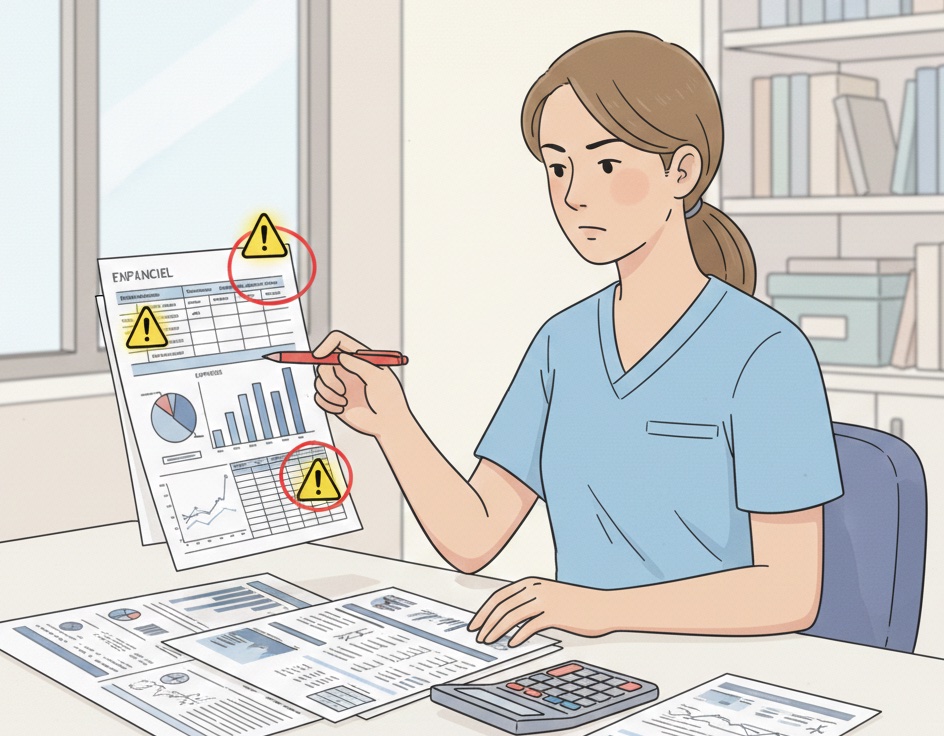
Your dental client's books balance. The bank reconciliation is complete. But something feels wrong. Here is how to recognize the warning signs that suggest bigger problems hiding beneath the surface.
📚 Part of our reconciliation series: This article is part of The Complete Guide to Dental Practice Reconciliation, our comprehensive resource on closing your books accurately and preventing revenue leakage.
Beyond Basic Reconciliation
As a bookkeeper serving dental clients, your primary job is ensuring the books are accurate and reconciled. But you see things that others miss. You see the patterns across months. You notice when trends shift in ways that do not make sense. You observe how different data points relate to each other in ways that tell a story the individual numbers cannot.
The practice owner is focused on clinical work. The office manager is buried in daily operations. You are the one with the financial perspective, the one who can step back and see the whole picture.
Some of what you notice is just normal variation. Dental practices have seasonal patterns, insurance mix changes, and occasional operational hiccups. But some patterns signal something more serious: fraud, operational dysfunction, or financial distress that the practice owner may not even recognize.
Learning to distinguish normal variation from genuine warning signs protects your clients. It also protects you and your professional reputation.
Financial Red Flags
The Collection Rate That Keeps Slipping
A healthy dental practice collects 96% to 98% of its adjusted production. When you see that percentage declining month after month, something is breaking down.
The decline is often gradual enough that nobody notices. The practice was at 97% last year. Now it is at 95%. Next quarter it might be 93%. Each individual month looks close enough to normal that nobody raises an alarm. But the trend tells a story of money that should be coming in and is not.
Sometimes the explanation is operational. The billing coordinator left and the replacement is struggling. Insurance claims are being denied at higher rates and nobody is appealing them. Patient balances are aging because the front desk stopped making collection calls.
Sometimes the explanation is darker. A declining collection rate can mask embezzlement. If someone is stealing payments, the money never gets recorded, and the collection rate drops because actual collections are lower than they should be.
When you see collection rates below 94% without a clear operational explanation, document the trend and present it to the owner. This is not something to mention casually. It is something to discuss formally with data.
Cash Receipts Disappearing While Cards Hold Steady
The mix of payment types in a dental practice should be relatively stable. Patients do not suddenly stop paying cash while dramatically increasing credit card usage unless something has changed.
If you see cash collections dropping significantly while credit card percentages rise to compensate, and overall collections are flat or declining, consider what that pattern might mean. Credit cards leave trails. Cash does not. A thief who skims cash but cannot touch credit card transactions would create exactly this pattern.
There are innocent explanations. Maybe the practice stopped accepting cash for large balances. Maybe patients genuinely prefer cards more than they used to. But the pattern warrants a question to the practice about whether anything has changed in how they handle cash payments.
Adjustments That Keep Growing
Adjustments should be predictable relative to production. A practice that writes off 15% of production every month might have fee schedule issues, but at least the pattern is consistent. What concerns me is when adjustments start climbing without any corresponding change in operations.
Adjustments are how embezzlers make stolen money disappear from the books. Take a payment, post an adjustment to zero out the balance, and the theft becomes invisible. The patient shows no outstanding balance. The books balance. The only evidence is an adjustment entry that nobody questions.
Watch for adjustment percentages that creep up over time. Watch for new adjustment categories appearing with growing balances. Watch for round-number adjustments, because legitimate insurance adjustments come in odd amounts based on fee schedules and allowed amounts. A $500 adjustment or a $1,000 adjustment is unusual enough to warrant a question about what it represents.
If you see adjustment patterns that concern you, ask for documentation. Legitimate adjustments have reasons. Insurance write-offs trace to EOBs. Courtesy adjustments should match documented policies. If the explanations do not make sense, or if there is no documentation, the practice has either a control problem or a theft problem.
The Variance That Never Goes Away
Every practice has occasional reconciliation variances. Timing differences, posting errors, and processing delays create temporary mismatches between the bank and the books. These should resolve within a few days as the timing catches up.
What should not happen is the same variance appearing month after month. If the books are consistently $300 higher than the bank deposits, or consistently $500 lower, that persistence suggests something systematic rather than random.
A persistent variance in the same direction could indicate ongoing theft of a consistent amount. It could indicate a recurring posting error that nobody ever fixes. It could indicate a process breakdown that creates the same leakage every month. None of these explanations is acceptable.
Document the pattern. Push for investigation. If the practice cannot explain a recurring variance, you need to consider whether you can continue serving this client without resolution. Your name is associated with these books.
Credit Balances That Accumulate Without Refunds
Patient credit balances should turn over. Credits get created when insurance pays more than expected or when patients prepay for treatment they do not complete. The proper response is to refund the money or apply it to future services.
When credit balances keep growing month after month, either nobody is processing refunds or refunds are being processed but diverted. I have seen schemes where an embezzler created fake credits through posting manipulations, then processed refund checks to themselves. The practice thought they were cleaning up credit balances when they were actually paying their thief.
Ask to see the refund log. Compare refunds processed in the PMS to refunds that actually cleared the bank. If those numbers do not match, someone is either stealing refund checks or there is a serious process problem in how refunds are handled.
Behavioral Red Flags
The Defensive Response
When you ask reasonable questions about financial matters and get defensive or evasive answers, pay close attention to that reaction. Honest people explain. They pull up records, walk through transactions, and help you understand what happened. People with something to hide change the subject, get emotional, or provide answers that do not quite address what you asked.
This applies to both staff and owners. Sometimes the owner is defensive because they are embarrassed about problems they do not want to admit. Sometimes staff are defensive because they do not understand the processes they are supposed to be running. Sometimes defensiveness indicates fraud being protected.
The key is whether you eventually get clear answers that make sense. Defensiveness that resolves into explanation is probably just discomfort. Defensiveness that never resolves into clarity is a warning sign.
The One Person Who Controls Everything
The single most dangerous situation in dental practice finances is when one person handles all financial functions with no oversight. This person collects payments, posts them to patient accounts, makes deposits, processes adjustments, reconciles the bank, and handles refunds. Nobody else touches the money or the records.
This is the classic embezzlement setup. Without separation of duties, a thief can steal money and cover their tracks without anyone else having visibility into what happened. The person who collects cash can skim it. The person who posts payments can divert them. The person who reconciles can hide the discrepancies.
Watch for the employee who resists involvement of others in financial processes. Watch for the person who never takes vacation because they are afraid someone covering their duties will discover something. Watch for unusual resistance to implementing new systems or controls that would create oversight.
Even if this person is completely honest, the control environment is unacceptable. Recommend segregation of duties. Suggest mandatory vacation with coverage by someone else. Offer to provide oversight yourself as an external control. If the practice refuses to address this risk, document your concerns in writing.
The Documentation That Does Not Exist
Legitimate transactions have documentation. Payments trace to receipts. Adjustments trace to EOBs or policy memos. Deposits trace to deposit slips. When documentation consistently cannot be produced, something is wrong.
Sometimes the explanation is sloppiness. The practice never developed good document retention habits. Records are scattered across email, paper files, and desk drawers, making retrieval difficult.
Sometimes the explanation is worse. Documentation was destroyed to hide fraud. Transactions were fabricated without real backup. Records that would reveal problems have conveniently disappeared.
Request missing documentation in writing. Note specifically what you asked for and what could not be produced. If patterns emerge where certain types of documentation are consistently unavailable, that pattern tells you something about what might be hidden.
The Lifestyle That Does Not Match the Salary
This is delicate territory, but it matters. If someone handling money is suddenly displaying wealth inconsistent with what you know about their compensation, that observation is relevant.
The front desk coordinator making $40,000 who arrives in a new luxury car deserves a moment of curiosity. Maybe they inherited money. Maybe their spouse got a raise. Maybe they have family wealth you do not know about. These explanations are common and innocent.
But maybe they have been supplementing their income from the cash drawer for the past three years.
You should never accuse someone of theft based on lifestyle observations alone. But you should note the observation and look for corroborating evidence in the financial data. If the lifestyle change coincides with rising adjustments or declining cash collections, the pattern becomes more concerning.
Operational Red Flags
Vendor Relationships That Seem Wrong
Unusual vendor patterns can indicate kickback schemes or fake vendors created to divert practice funds.
A single vendor receiving a disproportionate share of spending deserves scrutiny. Why is 80% of supply cost going to one company? Is that really the best arrangement, or does someone have a relationship with that vendor that benefits them personally?
New vendors that appear without clear business reasons are also concerning, especially if invoices have unusual formats, lack detail, or have addresses similar to employee addresses. Fake vendor schemes are common enough in small business fraud that any new vendor relationship should be verified.
Verify that significant vendors actually exist as real businesses. Review large vendor relationships with the practice owner to ensure they understand and approve the spending. Look for proper documentation including invoices, purchase orders, and delivery confirmations.
Payroll That Does Not Make Sense
Payroll fraud takes many forms. Ghost employees on the payroll who do not actually work. Unauthorized overtime that benefits certain people. Salary increases that were never approved. Expense reimbursements for expenses that never occurred.
Look at payroll as a percentage of collections. Dental practices typically run 25% to 30% in staff costs. If that percentage is climbing without corresponding revenue growth or service expansion, money is going somewhere it should not.
Look for employees you have never heard mentioned. Ask about unusual overtime patterns. Verify that payroll changes match what the owner authorized. Expense reimbursements should have receipts that match the amounts claimed.
Insurance Payment Irregularities
Insurance payments should follow predictable patterns. Claims get submitted, payments arrive, and the amounts match the EOBs. When that pattern breaks down, investigate.
Watch for insurance payments that arrive but never get posted, leaving patient accounts showing balances that have actually been paid. Watch for claims that seem to get written off rather than pursued. Watch for patterns where certain payers or certain types of claims consistently have problems.
Sometimes insurance irregularities indicate simple incompetence in the billing process. Sometimes they indicate something more deliberate, where payments are being diverted before posting or claims are being manipulated to create opportunities for theft.
What To Do When You Find Red Flags
Document Everything Specifically
Vague concerns are easy to dismiss. Specific data demands attention. When you identify something concerning, document the exact amounts, dates, and patterns. Build a picture with evidence rather than impressions.
Keep your documentation separate from the client's files. You want records that you control in case the situation becomes adversarial.
Assess the Severity
Not every red flag requires emergency action. Some require monitoring. Some require conversation. Some require immediate escalation.
Consider the potential magnitude of the problem. A $500 monthly variance is concerning but not urgent. A pattern that suggests systematic theft of thousands per month requires faster action.
Consider your confidence in the assessment. Strong patterns with clear evidence warrant direct action. Ambiguous situations with multiple possible explanations might warrant watchful waiting.
Communicate Appropriately
Present your findings to the practice owner in a way that opens conversation rather than creating defensiveness. Lead with data and questions rather than conclusions and accusations.
"I've noticed that adjustment percentages have increased from 12% to 18% over the past year. Can you help me understand what's driving that change?" is better than "I think someone is stealing from you."
If the owner responds with curiosity and engagement, work together to investigate. If the owner responds with dismissal or hostility, document that response and consider your obligations.
Know Your Limits and Protect Yourself
You are a bookkeeper, not a forensic accountant or investigator. When situations exceed your expertise or comfort level, recommend that the practice engage appropriate specialists.
If you believe fraud is occurring and the practice owner refuses to investigate, you face difficult decisions. Can you continue serving this client? What are your professional and legal obligations? These questions may require consultation with your own advisors.
Document your concerns and recommendations in writing. If the situation ever becomes a legal matter, you want a clear record that you identified problems and recommended action.
Want automated red flag detection for your dental clients? Zeldent monitors reconciliation patterns, identifies anomalies, and surfaces concerns before they become crises. Our multi-client dashboard lets you see warning signs across your entire dental portfolio at a glance. Schedule a demo to see how Zeldent supports proactive oversight.