Why Dental Insurance Verification Fails (and What It Costs You)
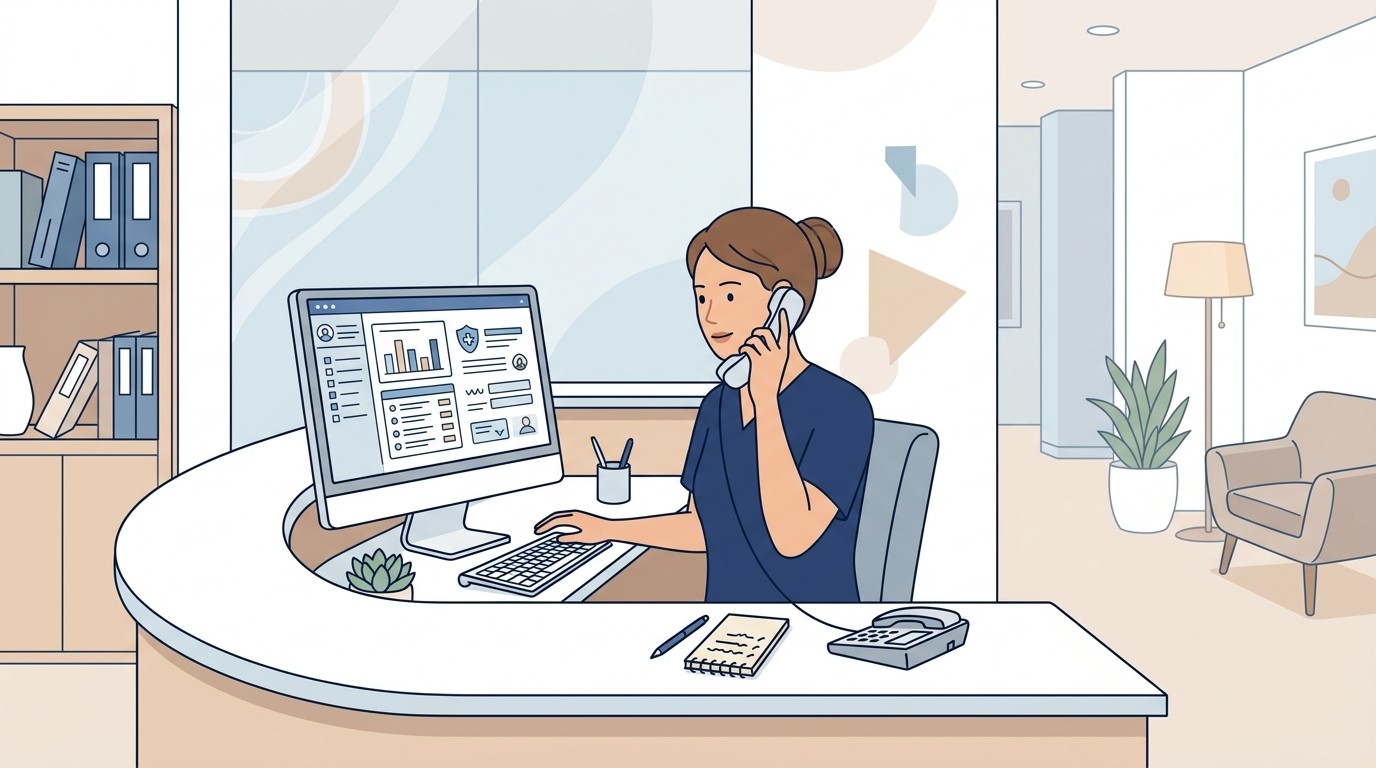
The moment insurance verification fails, the practice has already lost something. The treatment plan is built on the wrong numbers, the patient owes more than they were told, the staff explains, and goodwill leaks out before any clinical work happens. The cost is not theoretical.
What Insurance Verification Is Supposed to Do
Insurance verification is the work the practice does before a patient visit to confirm what the patient's plan actually covers. Eligibility, plan year, annual maximum remaining, deductible status, covered procedure categories, contract status of the providing dentist, and any waiting periods or frequency limitations on the specific procedures the patient is scheduled for.
Done well, verification produces three outputs. The patient knows what they will owe. The treatment coordinator can present accurate financial information when discussing the plan. And the practice submits claims with confidence that they will pay, because the eligibility and coverage have already been confirmed.
When verification fails, all three of those outputs collapse. The patient is told an amount that turns out to be wrong. The treatment coordinator's plan presentation creates expectations the actual EOB will contradict. And the claim that should have paid cleanly gets denied for eligibility, coverage, or frequency reasons that the practice could have caught beforehand.
How Verification Actually Fails
The failure modes are consistent across practices and worth naming specifically.
The verification was not done at all. The patient was scheduled, the visit happened, and no one verified insurance beforehand. The practice discovers the patient's coverage status only when the claim is denied or the patient calls to dispute their balance. This usually happens when verification is treated as a one-person task and that person is overwhelmed, out, or rotating in from another role.
The verification was done from outdated information. Patient demographics or insurance details from a prior visit were used without re-confirming. Insurance companies change plans, drop members, modify networks, and update fee schedules constantly. Verification on six-month-old data is sometimes worse than no verification at all, because it produces a confident wrong answer.
The verification confirmed eligibility but not the specific procedure. Eligibility is the easy part. Whether the patient's plan covers the specific procedure they are scheduled for, at the contracted rate, with no frequency or waiting-period limitation, is the hard part. Many practices verify eligibility and stop, then are surprised when the claim is denied for a frequency limitation or a non-covered procedure category.
The portal said one thing and the payer's call center said another. Insurance company self-service portals are often out of date, missing information, or display the patient's general eligibility without the plan-specific details that matter. A practice that relies entirely on portal data without calling on edge cases gets wrong answers. A practice that calls on every patient cannot keep up with the volume.
The verification was done but not communicated to the people who needed it. Verification happened. The benefits worksheet got filled out. But the treatment coordinator presenting the plan did not see it, or the billing coordinator submitting the claim did not see it, and the information that existed never reached the decisions it should have informed.
Coverage changed after verification but before the visit. Insurance changes mid-year are common, especially around plan year boundaries. Verification done two weeks before the visit can be wrong by the day of the visit. Practices that do not re-verify on or near the day of service catch this category of failure only after the fact.
What Verification Failures Actually Cost
The costs come in several forms.
Direct revenue loss from denied claims. Claims that get denied for eligibility, frequency, or coverage reasons. Some are recoverable through appeal, but each appeal costs staff time, and a meaningful portion of denied claims are never worked back to payment and age into write-offs.
Patient balance disputes that turn into bad debt. When the patient was told they owed $X and the EOB shows they owe $Y, the difference becomes a collections problem. Some patients pay the difference. Some dispute it indefinitely. Some leave the practice and never come back.
Reduced treatment acceptance. When the financial picture presented at consultation turns out to be wrong, the practice's credibility with the patient erodes. Patients who feel surprised by costs are less likely to accept additional treatment, less likely to refer, and less likely to stay with the practice long-term.
Staff time spent on rework. Calling the payer back, appealing the denial, calling the patient to renegotiate the balance, redoing the treatment plan presentation. All of this is unbilled time that came out of staff who could have been doing revenue-generating work instead.
Compliance exposure on Medicaid and government plan patients. Verification failures on government program patients can create more than a billing problem. Submitting claims for procedures that should have been pre-authorized, or billing under the wrong eligibility status, can implicate fraud rules even when the practice intended no fraud.
For a typical practice, the cumulative cost of verification failures runs into tens of thousands of dollars per year, distributed across small individual incidents that never get attributed back to the underlying cause.
What Practices Should Actually Do
The fixes are not heroic. They are structural.
Make verification a defined process owned by a specific role. Not "whoever has time." Not "whoever the patient called." A specific role with documented procedures, escalation paths, and time blocked for the work. If the practice has more verification volume than one person can do, the role gets more capacity or the work gets distributed deliberately, but it is owned.
Verify benefits, not just eligibility. The verification protocol should include the specific procedures the patient is scheduled for, with attention to frequency limitations, waiting periods, and coverage exclusions. A checklist that includes "did we verify the procedure-specific coverage" catches the largest category of failures.
Use the portal for what it does well and call for what it does not. Portal verification is fast and adequate for many cases. Complex cases, recent insurance changes, and high-value treatment plans warrant a phone call with the payer regardless of what the portal says.
Re-verify on or near the day of service for high-stakes appointments. Treatment plans involving significant dollar amounts, or patients with recent insurance changes, get a re-verification close to the visit. The cost of the re-verification is small. The cost of the wrong answer can be large.
Build verification handoff into the treatment plan presentation. The treatment coordinator should be looking at the verification result when presenting financial information to the patient. If the verification has not been done, or the result is unclear, the financial discussion is deferred until it has been resolved.
Reconcile claim denials back to verification gaps monthly. A monthly review of claims denied for eligibility, frequency, or coverage reasons reveals where verification is breaking down. The patterns are usually specific, certain payers, certain plan types, certain procedure categories, and they point directly at the protocol changes that would fix the problem.
The Tie to Revenue Integrity
Verification failures are a category of revenue leakage that lives upstream of the reconciliation work that catches most other leaks. By the time a denied claim shows up in AR, the upstream verification failure has already happened. Reconciliation can quantify the leak; it cannot prevent it.
The connection matters because practices that take Revenue Integrity seriously eventually find that they need both layers. Downstream reconciliation catches what slipped through. Upstream verification prevents the slipping in the first place. Together they keep the practice's revenue intact at both ends of the cycle.
Frequently Asked Questions
What is dental insurance verification?
Dental insurance verification is the work a practice does before a patient visit to confirm what the patient's plan actually covers. It includes eligibility status, plan year and annual maximum remaining, deductible status, covered procedure categories, contract status of the providing dentist, and any frequency limitations or waiting periods that apply to the specific procedures the patient is scheduled for.
Why does insurance verification fail in dental practices?
The most common failures are verification that never gets done because no one owns the task, verification based on outdated patient information, eligibility being confirmed without checking procedure-specific coverage, over-reliance on payer portals that lack detail, verification information that never reaches the people making decisions, and coverage changes between verification and the visit.
How much do verification failures cost a dental practice?
The cost shows up as denied claims, patient balance disputes that become bad debt, reduced treatment acceptance from credibility damage, staff time on rework, and compliance exposure on government plan patients. For a typical practice, the cumulative annual cost runs into the tens of thousands of dollars, distributed across small individual incidents that are rarely traced back to the underlying verification cause.
Should we verify insurance by portal or by phone?
Both, applied to the right cases. Portal verification is fast and adequate for routine cases with stable patients and standard procedures. Phone verification is warranted for high-value treatment plans, patients with recent insurance changes, complex coverage questions, and edge cases the portal does not clearly answer. Relying on one channel exclusively produces predictable failures.
Who should own insurance verification in a dental practice?
A specific role with documented procedures, defined time, and clear escalation paths. The work is too detailed and too consequential to leave as "whoever has time." If the volume exceeds what one person can do, the role gets more capacity or the work is distributed deliberately, but ownership is not diffuse.
Should we re-verify insurance close to the visit date?
For high-stakes appointments, yes. Treatment plans involving significant dollar amounts, patients with recent insurance changes, and any visit where the verification was done more than a couple of weeks in advance warrant a re-verification near the day of service. The cost of re-verifying is small. The cost of being wrong on a high-dollar plan presentation is large.
Zeldent reconciles the downstream side of verification failures by surfacing denied claims, eligibility gaps, and patient balance disputes that trace back to verification breakdowns, giving the practice the data to fix the upstream protocol. Schedule a demo to see how Revenue Integrity quantifies verification leakage.