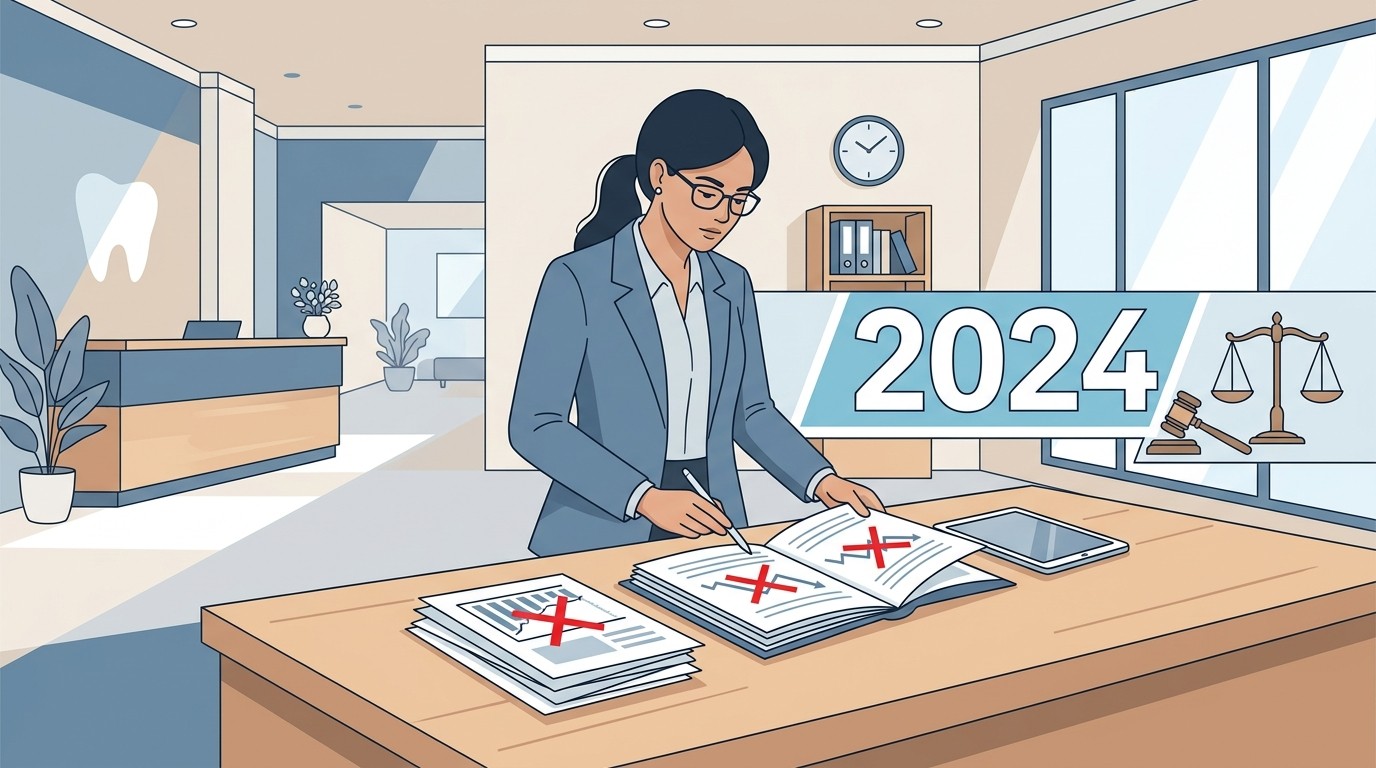
Biggest Dental Embezzlement Cases of 2025

2025 was a year of significant dental embezzlement cases, with multiple employees sentenced to lengthy prison terms and practices losing hundreds of thousands of dollars. These cases reveal how embezzlement happens and what could have prevented it.
Case 1: The Myrtle Beach Employee Who Stole $612,990
What Happened
A 39-year-old employee at Affordable Dentures & Implants on 38th Avenue in Myrtle Beach, South Carolina was arrested after allegedly embezzling more than $612,000 over an 18-month period.
The employee was responsible for collecting and depositing patient payments. According to investigators, she marked patient accounts as paid while keeping the cash for herself. The scheme ran from January 2024 to August 2025.
US Marshals arrested her on November 18, 2025. She was charged with breach of trust with fraudulent intent and booked into Horry County jail on $20,000 bond.
How It Worked
This was a classic cash skimming scheme:
- Collect cash payment from patient
- Mark the patient account as paid in the system
- Keep the cash instead of depositing it
The scheme relied on the fact that nobody was comparing actual bank deposits to recorded collections. As long as patient accounts showed as paid, nobody investigated where the money actually went.
What Should Have Caught It
- Daily comparison of PMS collection totals to bank deposit totals
- Independent verification of cash handling
- Periodic audits of patient accounts versus deposit records
At $612,990 over 18 months, the theft averaged over $34,000 monthly. That level of discrepancy should have been obvious with even basic reconciliation.
Case 2: The Florida Office Manager Sentenced to 15 Years
What Happened
Tiffany Denyse Young, 54, of St. Petersburg, received the maximum sentence of 15 years in prison for defrauding patients and the dental practices where she worked in Manatee County, Florida.
Young worked as an office manager at two separate dental practices from 2020 to 2023. She was convicted of scheming to defraud, fraudulent use of personal identification information affecting more than 10 victims, and obtaining codeine by fraud.
How It Worked
Young employed multiple fraud methods:
Blank check manipulation: She had patients leave the "pay to" section of their checks blank, then filled in her own name and deposited the checks into her personal account.
Amount alteration: She altered check amounts in many cases to increase the payout for herself.
Credit card skimming: She charged patients smaller amounts on their cards, pocketed the difference, and manipulated accounting software to cover the discrepancies.
Prescription fraud: She used one doctor's DEA registration number to prescribe controlled substances for herself.
What Should Have Caught It
- Never allow patients to leave checks blank
- Independent review of check endorsements before deposit
- Regular comparison of credit card processing reports to PMS records
- Periodic audit of controlled substance prescriptions
The 15-year sentence reflects the severity and breadth of the fraud. This was not opportunistic theft; it was systematic exploitation of trust.
Case 3: The New York Office Manager Who Redirected $286,000
What Happened
Jeffrey Fernandez, 34, of Norwalk, Connecticut, was arrested in June 2025 for allegedly embezzling approximately $286,000 from a dental practice in Great Neck Plaza, New York over a four-year period.
Fernandez worked as an office manager. The investigation was conducted by the Nassau County Electronics Squad Fraud and Forgery Unit.
How It Worked
The scheme was technically sophisticated but fundamentally simple: Fernandez allegedly changed the business routing account number from the dentist's office bank account to his own personal bank account.
By redirecting payments at the account level, he did not need to manipulate individual transactions. The entire payment stream flowed to him.
What Should Have Caught It
- Regular verification of bank account details by practice owner
- Dual control over any changes to banking information
- Monthly bank statement review by someone other than the person with account access
- Automated alerts on any banking configuration changes
This case illustrates why critical banking controls should never be delegated to a single employee without oversight.
Case 4: The Pennsylvania Office Manager Who Stole $251,843
What Happened
Heather N. Smith, 44, of North Strabane Township, Pennsylvania, was sentenced after pleading guilty to theft and theft by deception while working as an office manager at a Peters Township dental practice.
She was sentenced to 6 to 23 months in jail followed by eight years of probation. The judge ordered her to pay full restitution of $251,843 to Dr. Leonard Radnor.
What It Teaches
This case resulted in actual jail time, not just probation. The combination of prison time plus long probation plus full restitution represents the potential consequences embezzlers face.
The length of probation (eight years) reflects the court's view of the severity and breach of trust involved.
Case 5: Dr. Gividen's Practice - $160,000 to $220,000
What Happened
Dr. Stacey Gividen discovered her trusted office manager, Charlotte, had been stealing from her practice. Charlotte initially admitted to taking $30,000, but a forensic investigation by Prosperident revealed she had actually stolen nearly $160,000, with total impact including penalties, lost production, and cleanup approaching $220,000.
The case was featured in the Dentistry Unmasked podcast in late 2025.
How It Worked
Charlotte used multiple methods:
- Skimming cash from the till
- Making personal purchases through practice Amazon and vendor accounts
- Exploiting multiple payment channels
Forensic accountants documented purchases including plane tickets, clothing, gifts, and various personal items charged to the practice.
What Should Have Caught It
- Separate login credentials for all vendor accounts
- Requirement that all shipments go to office address only
- Monthly spot checks of inventory and supply orders
- Independent oversight of cash handling
Dr. Gividen now handles all payments and deposits personally, restricts staff access, and has independent accountant reconciliation.
Common Themes Across 2025 Cases
Theme 1: Office Managers Dominate
Four of the five cases involved office managers or employees with financial responsibilities. The trust placed in these positions, combined with access to financial systems, creates the opportunity for theft.
Theme 2: Multi-Year Schemes
These were not impulsive thefts:
- Myrtle Beach: 18 months
- Young: 3+ years (2020-2023)
- Fernandez: 4+ years
- Smith: Extended period
- Gividen: Extended period
Each month that passed without detection increased the total loss.
Theme 3: Basic Controls Would Have Helped
None of these cases involved sophisticated hacking or complex financial manipulation. They involved:
- Taking cash and not depositing it
- Manipulating checks
- Redirecting electronic payments
- Altering records
Basic daily reconciliation would have caught most of these schemes within weeks, not years.
Theme 4: Discovery Was Often Accidental
In several cases, the theft was discovered through tips, anomalies noticed during unrelated work, or external investigation. Systematic internal controls should catch these schemes, not luck.
Total Documented Losses in 2025
Adding up the major reported cases:
- Myrtle Beach: $612,990
- Young: Tens of thousands (unspecified)
- Fernandez: $286,000
- Smith: $251,843
- Gividen: ~$200,000
Minimum documented losses: Over $1.3 million from just these cases.
And these are only the cases that made news. Industry estimates suggest the majority of embezzlement goes unreported and undetected.
What Practice Owners Should Do
If 2025 teaches anything, it is that the fundamentals matter:
Reconcile daily. Compare what was collected to what was deposited. Every day.
Separate duties. The person collecting money should not be the person depositing it. The person making entries should not be the person verifying them.
Review personally. Practice owners should review bank statements monthly. Look at who checks are written to. Look at where deposits come from.
Verify independently. Use an outside bookkeeper or accountant to verify that internal records match external reality.
Automate verification. Manual checks are better than nothing, but automated systems that compare bank feeds to PMS records catch discrepancies that tired humans miss.
The money lost in 2025 cannot be recovered. But the lessons from these cases can prevent the same patterns from repeating in 2026 and beyond.
Related Reading: