Delta, Guardian and Aetna Are All Moving to Electronic Payment: What Changes, When and What It Costs
Three of the largest dental payers announced changes to how they pay you within the same two months. Each one either costs you money or changes how your deposits look. Here is all of it in one place.
What is happening
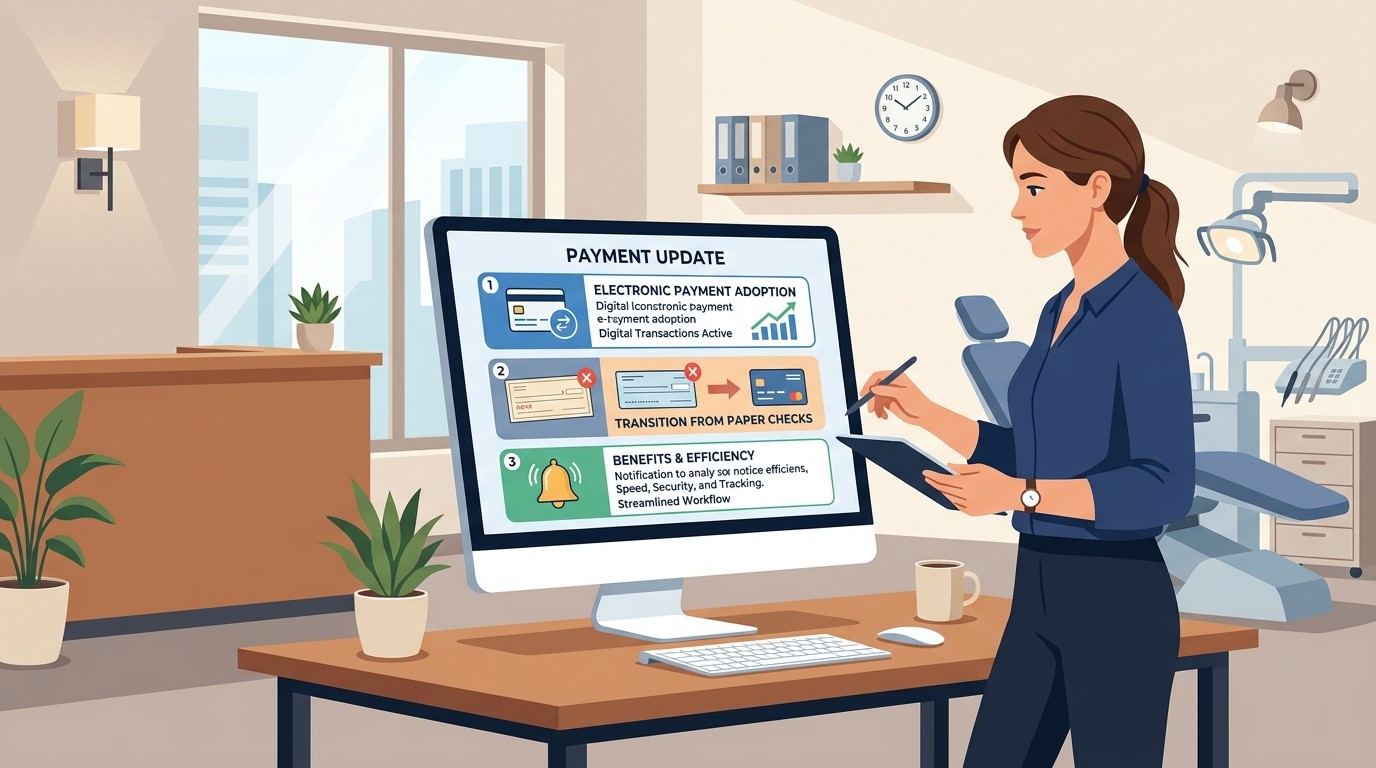
Dental plans are moving away from paper checks and paper explanations of benefits, and they are doing it faster than most practices have noticed. According to the California Dental Association, Delta Dental, Guardian and Aetna all announced changes to their payment methods over the summer of 2026, with some taking effect as early as September 4.
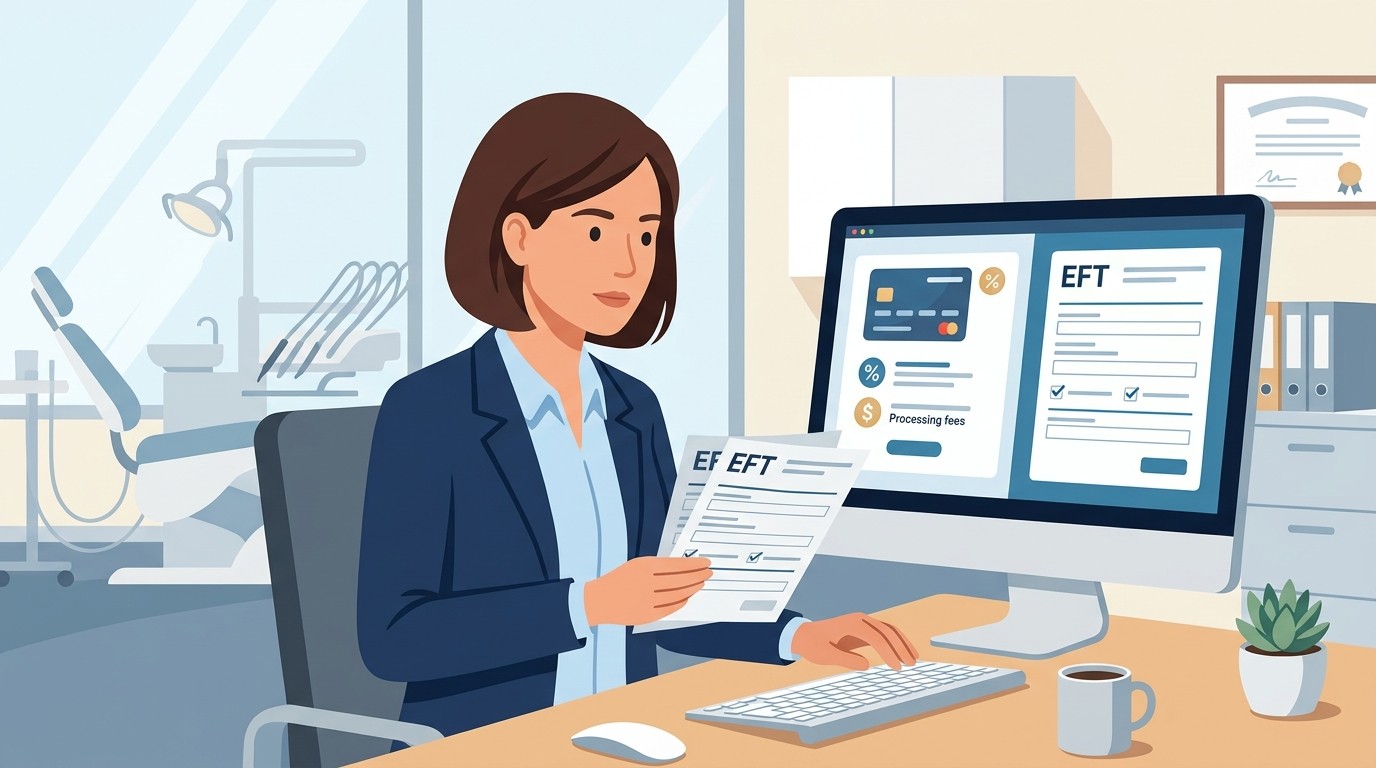
The direction is consistent across all three: create incentives, or penalties, that push practices toward electronic funds transfer or other electronic payment. The details differ, and the details are what determine whether a given practice pays a fee, waits longer for a check or has to change its reconciliation process.
The changes, payer by payer
| Payer | What changed | Effective | Cost or impact | What to do |
|---|---|---|---|---|
| Delta Dental | EFT becomes the standard payment method. Practices that keep receiving paper checks are charged a $15 weekly processing fee (one fee per week in any week they receive one or more checks). | Jan. 1, 2027 | $15 per check week, up to roughly $780 a year for a weekly-check practice | Enroll in EFT before Jan. 1, 2027. Delta said it would share more details in September. |
| Guardian | Paper checks issued every two weeks (every other Wednesday) instead of weekly. EFT-enrolled practices are usually paid about five days after review, with remittances available in the Guardian provider portal. | Late August 2026 | Slower cash for check practices, no fee | Enroll in EFT to keep the faster payment cycle. |
| Aetna | Out-of-network dentists in multiple states no longer receive paper checks or hard copy EOBs. Payment shifts to virtual credit card or EFT. California dentists are exempt for now and should expect details in Q1 2027. | Sept. 4, 2026 (outside California) | Virtual credit cards carry processing fees; EFT does not | Enroll in EFT through Optum's Payer Enrollment Services site. Aetna said enrollment is not available by phone. |
The part that costs money
Two of these changes have a direct dollar cost, and they work differently.
Delta's is a flat fee. Fifteen dollars a week does not sound like much until you multiply it by fifty-two, at which point a practice that simply never gets around to EFT enrollment is paying several hundred dollars a year for the privilege of receiving paper. It is a fee for inaction, and the fix is a one-time enrollment.
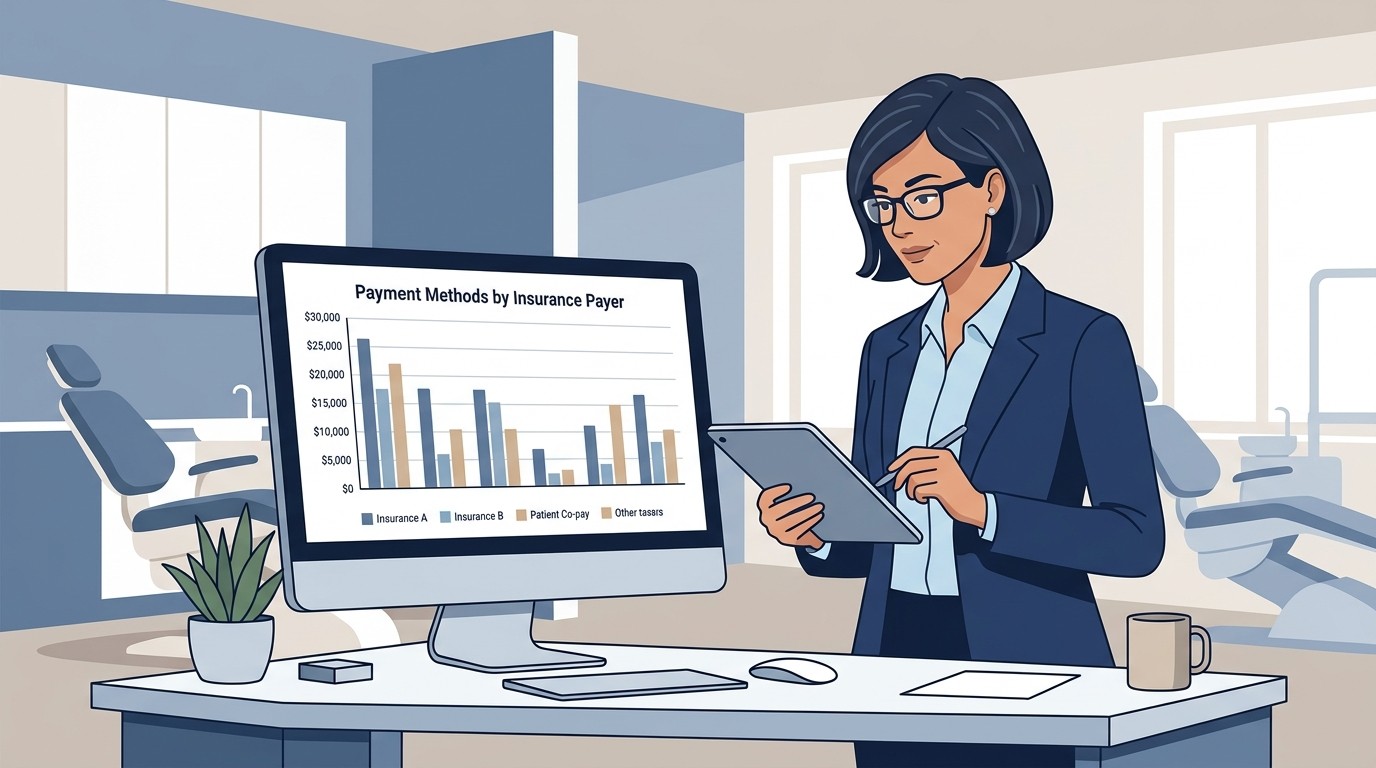
Aetna's is subtler and potentially larger. When a payer shifts from checks to virtual credit cards, every payment becomes a card transaction, and card transactions carry merchant processing fees, typically a few percent of the amount. On a large payer's annual volume, a few percent is real money. This is exactly the cost we measured in our report on which dental payers send virtual credit cards, where the spread between payers was enormous. Aetna, notably, almost never issued virtual cards in our data, at roughly zero to one percent of payments. This change could move that number for out-of-network practices, which is why the EFT enrollment matters: EFT is the option without the fee.
Guardian's change carries no fee, but it is worth noting that Guardian already issues the large majority of its payments as virtual credit cards in the data we have measured. A practice that has not enrolled in EFT with Guardian is likely already paying processing fees on most of its Guardian revenue, regardless of the check-frequency change.
Why California is different
California dentists are, for now, exempt from Aetna's shift, and the reason matters for everyone else. A CDA-sponsored law that took effect January 1, 2026 prohibits dental plans from using a fee-based payment method, including virtual credit cards, as the default. Dentists in California must opt in to any payment that carries a fee.
That is why Aetna is holding its California rollout until 2027 and promising a formal consent process. It is also a preview of where the broader argument is heading. As more plans push electronic payment, the question of whether a practice can be defaulted into a fee-bearing method is becoming a live policy issue, and California has answered it. Practices outside California do not have that protection yet, which makes proactive EFT enrollment the practical defense.
The reconciliation problem underneath all of this
Here is the piece that gets lost in the fee discussion, and it is the one that affects every practice regardless of what any single payer decides.
When a payer changes how it pays you, it changes how the money shows up. A check that used to arrive with a paper EOB becomes an EFT that lands in your account with a remittance sitting in a portal somewhere else, or a virtual card that has to be keyed into a terminal and arrives net of a fee. Each of those looks different in your bank feed, and each can quietly break the match between what your practice management system says was collected and what actually landed.
The CDA specifically noted that the shift is creating administrative burden, with some dentists reporting difficulty accessing EOBs or electronic remittance advice for EFT payments. That is the failure mode to watch. An EFT that arrives without its remittance, or a virtual card that deposits net of a fee your ledger never saw, is precisely how posting drifts away from reality. Our guide to Delta Dental eliminating reimbursement checks covers the reconciliation mechanics for the largest of the three, and our reconciliation guide by payer covers how each insurer's payment habits affect matching.
The practical rule is simple. Enroll in EFT wherever it is offered to avoid the fees, and then confirm that every EFT and every virtual card deposit reconciles against what you posted, because a changed payment method is exactly when a gap opens and nobody notices. Our guide to auditing dental merchant processing fees covers how to find the fee drag if you are already receiving virtual cards.
What to do this month
Enroll in EFT with Delta before the January deadline, and do not wait for the September details, since enrollment is the fix either way. Confirm your Guardian payment method and enroll in EFT if you are still on checks, since the biweekly cycle slows cash and the virtual card alternative carries fees. If you see Aetna out-of-network patients outside California, enroll in EFT through Optum now, because the September 4 change has already taken effect. And after each change, watch your first few deposits from that payer closely to confirm the amounts and the remittances line up with what you posted.
Other plans are likely to follow. The three that moved this summer are among the largest, and the CDA expects the trend to continue.
Frequently Asked Questions
Is Delta Dental charging a fee for paper checks?
Yes. Beginning January 1, 2027, Delta Dental will charge a $15 weekly processing fee to practices that continue receiving paper checks, applied once per week in any week the practice receives one or more checks. Enrolling in EFT avoids it.
Is Aetna still sending paper checks?
For out-of-network dentists in multiple states outside California, no. Effective September 4, 2026, Aetna shifted those payments to virtual credit card or EFT and stopped issuing hard copy EOBs. California dentists are exempt for now, with details expected in the first quarter of 2027.
How often does Guardian send paper checks now?
Every two weeks, on alternating Wednesdays, beginning in late August 2026, instead of weekly. EFT-enrolled practices are typically paid about five days after review.
Can a dental plan force me to accept virtual credit cards?
In California, no. A CDA-sponsored law effective January 1, 2026 prohibits fee-based default payment methods, including virtual credit cards, and requires dentists to opt in. Outside California that protection does not currently exist, which is why EFT enrollment is the practical defense.
Why does a payment method change affect reconciliation?
Because it changes how money appears in your bank. An EFT without its remittance, or a virtual card deposited net of a fee, can break the match between posted collections and actual deposits. Each change is a moment to confirm the first few deposits reconcile.
Zeldent reconciles every payer's deposits against what you posted, regardless of whether they arrive by check, EFT or virtual card, so a changed payment method never becomes a silent gap in your books. Book a demo to see how your payers are actually paying you.