What is Dental Revenue Integrity? A Complete Guide for Practice Owners

Dental Revenue Integrity Audit Checklist
The 7 checks every practice owner should run to verify their revenue is intact. Use it for your internal audit or hand it to your CPA.
A practice collecting $1.2 million per year is losing an average of $36,000 annually to revenue leakage that neither their billing team nor their PMS reports will surface. Revenue Integrity is the category of software that exists specifically to find that money.
What Dental Revenue Integrity Means
Dental Revenue Integrity is the continuous verification that every dollar your practice earned was billed, every dollar you billed was collected, and every dollar you collected was kept. It is the answer to a question most practice owners cannot confidently answer today: how do I know my numbers are right?
Your practice management system tells you what was posted. Your bank statement tells you what was deposited. Your insurance remittances tell you what payers say they sent. In a healthy practice, these three sources reconcile perfectly. In a typical dental practice, they do not. The gaps between them are where revenue disappears, and finding those gaps at scale is what Revenue Integrity software does.
Revenue Integrity is a category name, not a product name. It describes the verification layer that sits on top of your existing billing and collections operations. It does not replace your RCM vendor, your billing service, or your practice management system. It checks them.
Why Revenue Integrity Is a Separate Category from RCM
Revenue Cycle Management (RCM) and Revenue Integrity are often confused because both touch revenue. They are different categories solving different problems.
Revenue Cycle Management is the operational work of getting paid. Submitting claims. Posting payments. Working denials. Collecting patient balances. Aging AR. This is what Vyne Dental, DCS, eAssist, Wisdom, and similar services do. Their core deliverable is executing the revenue cycle correctly. They are the people and software responsible for the work.
Revenue Integrity is the verification that the revenue cycle produced the right outcome. It does not do the cycle work. It validates that the cycle work was complete, accurate, and fully monetized. Whether your cycle runs in-house or is fully outsourced to an RCM vendor, Revenue Integrity is the independent check that your reported numbers match your actual numbers.
The distinction matters because these two categories have different vendors, different architectures, and different return profiles. Hiring an RCM company does not give you Revenue Integrity. A billing service can execute their work beautifully and still leave a practice with six figures of leakage per year from issues the billing service never sees, was never asked to see, or is structurally incentivized not to see.
A useful analogy: RCM is your bookkeeper. Revenue Integrity is your auditor. The bookkeeper records the transactions. The auditor verifies that what was recorded reflects what actually happened. A practice that cares about its money needs both functions, whether the bookkeeper is internal staff or an outside service.
The Seven Revenue Integrity Checks
Complete Revenue Integrity in a dental practice means answering yes to seven questions on a continuous basis.
1. Was every dollar billed actually collected?
This is the most familiar check and the one most people associate with reconciliation. Claims went out, payments came back, patient portions were collected, and everything flows to the bank. At scale, gaps appear. Payments are posted in the practice management system that never actually deposit. Credit card batches do not match posted card payments. Insurance EFTs are received but not applied to the right patients. Cash collections lag cash deposits. A Revenue Integrity system compares posted collections to actual deposits continuously and surfaces discrepancies immediately.
2. Was every dollar collected actually kept?
Money that reaches your bank is not automatically yours to keep. Voids, refunds, adjustments, and reversals can move collected funds back out without your knowing. In a healthy practice, these reversals are rare and explicable. In a practice with an embezzlement pattern, they are the mechanism by which funds disappear. Revenue Integrity audits reversal activity continuously, flags unusual concentrations by employee or date, and ensures every reversal traces back to a legitimate source transaction.
3. Was every dollar you were owed actually billed?
Revenue leaks before it is ever billed when services are rendered but never submitted as claims. The patient was seen. The procedure was documented in the clinical record. The ledger entry was never created, or was created but never submitted, or was submitted but rejected and never resubmitted. This category of leakage does not appear on any reconciliation report because there is nothing to reconcile. It only surfaces when you compare the clinical record to the billing record and look for the gap. Revenue Integrity catches unbilled encounters by continuously cross-referencing clinical activity to billing activity.
4. Did the payers pay the contracted amount, not less?
Most practices do not systematically audit payer payments against contracted fee schedules. Insurers occasionally underpay, either through coding disputes, misapplied contract rates, or outright error. The individual dollar amounts per claim are small. The cumulative impact across thousands of claims per year is significant. Revenue Integrity matches every paid claim to the contracted rate, flags systematic underpayments, and gives the practice the data needed to appeal or recover.
5. Are the adjustments and write-offs legitimate?
Adjustments and write-offs reduce what the practice collects. Some are contractually required, like PPO write-offs. Some are discretionary, like patient courtesy discounts. Some are fraudulent, used to disguise theft by making a balance appear reduced when the collected funds were diverted. Revenue Integrity analyzes adjustment patterns at the user, patient, and code level, flags unusual concentrations, and ensures every non-contractual adjustment has a documented justification.
6. Are patient balances accurate and credits refunded?
Patient balances accumulate errors over time. Credit balances sit unrefunded when they should be returned. Debit balances age into uncollectibility. Payments are posted to the wrong patient. None of these are necessarily fraud, but all of them represent revenue that is not where it should be and exposure under state refund laws and payer contracts. Revenue Integrity continuously audits patient balances and flags credits that have aged beyond refund deadlines.
7. Do the books reflect reality at a point in time?
The final check matters most during practice transitions. Buying a practice means inheriting whatever accounting patterns were present before closing. Selling a practice means representing your numbers to a buyer who will verify them. A change in ownership without a Revenue Integrity audit means the buyer is accepting the seller's representation of the numbers without independent verification. Revenue Integrity platforms produce a point-in-time reconciliation of the full practice financials, giving both parties confidence in what is being transferred.
Who Needs Revenue Integrity
Any dental practice benefits from Revenue Integrity, but four groups need it most acutely.
Solo and small group practices without internal financial oversight. A single-location practice with a part-time bookkeeper and a billing coordinator is the most common dental structure in the United States. It is also the structure most exposed to undetected revenue leakage because there is no independent second pair of eyes on the numbers. The practice owner is usually clinical. The bookkeeper handles the books. The billing coordinator handles the claims. No one is checking the work against the source systems. Revenue Integrity software is the independent check that a full-time financial controller would perform, without the cost of that role.
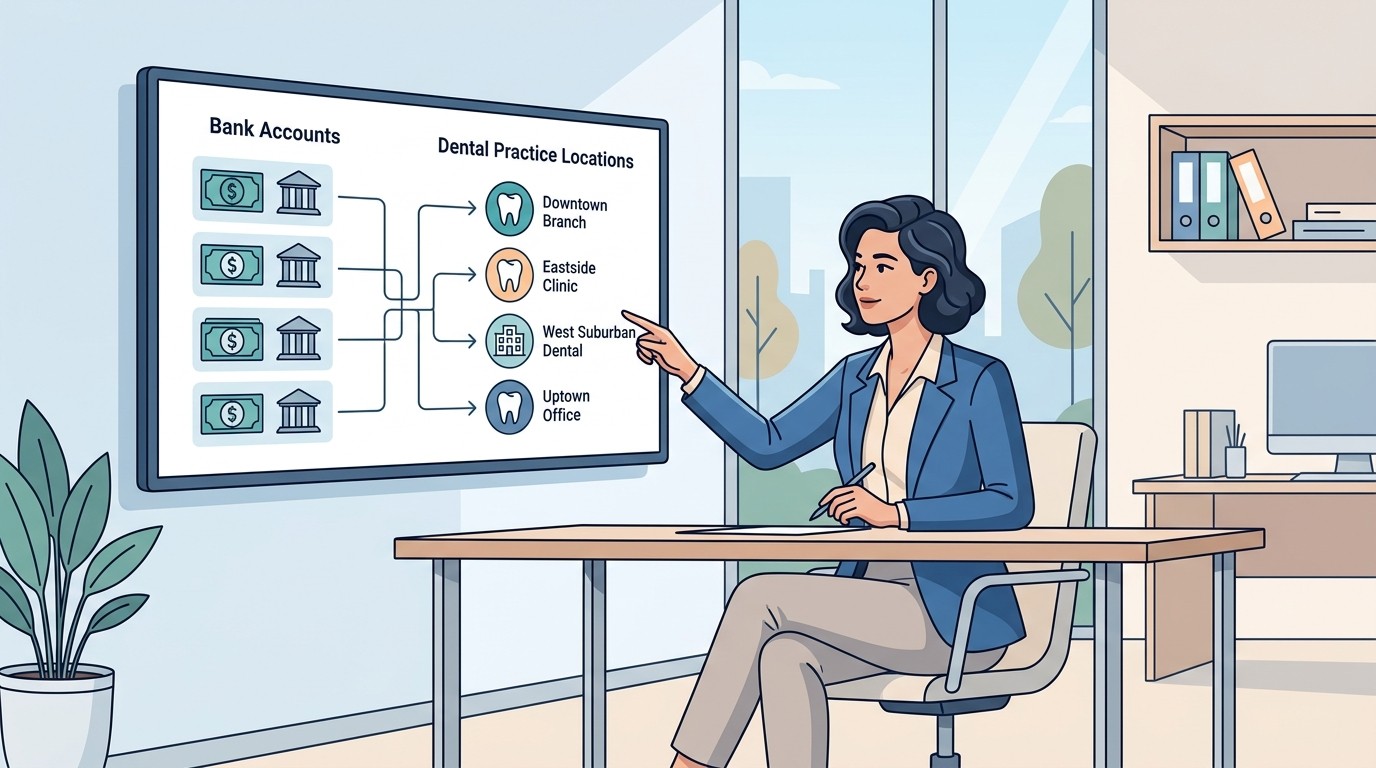
DSOs and multi-location groups. The moment a practice owner operates more than one location, the oversight challenge compounds. Each location has its own staff, its own patterns, and its own potential leakage. A DSO operator cannot be at every practice every day verifying reconciliation. Revenue Integrity at scale is what allows multi-location leaders to know their numbers are right across the portfolio without personally auditing each location.
Practices using outsourced RCM or billing services. Hiring a billing service is common and often operationally correct. It is also a transfer of trust. The practice now relies on the vendor to do the billing work and report accurately on the outcome. Revenue Integrity is the practice owner's independent verification that the outsourced vendor is performing, not underperforming, and not missing patterns that matter. It converts the vendor relationship from blind trust to verified trust.
Practices going through acquisition. Buyers and sellers of dental practices both need Revenue Integrity. The buyer needs independent verification of what they are paying for. The seller benefits from a clean, verified representation of the practice's numbers that makes the deal smoother. A Revenue Integrity audit performed during due diligence saves both parties weeks of dispute and protects against post-closing surprises.
What Revenue Integrity Is Not
Three things Revenue Integrity is often confused with, and is not.
It is not reconciliation software alone. Reconciliation is one of the seven integrity checks. A reconciliation tool answers question one. A Revenue Integrity platform answers all seven. Reconciliation is necessary but not sufficient.
It is not an accounting platform. QuickBooks, Xero, and similar general-ledger systems record what is told to them. They do not verify whether what they were told matches reality. Revenue Integrity sits upstream of accounting and feeds clean, verified numbers into the general ledger rather than relying on it.
It is not a replacement for a CPA or bookkeeper. A good dental CPA interprets your numbers strategically, advises on tax and distribution decisions, and reviews major transactions. Revenue Integrity gives your CPA numbers they can trust, but it does not replace their judgment. The best outcomes happen when Revenue Integrity software and a good CPA work together, each doing what they do best.
How to Evaluate Revenue Integrity Platforms
When evaluating tools in this category, look for coverage across all seven checks rather than depth in one. Some tools are strong on reconciliation but blind to payer underpayment. Others focus on fraud detection but miss unbilled encounters. A real Revenue Integrity platform covers the full set.
Look also at the integration architecture. The tool must connect directly to your practice management system, your bank, your merchant processor, and your clearinghouse, and it must do so through official APIs where they exist. Screen scraping and manual upload workflows break constantly and are HIPAA-fragile.
Look at how the tool handles outsourced billing. If your practice uses an outside RCM vendor, the tool must be able to verify the vendor's output without requiring the vendor's cooperation. The whole point of independent verification is that it does not depend on the party being verified.
Finally, look at the audit trail. Revenue Integrity findings must be traceable back to source transactions with timestamps, user attribution, and the ability to export for forensic accountants or attorneys if needed. A tool that flags problems without providing the underlying evidence is not a complete solution.
Frequently Asked Questions
What is dental revenue integrity?
Dental Revenue Integrity is the continuous verification that every dollar a dental practice earned was billed, every dollar billed was collected, and every dollar collected was kept. It is the verification layer that sits on top of revenue cycle management and ensures reported numbers match actual financial reality.
How is revenue integrity different from revenue cycle management?
Revenue Cycle Management is the operational work of getting paid, claims submission, payment posting, denial management, and AR collection. Revenue Integrity is the verification that this work produced the right outcome. RCM does the cycle. Revenue Integrity validates the cycle. They are complementary, not competitive.
Do I still need an RCM service if I have revenue integrity software?
Yes. Revenue Integrity software does not submit claims, post payments, or work AR. It verifies that whoever is doing that work, whether in-house staff or an outside vendor, is doing it completely and accurately. If your practice does RCM in-house, Revenue Integrity is the check on your staff. If your practice outsources RCM, Revenue Integrity is the check on your vendor.
Can I do revenue integrity manually?
In theory, yes. In practice, no practice does it completely. Manual Revenue Integrity at the scale of a typical dental practice requires a full-time financial controller comparing practice management exports to bank statements, insurance remittances, merchant processor reports, and clinical records every day. The labor cost exceeds the cost of software, and the attention span required exceeds what any one person maintains over years.
How much revenue leakage does the average dental practice have?
Industry data and our own reconciliation of client practices suggests $25,000 to $30,000 in recoverable revenue per $1 million in annual production. This includes unbilled encounters, payer underpayments, reversed collections, unrefunded credits, and adjustments that should not have been taken. The specific distribution varies by practice, but the total is remarkably consistent across practice sizes.
Is revenue integrity only relevant if I suspect embezzlement?
No. Embezzlement is one form of revenue leakage, and Revenue Integrity catches it, but the majority of leakage in most practices is not fraud. It is unbilled services, payer underpayments, sloppy adjustments, and unreturned credit balances. Practices with entirely trustworthy staff still benefit substantially from Revenue Integrity because most leakage is structural, not criminal.
What practice management systems does revenue integrity software support?
The best platforms integrate with the major dental practice management systems including Dentrix, Dentrix Ascend, Open Dental, Eaglesoft, Curve Dental, Denticon, and Cloud 9. If a platform does not support your PMS, the integration usually involves screen scraping or manual uploads, which are not stable enough for the continuous verification that Revenue Integrity requires.
How long does it take to implement revenue integrity software?
Typical implementation is two to four weeks. The time is spent connecting integrations to the practice management system, the bank, the clearinghouse, and the merchant processor, and then baselining the last 90 days of activity so the owner sees real findings from day one of live operation.
Zeldent is the Dental Revenue Integrity platform. We verify that every dollar you earned, you billed; every dollar you billed, you collected; and every dollar you collected, you kept. Practices on Zeldent recover an average of $25,000 to $30,000 per $1 million in annual production within the first year. Schedule a demo to see how Revenue Integrity works for your practice.
Dental Revenue Integrity Audit Checklist
The 7 checks every practice owner should run to verify their revenue is intact. Use it for your internal audit or hand it to your CPA.