Building a Centralized Financial Oversight Model for DSOs
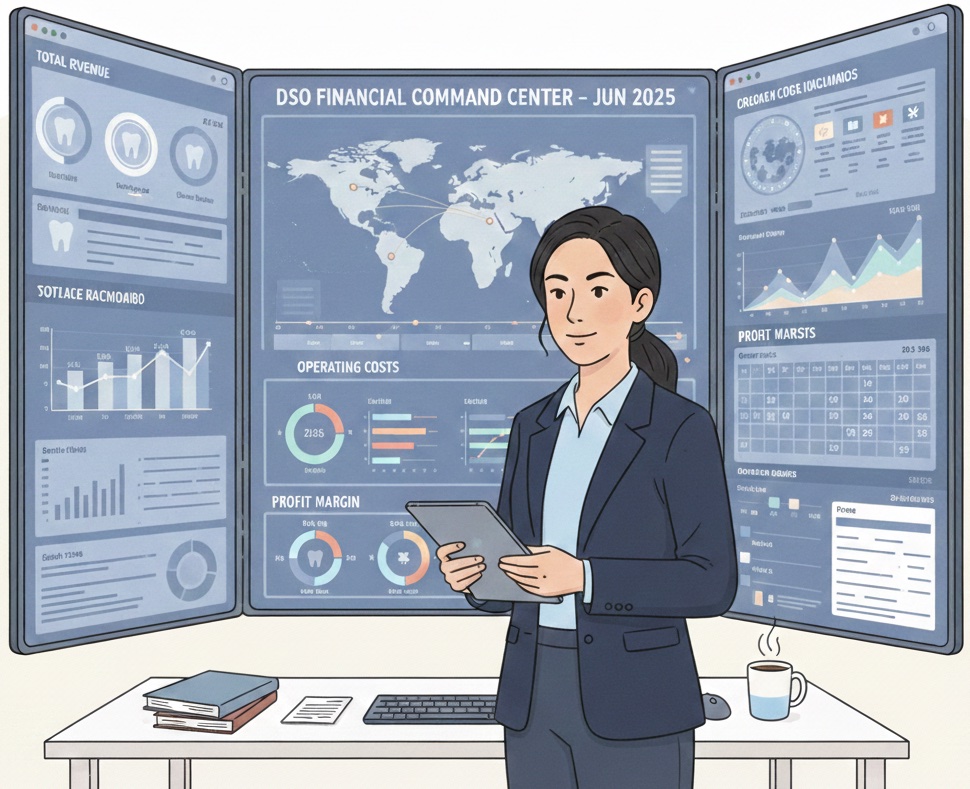
At five locations, you knew what was happening because you could see it yourself. At fifty locations, you only know what the data tells you. Building that data infrastructure is how growing DSOs maintain control.
📚 Part of our DSO series: This article is part of The DSO Financial Operations Playbook, our comprehensive guide to building scalable financial operations across multiple dental practice locations.
The Oversight Imperative
When a DSO grows from a handful of locations to dozens or hundreds, something fundamental changes in how the organization must operate. The founder who once walked the halls of every practice, who knew every office manager by name, who could spot problems just by being present, can no longer rely on personal observation. The organization has outgrown the founder's ability to see it directly.
This transition breaks many growing DSOs. They continue operating as if personal relationships and informal communication can substitute for systematic oversight. Problems fester in locations that leadership rarely visits. Financial irregularities go unnoticed because nobody is looking at the right data. The organization grows in revenue but not in capability, and eventually the lack of infrastructure catches up with them.
The solution is centralized financial oversight: a function, supported by systems and processes, that provides visibility into every location's financial health without requiring anyone to be physically present. This oversight does not replace local accountability. It complements and enables it by ensuring that corporate leadership can see what is happening and intervene when necessary.
Principles of Effective Oversight
Visibility Without Micromanagement
The goal is not to control every decision at every location. That approach does not scale and destroys the local initiative that makes practices successful. The goal is to see enough to identify problems early, verify that standards are being met, and provide support where it is needed.
Think of oversight like a dashboard warning light in a car. You do not need to monitor engine temperature constantly while driving, but you need to know immediately if it spikes into the danger zone. Financial oversight works the same way. Most locations most days are fine, and you do not need to scrutinize them. But when something goes wrong, you need to know about it quickly.
This means defining what matters enough to monitor, setting thresholds that distinguish normal variation from genuine concern, and building systems that surface exceptions rather than requiring you to hunt for them.
Standardization Enables Scale
You cannot provide meaningful oversight if every location operates differently. When each practice has its own procedures, its own definitions, its own reporting formats, comparing them becomes impossible. What looks like a variance at one location might just be a different way of categorizing transactions.
Standardization means common procedures for end-of-day closing, common definitions for what counts as a variance, common reporting formats that allow apples-to-apples comparison, and common expectations for response times and escalation. This standardization is not about eliminating local judgment. It is about creating a common language and framework within which local judgment operates.
The resistance to standardization usually comes from acquired practices that believe their existing processes are superior. Sometimes they are right. When you find genuinely better practices, adopt them across the organization. But the goal is one best way, not fifty different ways that cannot be compared.
Exception-Based Attention
No central team can deeply review every transaction at every location every day. The math does not work. If you have fifty locations each processing hundreds of transactions daily, you have tens of thousands of data points to consider. Manual review of that volume is impossible.
Exception-based oversight focuses attention where it matters. Define what normal looks like. Build systems that flag deviations from normal. Investigate the exceptions while letting normal activity pass through without scrutiny. This approach is both more efficient and more effective than trying to review everything.
The key is calibrating your exception thresholds correctly. Too tight, and you drown in false positives that waste time and create alert fatigue. Too loose, and real problems slip through. Start conservative and adjust based on experience. When an issue surfaces that your exceptions should have caught but did not, tighten the relevant threshold.
Trust But Verify
Centralized oversight is not about distrusting location teams. Most people are honest and competent. Most locations are well-run. Most days, nothing is wrong.
But even honest, competent people make mistakes. Even well-run locations have occasional problems. And unfortunately, some people are not honest, and you often cannot tell which ones until something goes wrong. Verification is how you catch mistakes early, identify locations that need support, and deter the small percentage of bad actors who would exploit the absence of oversight.
Verification should be routine and unsurprising. Everyone should know that deposits are matched to bank records daily, that reconciliation variances are investigated, that audits happen periodically. This visibility itself prevents many problems that would otherwise occur.
Building the Oversight Infrastructure
Data Collection
Oversight requires data, and data collection requires infrastructure. You need reliable flows of information from every location into central systems where it can be analyzed.
For financial oversight, the essential data includes daily deposits by payment type, daily collections per the PMS, variances between the two, and explanations for any discrepancies. This data might flow through automated integrations with PMS platforms and bank feeds, through standardized reports that locations submit, or through some combination of both.
The reliability of this data flow is critical. If locations can simply not submit reports without consequence, your oversight has gaps. If data integrations fail silently without alerting anyone, you have blind spots you do not know about. Build monitoring into your data collection so you know when expected data does not arrive.
Data quality matters as much as data availability. If locations submit reports but the numbers are unreliable, you have information without insight. Validation rules that catch obvious errors, feedback loops that address recurring data quality issues, and consequences for persistent problems all contribute to maintaining data quality.
Reporting and Dashboards
Raw data is not useful until it becomes information that supports decisions. Reporting and dashboards transform data into insight.
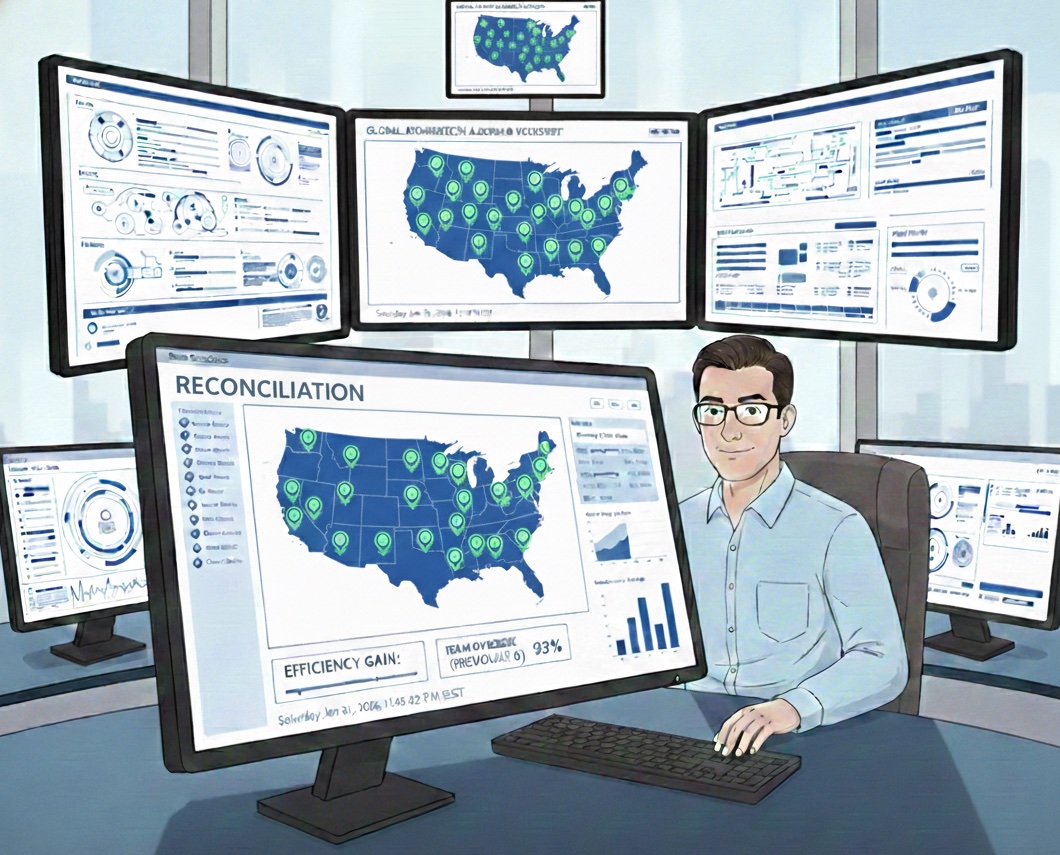
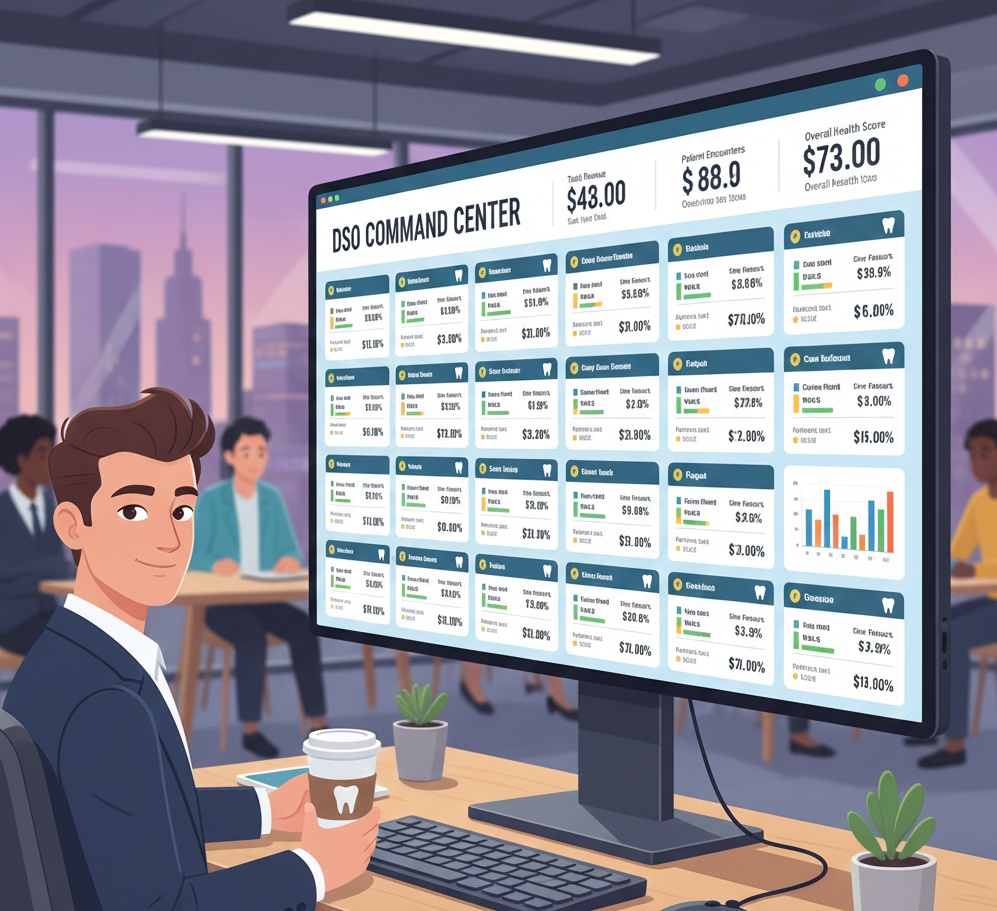
Design your reporting hierarchy to match your organizational structure. Portfolio-level dashboards show overall health and surface locations that need attention. Regional views let regional leaders see their areas of responsibility. Location-level detail supports investigation of specific issues. Each level should answer the questions relevant to that level without overwhelming users with inappropriate detail.
Real-time or near-real-time reporting enables faster response. If you only see yesterday's data tomorrow afternoon, problems have a full day to compound before anyone notices. If you see exceptions within hours of their occurrence, intervention can happen before situations deteriorate.
But beware of dashboard proliferation. Every new metric creates cognitive load. Every new report competes for attention. Focus on the measures that actually drive action. A dashboard with ten critical metrics that everyone reviews daily is more valuable than a hundred metrics that nobody has time to examine.
Alerting and Escalation
Dashboards require people to look at them. Alerts push information to people who need to act.
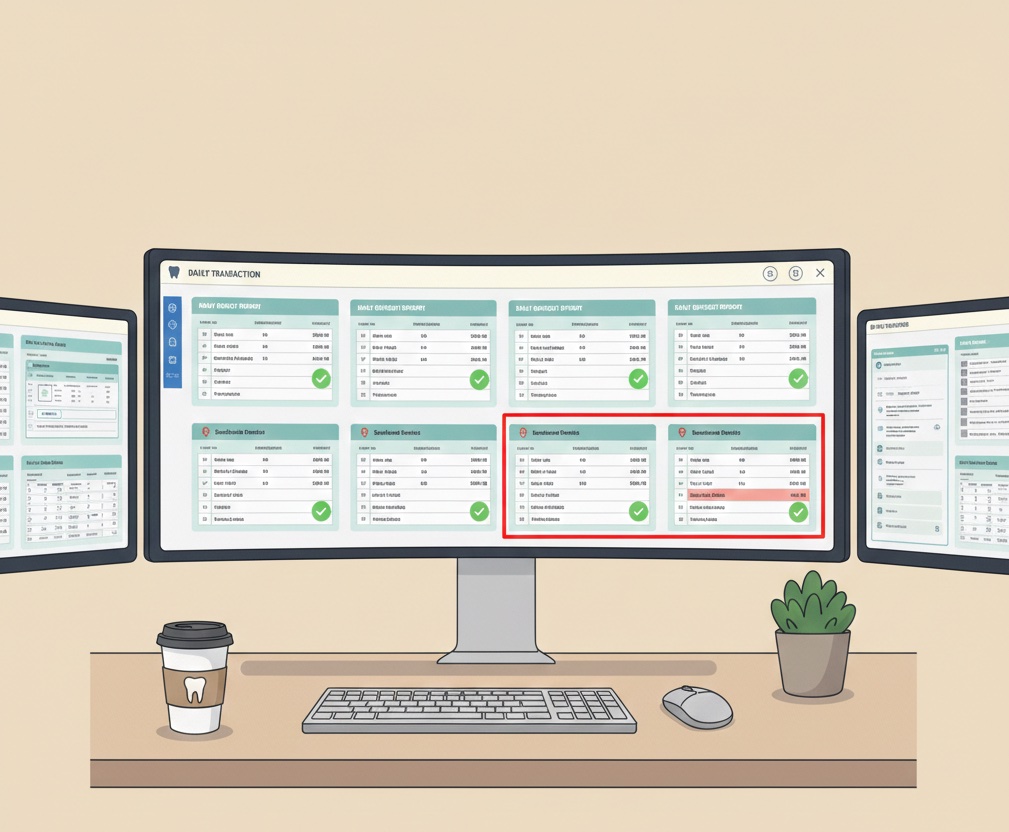
Define alert conditions for situations that require immediate attention. A location that did not deposit when it should have. A variance that exceeds threshold. A pattern that suggests potential fraud. These alerts should go to specific people with specific expectations for response.
Escalation paths define what happens when initial alerts do not result in resolution. If a variance is flagged and not resolved within 24 hours, who gets notified? If a location repeatedly misses submission deadlines, when does regional leadership get involved? Clear escalation paths prevent issues from languishing while everyone assumes someone else is handling them.
Calibrate alert volume carefully. Too many alerts create fatigue that causes people to ignore them. Too few alerts let problems slip through. Monitor alert volume and response rates to identify when adjustments are needed.
Audit and Verification
Ongoing monitoring catches most issues, but periodic audits catch what ongoing monitoring misses and verify that monitoring itself is working correctly.
Design an audit program that covers all locations over a reasonable cycle. Maybe every location gets a detailed audit annually. Maybe you audit a random sample quarterly. Maybe you risk-weight audits to focus more attention on locations with concerning patterns. The specific approach depends on your resources and risk tolerance.
Audits should verify that reported numbers match source documentation, that procedures are being followed as documented, that exceptions were handled appropriately, and that any issues identified in previous audits have been addressed. Document findings and track remediation.
Surprise elements in your audit program deter gaming. If locations know exactly when they will be audited, they can clean up in advance. Random timing and random sampling create healthy uncertainty about when scrutiny might arrive.
Organizational Structure
The Central Finance Team
Centralized oversight requires a team to execute it. This team might be as small as a single controller in an emerging DSO or as large as a multi-person department with specialized roles in a mature organization.
Core functions of the central team include daily reconciliation oversight across all locations, exception investigation and resolution, reporting and dashboard maintenance, audit execution, and process improvement. As the organization grows, these functions might separate into distinct roles with specialists focusing on specific areas.
Hiring for these roles requires attention to both technical skills and disposition. Effective oversight professionals are detail-oriented enough to catch discrepancies, assertive enough to push back on inadequate explanations, diplomatic enough to work effectively with location teams, and systematic enough to maintain consistent processes.
Regional Structure
Large DSOs typically interpose regional leadership between corporate and locations. Regional directors or vice presidents oversee groups of practices and serve as the first line of management for many issues.
Financial oversight should integrate with this regional structure. Regional leaders need visibility into their locations' financial performance. They should receive alerts for issues in their region. They should be responsible for addressing location-level problems before escalation to corporate.
Define clearly what regional leaders are responsible for and what corporate handles directly. If every issue escalates to corporate immediately, regional leaders become ornamental. If corporate never sees anything, dangerous problems might be suppressed locally.
Location Accountability
Centralized oversight does not replace local accountability. Locations remain responsible for their own financial performance, accurate recording and reporting, and prompt resolution of issues.
Clear job descriptions define who at each location is responsible for financial matters. Usually this is the office manager, but the specific role depends on your organization. These individuals should understand their accountability, receive training on your standards and systems, and have support when they need help.
Build location-level accountability into performance management. Financial accuracy metrics should be part of how location leaders are evaluated. Patterns of problems should affect compensation and advancement. Consistent excellence should be recognized and rewarded.
Implementation Roadmap
Building centralized oversight is a journey, not a single project. A typical implementation unfolds over twelve to eighteen months, though timing varies based on organizational complexity and starting point.
The first phase focuses on foundation. Standardize procedures across locations so you are comparing like to like. Implement basic data collection so information flows to the center. Build initial reporting that provides portfolio-level visibility. This phase typically takes three to four months.
The second phase builds sophistication. Implement automated data feeds to reduce manual reporting burden. Develop exception alerting so problems surface proactively. Create dashboards that provide real-time visibility. Establish the audit program. This phase typically takes four to six months.
The third phase focuses on optimization. Refine thresholds and alerts based on experience. Add analytics that identify patterns and predict issues. Integrate financial oversight with other operational systems. Build continuous improvement processes. This phase is ongoing.
Each phase requires change management alongside technical implementation. Location teams need to understand what is expected of them, why the changes matter, and how to succeed in the new environment. Training, communication, and support enable adoption. Enforcement ensures compliance.
The Payoff
DSOs that build effective centralized oversight gain capabilities that their less-organized competitors lack.
Financial accuracy improves because problems are caught early and corrected quickly. Revenue leakage decreases because nothing slips through unnoticed. Fraud risk diminishes because verification creates deterrence and detection.
Decision-making improves because leaders have reliable data to work from. Acquisitions integrate faster because new locations immediately come under the oversight umbrella. Audits and due diligence proceed smoothly because records are organized and accurate.
The organization becomes more valuable because buyers and investors see professional financial management. The management team sleeps better because they know what is happening across the portfolio. And the locations themselves often improve because the discipline of oversight creates accountability that drives better performance.
Building centralized oversight for your DSO? Zeldent provides the automated reconciliation layer that makes portfolio-wide visibility possible. Daily matching across all locations, exception alerting, and dashboards designed for multi-location management. Schedule a demo to see how Zeldent enables oversight at scale.