How DSOs Use Automated Reconciliation to Scale

At ten locations, you had two people reconciling. At fifty locations, you still have two people reconciling. The difference is automation.
📚 Part of our DSO series: This article is part of The DSO Financial Operations Playbook, our comprehensive guide to building scalable financial operations across multiple dental practice locations.
The Scaling Problem
Growing a DSO creates a fundamental tension in financial operations. Every new location adds revenue, which is good. But every new location also adds reconciliation work: more bank accounts, more payment types, more staff to oversee, more opportunities for error.
Without automation, financial operations headcount must grow roughly in proportion to location count. Two analysts can manually reconcile maybe ten to fifteen locations effectively, spending their days pulling reports, comparing numbers, and investigating discrepancies. Add another fifteen locations and you need to add another analyst. The math is simple and unforgiving.
This creates problems that compound with growth. The direct cost of analysts is significant. Finding skilled reconciliation analysts is difficult, and finding enough of them to staff linear growth is even harder. More people means more variation in how work gets done, even with standardized procedures. Managing a large team creates its own overhead.
And perhaps most importantly, manual reconciliation simply cannot keep pace with a rapidly growing organization. While you are searching for, hiring, and training new analysts, locations are being acquired faster than oversight can be established. The gap between where you are and where you need to be widens rather than closes.
Automated reconciliation breaks this pattern. It enables DSOs to scale locations without proportionally scaling finance headcount, to maintain consistent oversight regardless of growth pace, and to actually improve reconciliation quality as the organization expands.
What Automation Does
At its foundation, automated reconciliation performs the same work that manual reconciliation performs. It compares deposits in the bank to collections recorded in practice management systems. It identifies matches where everything aligns. It flags discrepancies where things do not match.
The difference is how it does this work.
Manual reconciliation requires a human to log into the bank portal, download or transcribe deposit information, log into the PMS, pull collection reports, and compare the numbers line by line. For a single location, this might take twenty or thirty minutes on a clean day, longer if there are issues to investigate. Multiply that across dozens of locations and you have consumed entire days of analyst time.
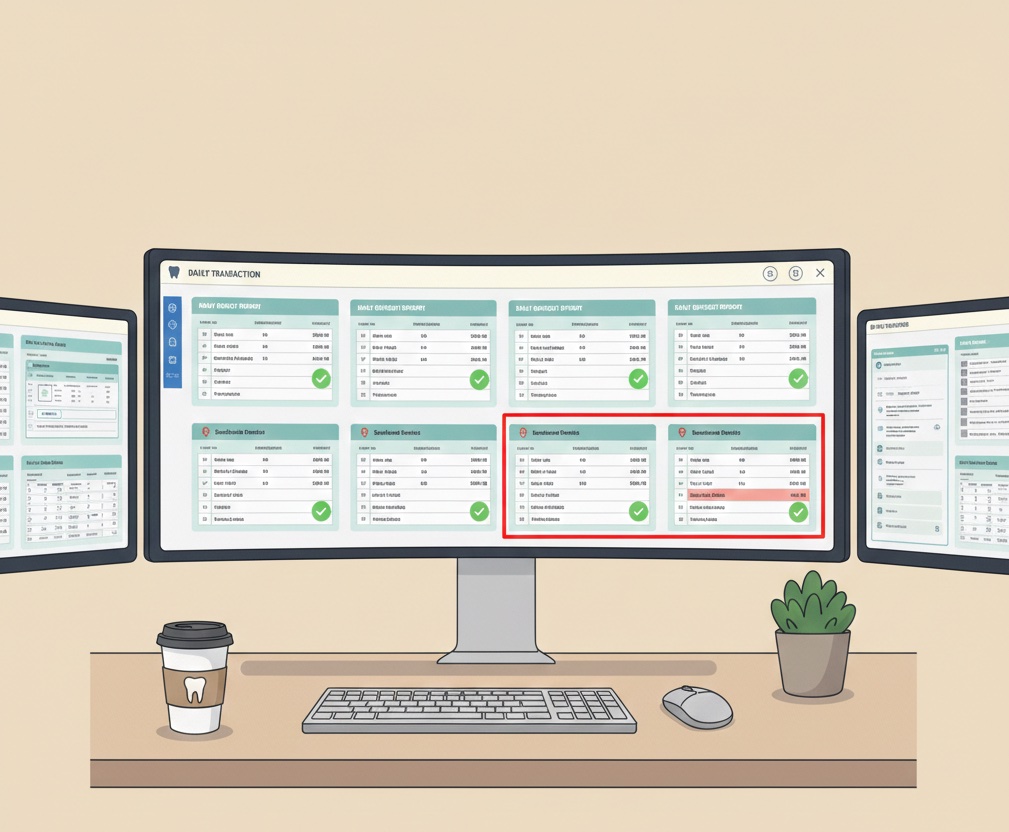
Automated reconciliation pulls data directly from sources through integrations. Bank feeds deliver deposit data without anyone logging in. PMS connections retrieve collection data without anyone running reports. The system compares these data sets using defined rules and presents the results: here are the matches, here are the exceptions.
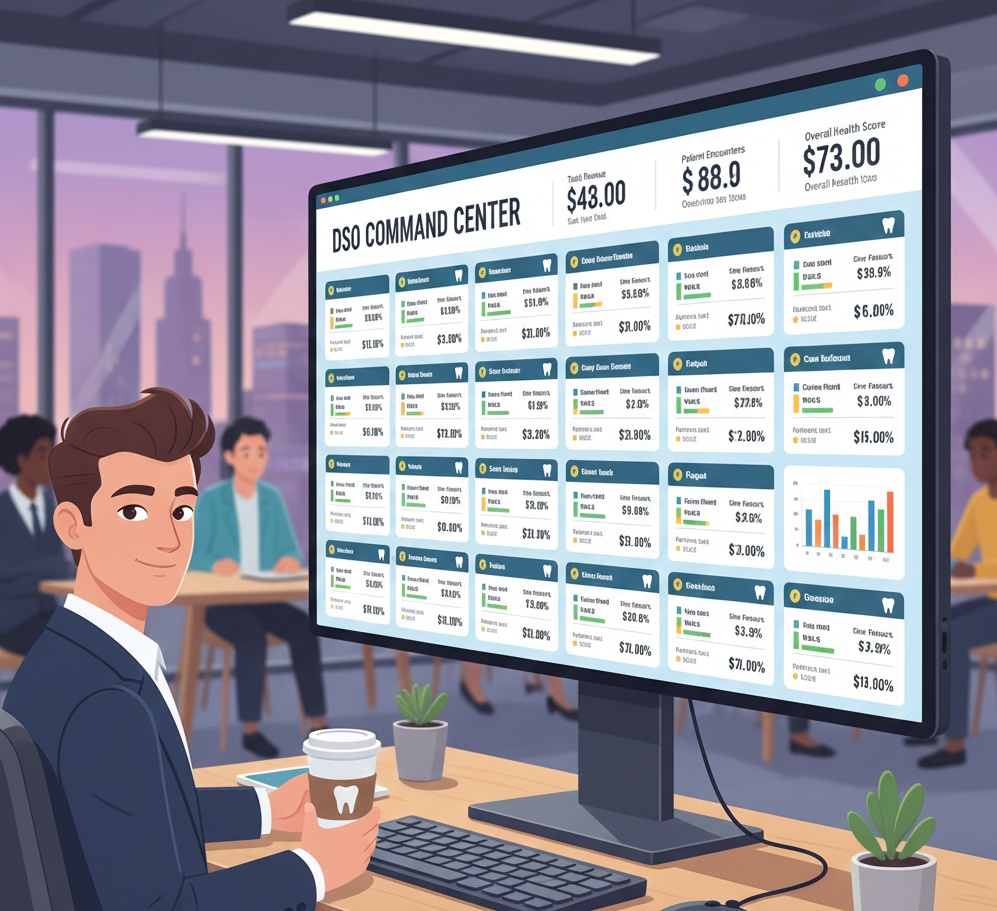
This automation shifts human effort from data gathering and routine comparison to investigation and judgment. Analysts no longer spend their mornings pulling reports and copying numbers into spreadsheets. They start their day looking at an exception list that tells them exactly which locations need attention.
How the Math Changes
Consider the time allocation for manual reconciliation at a single location on a typical day. Pulling bank data takes five minutes. Pulling PMS reports takes another five. Comparing the numbers and verifying the match takes ten minutes when everything is clean. Documenting the reconciliation takes another five. On a day with no issues, that is twenty-five minutes per location.
But days with no issues are not every day. Investigating a variance, even a simple one, easily adds fifteen to thirty minutes. A more complex issue can take an hour or more. Call it forty minutes per location on average when you factor in investigation time.
At forty minutes per location per day, an analyst working eight hours can realistically handle about ten locations, maybe twelve with efficiency. Beyond that, either quality suffers or overtime becomes permanent.
Now consider the same work automated. The system pulls and compares data without human involvement. The analyst reviews the results, which takes maybe two minutes per location when everything matches. On a day with no issues, reviewing twelve locations takes less than half an hour.
When issues arise, the investigation takes the same time it always did. You still need to figure out why the numbers do not match. You still need to call the location, review documentation, and determine the root cause. Automation does not change that.
But instead of spending hours on routine verification before you even find the issues, automation presents the issues immediately. The analyst who used to handle ten locations now handles thirty or forty, because the time freed from routine verification goes toward the exceptions that actually need attention.
The productivity gain is dramatic. Organizations that automate typically see three to four times more locations per analyst. That ratio keeps improving as automation matures and as the organization learns to minimize exception rates through better processes.
Implementation Reality
Automation does not happen by flipping a switch. Implementation is a project that requires planning, effort, and patience.
The foundation is connectivity. The automation system needs to pull data from your banks and your practice management systems. Bank feeds are generally standardized and relatively straightforward to establish. PMS connectivity depends on which systems you run and whether the automation vendor has built integrations for them. Common systems like Dentrix, Eaglesoft, and Open Dental usually have established integrations. Less common systems may require custom work or may not be feasible.
Data quality issues surface during implementation. You discover that PMS configurations vary across locations in ways that affect reporting. You find that payment type categorizations are not consistent. You learn that bank descriptions contain information that helps with matching at some locations but not others. Budget time for data cleanup and standardization as part of implementation.
Matching rules need calibration. Automated matching follows rules: if the deposit date is within one day and the amount matches exactly, call it a match. But what about deposits that post two days later due to weekend timing? What about amounts that differ by a few dollars due to processing fees? Rules that are too strict generate false exceptions. Rules that are too loose miss real problems. Finding the right calibration requires testing and refinement.
Change management accompanies technical implementation. Location staff may need to change how they close out their days. Central finance staff need to learn new workflows. Regional leaders need to understand new reports and dashboards. The technology only works if the organization adopts it.
A typical implementation takes three to six months from decision to full deployment, though simpler environments can move faster and more complex ones take longer. Pilot with a representative subset of locations before expanding to the full portfolio. Learn what works and what needs adjustment before scaling.
Operational Transformation
Automation changes how your reconciliation function operates day to day.
The analyst's morning used to start with data gathering: logging into portals, downloading files, copying information. Now the morning starts with review: opening the dashboard, seeing which locations reconciled cleanly, and focusing immediately on exceptions.
This shift has psychological benefits beyond time savings. Analysts doing manual reconciliation often feel like they are just pushing paper, doing the same tedious tasks every day. Analysts working with automation focus on investigation and problem-solving, which is more engaging work. Job satisfaction tends to improve, which helps with retention.
The nature of exceptions changes too. In a manual environment, many "exceptions" are actually human errors: an analyst who copied a number wrong, a report that was run with incorrect parameters, a comparison that missed a transaction. Automation eliminates these false exceptions because the data is pulled directly from source systems without human transcription.
The exceptions that remain are real: actual discrepancies between what the bank received and what the PMS recorded. These require genuine investigation. The investigation effort is similar to what it was before automation, but analysts spend their time on real issues rather than chasing errors introduced by the manual process itself.
Reporting improves because data is captured systematically. Manual reconciliation generates inconsistent documentation. One analyst documents thoroughly; another cuts corners. Automated systems capture everything the same way every time, creating complete audit trails and enabling meaningful trend analysis.
What You Can Achieve
The direct benefit of automation is efficiency: more locations reconciled per analyst, lower cost per location, ability to grow without proportional headcount growth. These benefits are substantial and measurable.
But the indirect benefits may be more valuable.
Consistency improves because automation applies the same rules everywhere. Every location is evaluated against the same standards with the same thresholds. There is no variation based on which analyst happens to review a particular location or how busy they are that day.
Speed improves because results are available within hours of day-end rather than the following day. Faster visibility enables faster response. An issue identified Monday morning can be investigated and resolved Monday rather than discovered Wednesday and resolved Friday.
Coverage improves because automation can handle volume that would overwhelm manual processes. During rapid growth periods, automation maintains reconciliation standards while the organization catches up with hiring. During acquisitions, new locations come under oversight immediately rather than waiting for available analyst capacity.
Risk management improves because anomalies are detected systematically. Patterns that suggest fraud, operational breakdown, or emerging problems surface through exception trends rather than waiting for someone to notice. The organization shifts from reactive to proactive.
And perhaps most importantly for growing DSOs, scale stops being a constraint. You can acquire new locations confident that financial oversight will be maintained. You can plan growth without wondering whether your finance team can keep up. The infrastructure that supports ten locations scales to support a hundred.
Measuring Automation Success
Track metrics that reveal whether automation is delivering expected value.
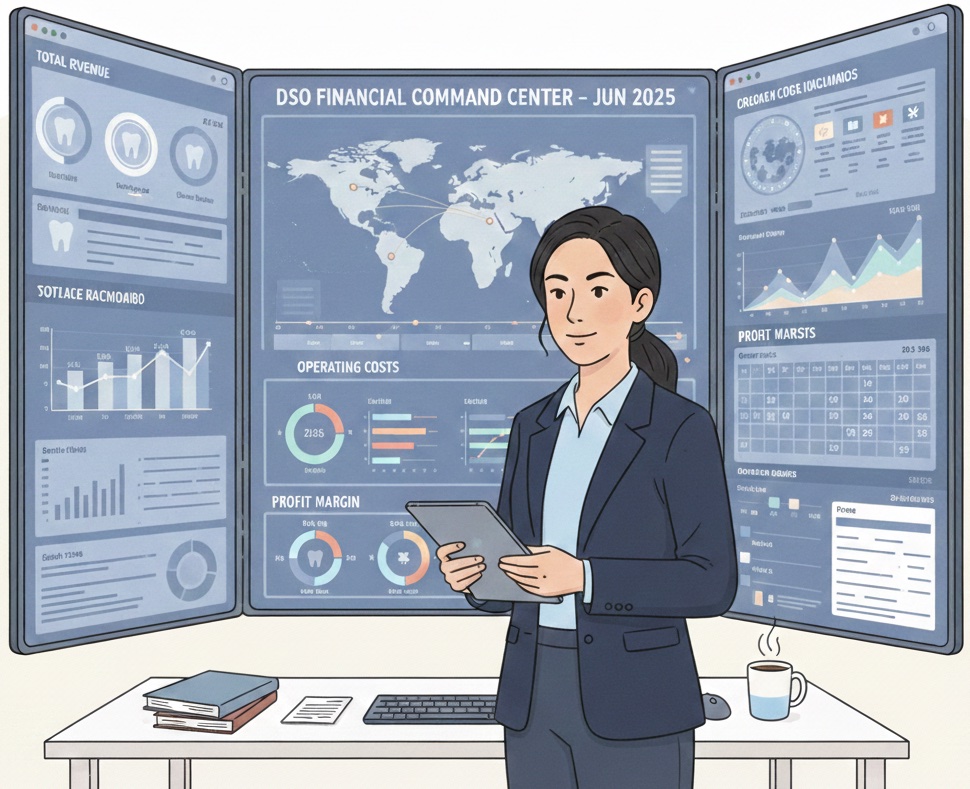
Efficiency metrics show productivity improvement. Time per location should decrease substantially. Locations per analyst should increase. Total hours spent on reconciliation should decline relative to portfolio size. If these metrics are not improving, implementation may be incomplete or adoption may be lagging.
Quality metrics show whether reconciliation is actually happening. Exception resolution time should improve because analysts can focus on investigation rather than data gathering. Match rate should improve over time as data quality issues are addressed and processes stabilize. Aged unresolved items should decrease because nothing falls through the cracks.
Business impact metrics connect reconciliation to organizational outcomes. Revenue recovered from identified discrepancies, fraud prevented or detected, audit findings related to reconciliation, and time to integrate acquisitions all reflect the value automation provides beyond pure efficiency.
Review these metrics regularly. Compare actual results to the projections used to justify the automation investment. When results fall short, investigate why and address the gaps.
Ready to scale your DSO without scaling your finance headcount? Zeldent provides automated reconciliation built for multi-location dental organizations. Add locations without adding analysts. Get visibility across your entire portfolio from day one. Schedule a demo to see how automation enables scale.