Revenue Reconciliation at Scale: A DSO Finance Leader's Guide
At ten locations, reconciliation is a process. At a hundred locations, it is an organizational capability. Building that capability is how DSO finance leaders protect revenue across their portfolios.
📚 Part of our DSO series: This article is part of The DSO Financial Operations Playbook, our comprehensive guide to building scalable financial operations across multiple dental practice locations.
The Scale Challenge
The reconciliation process that works at five locations breaks at fifty. The controller who could personally verify every deposit when you had a handful of practices cannot possibly maintain that level of attention across a large portfolio. The informal communication that surfaced problems in a small organization gets lost in the noise of a big one.
This is not a failure of people or effort. It is a failure of approach. Methods that rely on individual heroics, personal relationships, and manual processes simply do not scale. Every DSO that grows significantly faces the moment when they must transform reconciliation from something people do into something the organization does.
Finance leaders who navigate this transformation successfully build organizations where reconciliation happens reliably regardless of which specific people are involved, where problems surface systematically rather than accidentally, and where growth creates leverage rather than chaos. Those who fail to make the transformation find themselves perpetually fighting fires, never confident in their numbers, and constrained in their ability to grow.
Organizational Foundations
Designing the Function
Before thinking about processes or technology, think about organization. Who owns reconciliation? What authority do they have? How do they relate to the locations they oversee?
In small DSOs, reconciliation often lives with a controller who wears many hats. As the organization grows, reconciliation typically becomes its own function, sometimes reporting to the controller, sometimes to a VP of Finance, sometimes directly to the CFO. The specific reporting relationship matters less than clarity about ownership and appropriate authority.
The central reconciliation function needs authority to require information from locations, to investigate variances, and to escalate when standards are not met. Without this authority, the function becomes advisory rather than operational. People can ignore it, and eventually they will.
Define the relationship between central finance and location staff clearly. Location office managers are typically responsible for their daily closeout and for responding to inquiries from corporate. Regional leaders are responsible for ensuring their locations comply with standards. Corporate finance is responsible for oversight, verification, and exception management. Everyone should understand their role and the roles of others.
Building the Team
The people who staff your reconciliation function determine its effectiveness. This is not entry-level work to be given to whoever is available. It requires attention to detail, analytical capability, and the ability to push back professionally when explanations do not make sense.
At minimum scale, you need someone who can review reconciliation status across all locations daily, investigate exceptions, and maintain documentation. As you grow, you add capacity: more analysts, specialized roles for different aspects of reconciliation, supervisors who manage the analysts. Very large DSOs may have teams of ten or more people dedicated to revenue verification.
Training matters as much as hiring. Even capable people need to understand your specific systems, your specific thresholds, and your specific escalation paths. Build training programs that create consistency across the team. Document procedures so that knowledge is not trapped in individual heads.
Consider career paths. Reconciliation can be a stepping stone to broader finance roles, which helps with both recruitment and retention. People work harder and stay longer when they see a future beyond their current position.
Process Design
Effective processes share common characteristics: they are documented, they are standardized, they focus attention on exceptions, and they include clear escalation paths.
Documentation means writing down what should happen, step by step. This seems obvious but is surprisingly rare. Many DSOs operate on tribal knowledge where procedures exist only in people's heads. When those people leave or are unavailable, the procedures leave with them. Written documentation survives personnel changes and enables consistent training.
Standardization means doing things the same way across locations and across time. When every location follows the same end-of-day procedures and submits the same reports in the same formats, comparison becomes meaningful. When every location does things differently, you are not really reconciling a portfolio; you are reconciling dozens of independent practices with no common baseline.
Exception-based management means focusing human attention on things that need human attention. If 90% of locations reconcile cleanly on 90% of days, reviewing all of them is wasteful. Build processes that surface the 10% that need investigation and let the rest flow through with minimal touch.
Escalation paths define what happens when standard processes fail. When a variance is not resolved within 24 hours, who gets notified? When a location repeatedly misses deadlines, when does it become a performance issue? Clear escalation prevents problems from aging indefinitely while everyone assumes someone else is handling them.
Technology Infrastructure
What Technology Should Do
Technology serves the organization, not the other way around. Before evaluating tools, be clear about what you need technology to accomplish.
Data collection is the foundation. You need deposit data from banks and collection data from practice management systems to flow reliably into a central location where they can be compared. Manual data collection at scale is slow, error-prone, and expensive. Automated feeds are faster, more reliable, and ultimately cheaper.
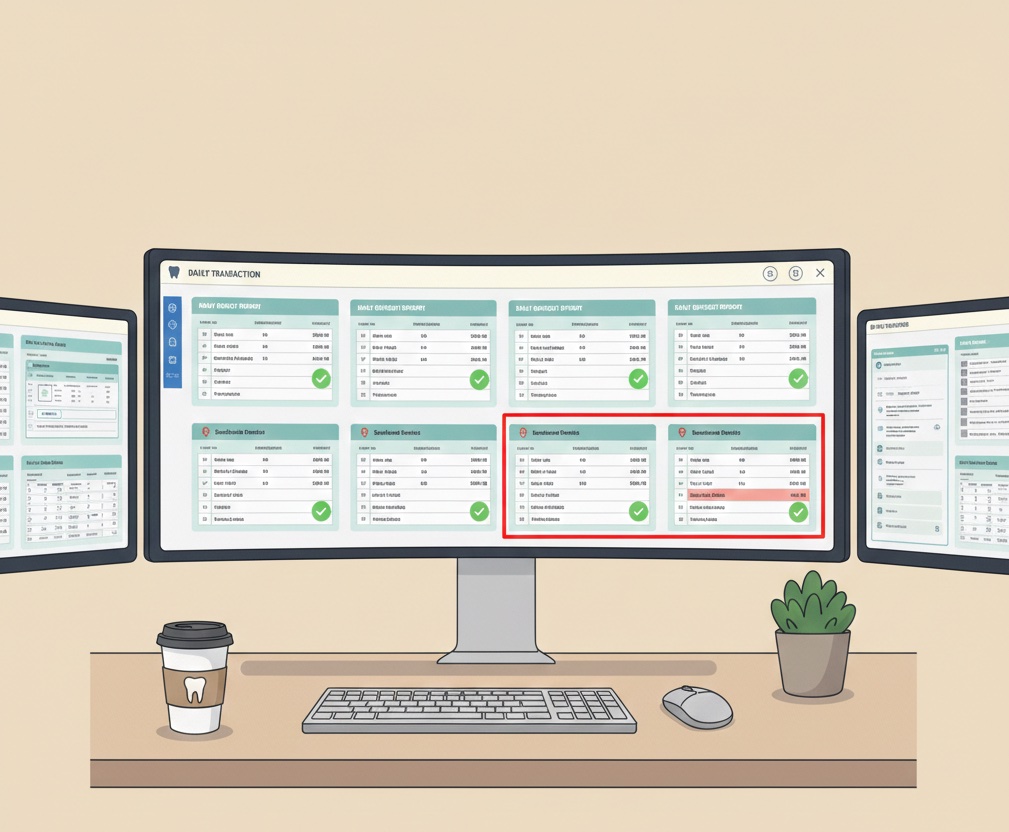
Matching is the core function. Comparing deposits to collections, identifying matches, and flagging discrepancies. At scale, this comparison involves thousands of transactions daily. Manual matching is not feasible. Automated matching with clear rules handles the volume.
Exception management is where human judgment applies. Once matching identifies discrepancies, those discrepancies need investigation, documentation, and resolution. Technology can facilitate this workflow, but humans must execute it.
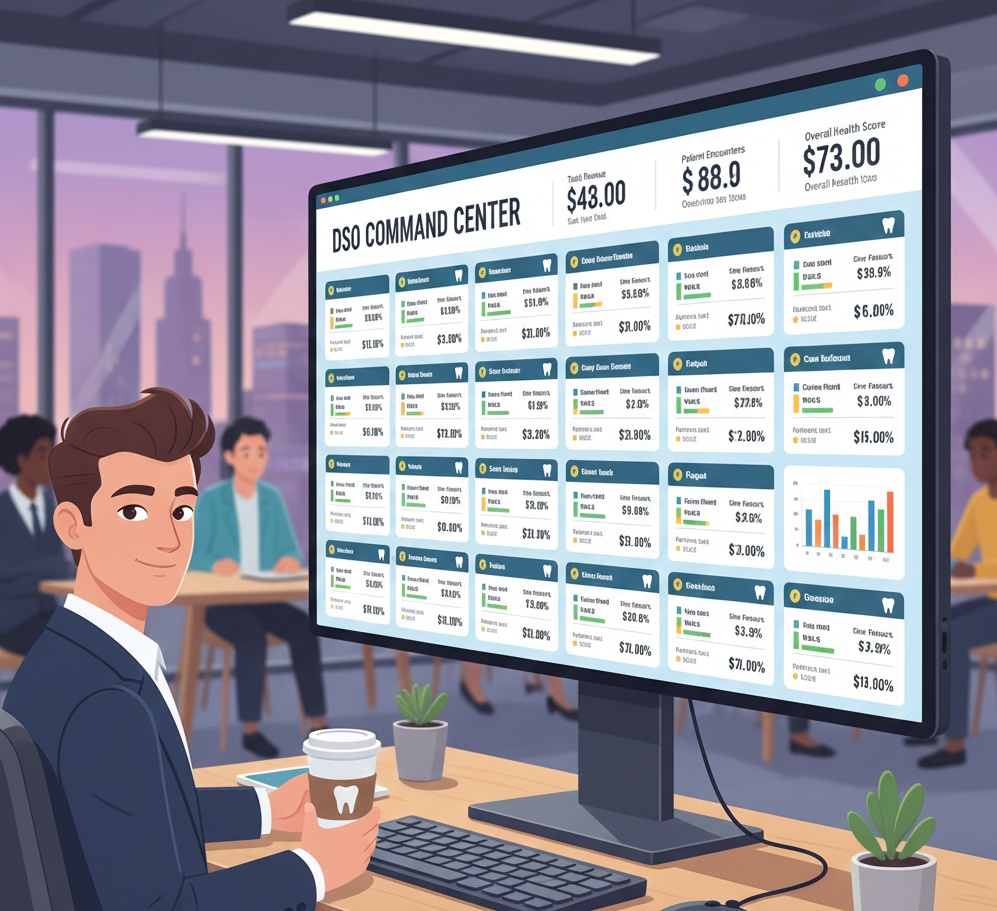
Reporting and analytics turn data into insight. Dashboards that show current status, trends over time, and comparisons across locations enable both operational management and strategic decision-making.
Evaluating Tools
The market offers various reconciliation tools with different capabilities and price points. Evaluating them requires clarity about your needs and realistic assessment of implementation complexity.
Consider integration capability. Does the tool connect to your PMS platforms and banks? Direct integration is better than manual data loads. But integration with less common systems may require custom work or may not be possible.
Consider multi-location support. A tool designed for single practices will not work well at portfolio scale. You need consolidated views, location-level drill-down, and the ability to manage many entities efficiently.
Consider scalability. What works for your current size should still work when you double. Adding locations should be straightforward, not a major implementation effort each time.
Consider total cost of ownership. License fees are only part of the cost. Implementation, training, ongoing maintenance, and the staff time required to operate the system all contribute. Cheap tools that require extensive manual work may cost more than expensive tools that automate effectively.
Implementation Reality
Technology implementation is harder than vendors suggest. Plan for a longer timeline and more effort than the sales pitch implies.
Start with a pilot. Select a subset of locations that represent your diversity of PMS platforms, banking arrangements, and operational maturity. Implement fully with this pilot group. Learn what works and what does not. Refine before expanding.
Expect data quality issues. When you start connecting systems, you discover that data is not as clean as everyone assumed. PMS configurations vary. Bank feeds have quirks. Payment type mappings do not align. Plan time for data cleanup and standardization.
Invest in training. Tools are only as good as the people using them. Rushed training leads to underutilization, workarounds, and frustration. Thorough training enables adoption.
Plan for change management. New tools mean new workflows. People who were comfortable with old processes may resist new ones. Communication, training, and patience help organizations adapt. So does clear expectation that the new way is not optional.
Managing Growth
Integrating Acquisitions
Every acquisition tests your reconciliation infrastructure. A new practice arrives with its own PMS, its own bank accounts, its own procedures, and its own people. Integrating it into your reconciliation framework is a concrete, time-bound project that must happen alongside all the other integration work.
Build a standard integration playbook. What happens in week one? What happens in month one? When should the practice be fully on your reconciliation standards? Having a playbook enables consistent execution and prevents integration from being reinvented each time.
Prioritize early visibility. Even before full integration, you need to see what is happening at the acquired practice. Temporary manual reporting may be necessary while automated feeds are established. Do not let new locations operate in darkness just because integration is not complete.
Assess acquired practices for reconciliation health. What did their reconciliation look like before acquisition? Are there existing problems that need cleanup? Understanding the baseline helps you plan integration appropriately and avoid surprises.
Scaling the Team
Growth requires adding capacity, but the relationship between locations and headcount should not be linear. If you need one analyst per ten locations, you will eventually drown in headcount costs. The goal is productivity improvement, where each analyst can handle more locations as your processes and technology mature.
Track productivity metrics. Locations per analyst, time to investigate exceptions, volume of manual work remaining. These metrics show whether you are achieving scale economies or just adding bodies.
When you add people, add capability. Each new hire should bring something the team needs, whether that is specific technical skills, experience with a PMS platform, or analytical depth. Hiring for interchangeable capacity is sometimes necessary but should not be the default.
Maintaining Standards
Growth creates pressure to relax standards. There are always reasons why a particular location or situation is special, why the standard process cannot apply, why exceptions should be made.
Resist this pressure. Standards that bend under pressure are not really standards. Exceptions proliferate. Complexity accumulates. Eventually you have no real standards at all, just a collection of special cases.
This does not mean standards should never change. When a standard is genuinely wrong, fix it for everyone. When a standard needs updating because the organization has evolved, update it deliberately. But changing standards is different from making exceptions. Exceptions undermine consistency; deliberate changes improve it.
Metrics and Monitoring
What to Measure
Measuring the right things enables management. Measuring the wrong things creates perverse incentives or wastes effort.
For reconciliation, essential metrics include match rate (what percentage of transactions reconcile automatically), exception rate (what percentage require investigation), resolution time (how long do exceptions take to close), and accuracy (when you investigate exceptions, what percentage are real issues versus false positives).
These metrics should be tracked at multiple levels: individual analyst performance, location performance, regional performance, and portfolio performance. Different levels surface different insights. An analyst with slow resolution time needs coaching. A location with high exception rate needs process intervention. A region with consistent problems needs leadership attention.
Trend matters more than snapshot. A 95% match rate is good or bad depending on whether you were at 90% last year or at 98%. Improving metrics indicate a function that is getting better. Declining metrics indicate emerging problems.
Using Metrics for Improvement
Metrics are not just for reporting. They are for improvement.
When metrics reveal problems, investigate root causes. High exception rates at a location might indicate training gaps, system configuration issues, or staffing problems. Understanding the cause enables appropriate response.
Set targets that drive improvement without creating dysfunction. Achievable stretch goals motivate effort. Impossible targets create gaming, burnout, or resignation. Calibrate targets to what is realistic given current capability and planned investments.
Share metrics broadly. When locations can see their performance relative to peers, accountability increases. When the organization can see overall performance, alignment improves. Transparency builds a culture where financial accuracy matters.
The Strategic Value
Finance leaders who build reconciliation capability at scale create strategic value for their organizations.
Financial accuracy improves decision-making. When leaders trust the numbers, they make better decisions. When numbers are suspect, decisions are hedged or delayed.
Revenue protection accumulates over time. Catching leakage at dozens of locations adds up to significant money. Preventing fraud across a large portfolio protects substantial value.
Operational discipline extends beyond finance. Organizations that master reconciliation tend to be disciplined in other areas as well. The same attention to process and measurement that makes reconciliation work applies to clinical quality, patient experience, and operational efficiency.
Exit value increases when financials are clean. PE firms and strategic buyers pay premiums for organizations with strong financial controls. The work you do building reconciliation capability is work that compounds when it comes time to transact.
Building reconciliation at scale? Zeldent provides the technology layer that enables portfolio-wide reconciliation without proportional headcount growth. Automated matching, exception management, and portfolio dashboards designed for DSO finance leaders. Schedule a demo to see how Zeldent supports scale.