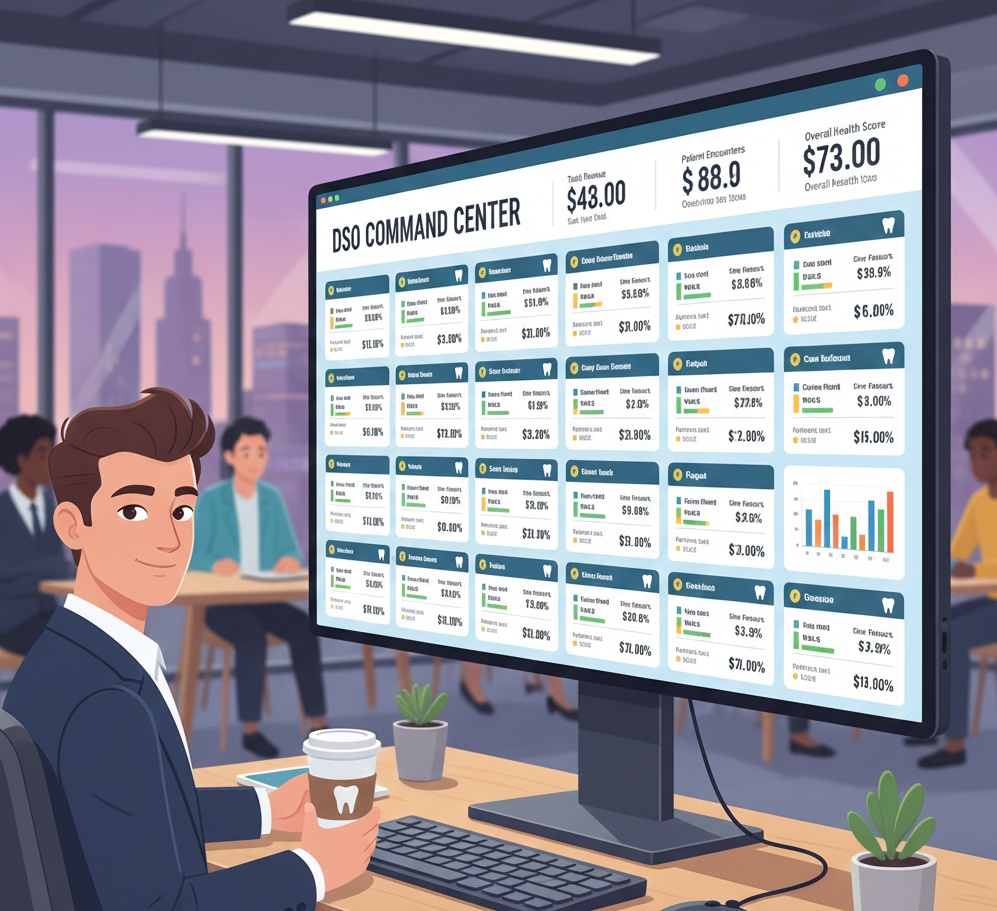
Multi-Location Deposit Reconciliation: A DSO Controller Guide
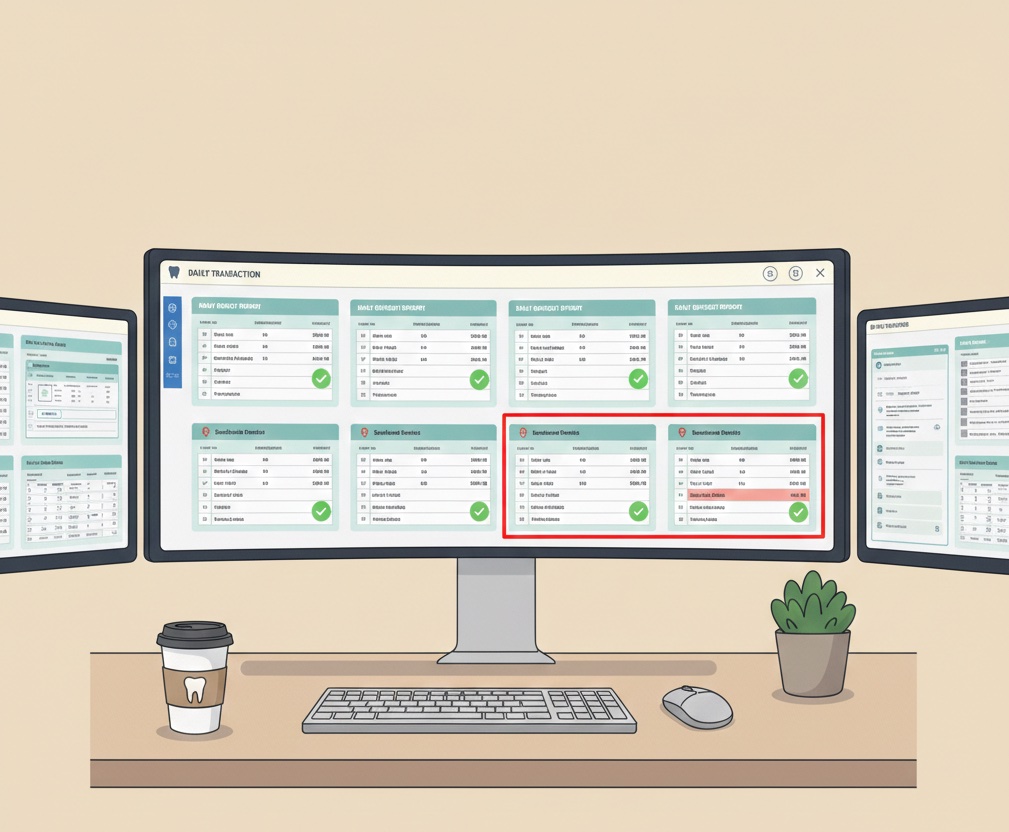
Yesterday, 12 locations deposited $187,000 combined. This morning, you need to verify every dollar is accounted for. Here is how controllers actually do it.
📚 Part of our DSO series: This article is part of The DSO Financial Operations Playbook, our comprehensive guide to building scalable financial operations across multiple dental practice locations.
The Controller's Daily Reality
As a DSO controller, deposit reconciliation is not a theoretical exercise. It is a daily operational requirement with real deadlines and real consequences. Every location generates deposits. Every deposit needs verification. Every variance needs investigation before it ages into something harder to solve.
The challenge is doing this efficiently across multiple locations without letting issues slip through the cracks. You cannot spend three hours per location every day. You need systems and routines that surface problems quickly while letting clean locations pass through with minimal attention.
This guide provides tactical, hands-on guidance for controllers who live this reality every day. Not theory about why reconciliation matters, but practical approaches to getting it done across a portfolio of dental practices.
The Morning Routine
The first thirty minutes of your day should give you visibility into yesterday's activity across all locations. This is not deep investigation time. This is triage time, separating locations that need attention from those that are fine.
Start by pulling bank activity. If you have a treasury management system or consolidated banking dashboard, this should be a single view showing prior-day deposits for all location accounts. Note the deposit amounts and look for anything unusual: missing deposits where you expected activity, amounts that seem off for a typical day, or unexpected transactions like returned items.
Next, gather your PMS deposit reports. Depending on your setup, locations may submit these to you, or you may pull them directly from centralized systems. Either way, you need yesterday's deposit total from each location's practice management system. If any locations have not submitted their reports, note them for follow-up.
Now compare. For each location, does the bank deposit match what the PMS says should have been deposited? This comparison should take only a few seconds per location when everything is clean. Flag any location where the numbers differ by more than your threshold, typically somewhere between $100 and $500 depending on your organization's standards.
By the end of thirty minutes, you should know which locations reconciled cleanly and which need investigation. The clean ones are done for the day. The flagged ones become your work queue.
Investigating Variances
When you find a variance, resist the urge to immediately call the location. First, consider what might explain it without requiring their input.
Timing differences are the most common innocent explanation. A deposit made late in the day might not post until the following business day. A credit card batch settled after the bank's cutoff might appear tomorrow instead of today. Check whether yesterday's variance resolves with today's deposit before assuming something is wrong.
Payment type mismatches often explain variances that do not resolve with timing. If the location's credit card total does not match their merchant batch, someone may have posted a cash payment as a credit card or vice versa. These are data entry errors, not missing money, but they still need correction.
If you cannot explain the variance from your desk, then contact the location. Be specific about what you need. "Your deposit report shows $8,432 but the bank received $8,147. Can you help me understand the $285 difference?" is better than "your numbers don't match." Specific questions get faster answers.
Document what you find. For every variance, record when you identified it, what you investigated, what the explanation was, and when it was resolved. This documentation serves multiple purposes: it creates audit trails, helps identify patterns, and protects you if questions arise later.
Managing Multiple PMS Platforms
Most DSOs end up running multiple practice management systems, either through acquisitions that brought different platforms or through deliberate decisions to use different systems for different practice types. This creates reconciliation complexity because each platform reports differently.
Dentrix generates a Day Sheet and Deposit Slip report that provide what you need, but the navigation and exact report names may vary by version. Eaglesoft has similar capabilities but organizes them differently. Open Dental provides strong reporting but requires knowing which reports to pull. Curve and other cloud-based systems often make data more accessible but may use different terminology.
The solution is standardization of outputs, not inputs. You cannot force every location onto the same PMS, at least not quickly. But you can require every location to submit the same information in the same format regardless of what system generated it.
Define what you need: total deposits by payment type, deposit date, any exceptions or notes. Create a template that works across platforms. Train locations on completing it from their specific system. This way your reconciliation process stays consistent even as source systems vary.
Some platforms make this harder than others. Legacy systems might lack easy export capabilities. Newer systems might provide data in formats that do not match your template. Work with your IT team or PMS vendors to find solutions, whether that means custom reports, data exports, or manual translation.
Bank Account Structures
How your DSO structures bank accounts significantly affects reconciliation complexity. There is no universally right answer, but understanding the tradeoffs helps you optimize your approach.
A single centralized account simplifies cash management. All locations deposit to one place. You have one account to monitor, one balance to manage, one set of bank fees. But reconciliation becomes harder because you must identify which location each deposit came from. Deposit reference numbers and clear location naming conventions become essential.
Location-level accounts provide clearer visibility. Each location's deposits appear in their own account. Matching deposits to locations is trivial. But you now have dozens of accounts to monitor, more bank fees, and cash scattered across accounts that may need concentration or sweeping.
Hybrid approaches balance these concerns. Regional accounts group nearby locations. Payment-type separation routes insurance to one account and patient payments to another. The right structure depends on your size, banking relationships, and operational preferences.
Whatever structure you use, make sure your reconciliation process matches it. If deposits are commingled, your process must include location identification. If deposits are separated, your process must aggregate them for portfolio-level views.
The Locations That Always Have Problems
Every controller knows them. The location where something is always wrong. The manager who always has an excuse. The practice that never submits reports on time.
The late reporter is frustrating but manageable. Set clear deadlines with explicit consequences. Automate report submission where possible. Escalate to regional leadership when deadlines are repeatedly missed. Sometimes the problem is the person, but sometimes it is a process issue that nobody addressed.
The variance factory is more concerning. If a location consistently has reconciliation discrepancies, something systematic is wrong. Maybe their EOD procedures are broken. Maybe they have a training gap. Maybe they have a theft problem. A pattern of variances demands on-site investigation, not just repeated phone calls asking for explanations.
The system blamer deflects responsibility by claiming the PMS is wrong. Sometimes they are right, and you should verify against independent sources before dismissing the claim. But if the system is always blamed and never investigated, you are probably hearing excuses rather than explanations.
The holiday backlog is predictable and manageable. Holidays and vacations create gaps that must be caught up. Build catch-up time into post-holiday schedules. Provide corporate coverage for critical locations. Adjust deadlines reasonably while maintaining expectations.
Building Location Accountability
Accountability requires clarity. Every location should understand exactly what is expected: which reports to submit, when to submit them, what constitutes an acceptable variance, and who to contact with questions. Document these expectations. Include them in training. Reinforce them regularly.
Accountability also requires visibility. Let locations see how they compare to peers. Share reconciliation accuracy rankings. Publish variance frequency reports. Show resolution time metrics. When a location can see that they are the only one consistently missing deadlines, peer pressure supplements management pressure.
Recognize strong performers. The locations that consistently reconcile cleanly deserve acknowledgment. Share their practices as examples. Consider tying incentives to financial accuracy. Positive reinforcement builds culture more effectively than constant criticism.
But accountability ultimately requires consequences. When locations persistently fail to meet standards despite clear expectations and support, escalation is necessary. Document the failures. Communicate clearly that the situation must change. Involve regional leadership. If necessary, use performance management processes. Accountability without consequences is just wishful thinking.
The Monthly Roll-Up
Daily reconciliation feeds into monthly close. By month-end, you should have no outstanding variances from any day in the month. Every deposit should be matched and documented.
Before declaring a location's month closed, verify that all daily reconciliations are complete, all variances have been investigated and resolved, any unidentified deposits have been traced, and credit balance activity has been reviewed. This verification should be routine, not heroic. If you have been reconciling daily, month-end is just confirmation that everything stayed clean.
Consider requiring location managers to certify their monthly reconciliation. A formal statement that all deposits are accurately reported and all variances are resolved creates personal accountability. It also creates an audit trail showing who attested to the accuracy of each location's financials.
Prepare a monthly summary for finance leadership. Show portfolio-level reconciliation status, highlight any locations with issues, present variance trends, and recommend process improvements. Leadership should understand both the overall health of the portfolio and any specific concerns requiring attention.
Technology and Automation
Automation transforms reconciliation from a time-consuming manual process to an exception-driven workflow. Bank feed integration pulls deposit data automatically, eliminating manual data entry and the errors that come with it. Automated matching compares deposits to PMS records and identifies discrepancies without human calculation. Alerting notifies you when thresholds are breached rather than requiring you to check every location.
But automation does not eliminate the need for human judgment. Investigating why a variance occurred still requires thought. Determining appropriate resolution still requires decision-making. Working with location staff still requires communication skills. Automation handles the routine so you can focus on the exceptions.
When evaluating reconciliation tools, consider multi-location support, integration with your PMS platforms, bank feed capabilities, exception alerting, audit trail documentation, and scalability for growth. The right tool dramatically improves productivity. The wrong tool creates new problems without solving old ones.
Building Your Rhythm
Effective multi-location reconciliation requires consistent rhythm. The same tasks done the same way at the same time create efficiency through habit.
Daily, spend your first thirty minutes on the morning review. Investigate flagged exceptions. Document resolutions. By midday, you should have a clear picture of where things stand.
Weekly, review any aged items that have not resolved. Check location compliance with submission deadlines. Escalate persistent issues. Look for patterns that suggest process problems rather than one-time errors.
Monthly, complete the close process. Obtain certifications. Prepare leadership reporting. Review the month's trends and identify improvement opportunities.
Quarterly, step back for bigger-picture analysis. How are variance rates trending? Which locations consistently perform well or poorly? What process changes might improve results? Are your thresholds and procedures still appropriate as the organization grows?
Consistency creates efficiency. Rhythm creates accountability. Together they create a reconciliation function that scales with the organization rather than becoming a bottleneck.
Managing deposit reconciliation across multiple locations? Zeldent gives DSO controllers instant visibility into every location's reconciliation status. Automated matching, variance detection, and exception alerting let you focus on issues rather than routine verification. Schedule a demo to see multi-location reconciliation designed for controllers.