Lassie AI for Dental Practices: What It Does, and the Independent Audit That Belongs Alongside It

Automating how payments get posted and verifying that those payments are real are two different jobs. The best practices do both, and keep them apart on purpose.
What Lassie is
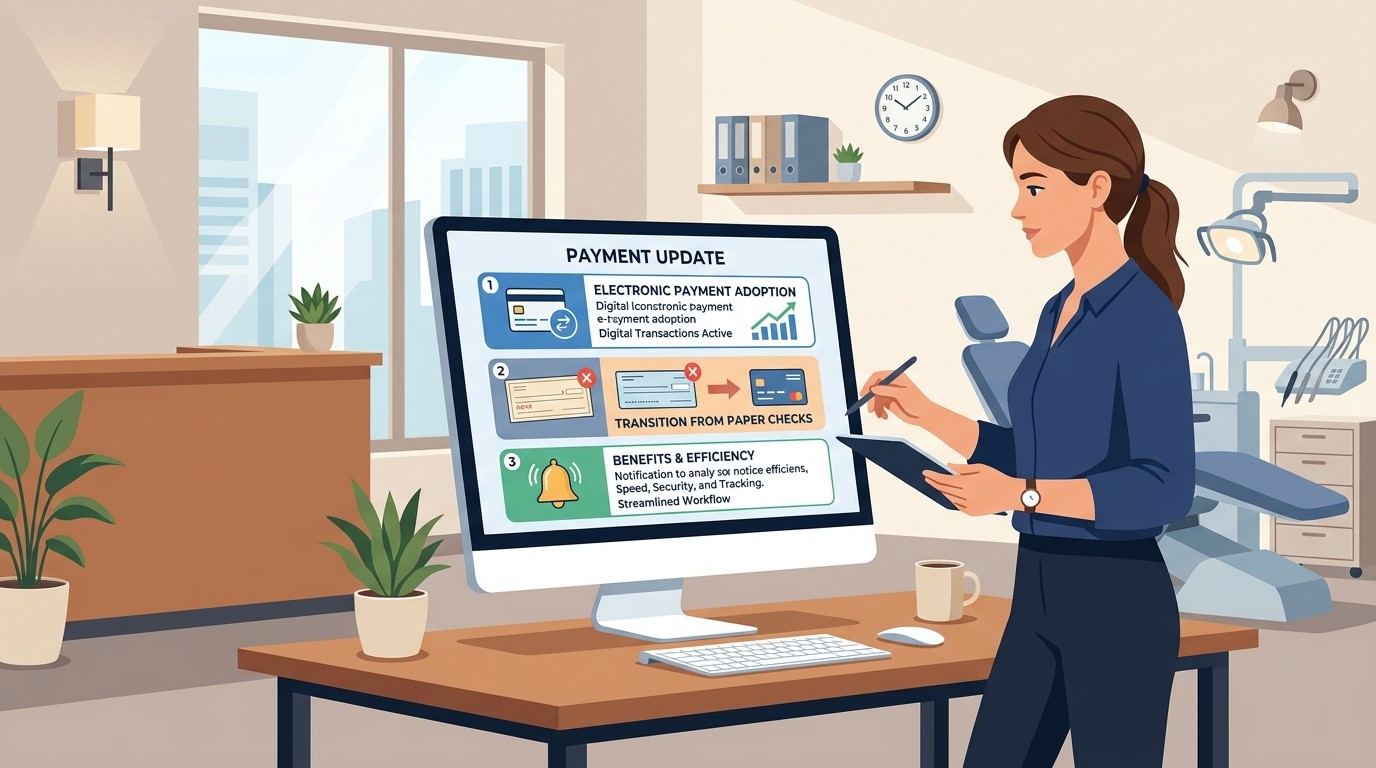
Lassie is an AI back office for dental and medical practices. It markets itself as software that runs the administrative side of the office, and the core of what it does sits in three steps: it enrolls electronic payments so the practice stops handling paper, it reconciles EFTs by matching incoming payments to insurers, patients, and claims, and it posts those payments into the practice management system so the books stay current. The company says it handles around 98 percent of posting autonomously and asks for human input only on the more complex exceptions.
If your front office spends hours every week keying remittances and chasing enrollments, that is real, useful automation. Removing manual posting work frees up staff time and gets the ledger updated faster than a person can do it by hand. There is nothing wrong with that, and for a lot of practices it solves a genuine pain.
What follows is not a knock on Lassie. It is about understanding precisely what an automated posting tool does, and what it is not designed to do, so you can decide what else your practice needs around it.
What "reconciliation" means to a posting tool
The word reconciliation gets used for two very different things in a dental office, and the difference is the entire point.
When Lassie reconciles, it matches a remittance to the claims it belongs to. The payer sends an EFT and an explanation of what it covers, and the tool figures out which patients and which claims that money maps to, then posts it correctly. That is remittance-to-claim matching, and it is necessary work. It is what lets the posting happen accurately and automatically.
But notice what that process operates on. It works with the payment information flowing in, and then it writes the result into your practice management system. The remittance says a payment was made, the tool maps it, and the ledger now reflects it. Every step in that chain trusts the data it was handed and trusts that the system of record is the truth.
The job a posting tool is not built to do
Here is the second meaning of reconciliation, the one that lives outside any posting tool.
Did the money actually arrive in your bank account, and does what landed there match what your ledger says you collected?
That is a different question, and nothing about automating the posting answers it. A remittance can say a payment was issued that never deposits. A deposit can hit the bank and never get fully posted. An adjustment can be entered that makes a balance quietly disappear. In each of those cases the posting tool did its job correctly based on the information it had, and the ledger still does not match the bank. We walk through how this plays out across the whole revenue cycle in our guide to dental revenue cycle management.
An automated poster is, by design, one of the actors writing to your ledger. It is part of the system being recorded. It is not positioned to independently certify that the recorded money is all there, because it is the thing doing the recording.
Why the two belong apart, not bolted together
This is not a Lassie limitation. It is true of any posting process, automated or human. The principle behind it is separation of duties, the oldest rule in financial controls: the person or system that records the money should not also be the only one verifying it. The moment those two roles collapse into one, nobody is actually checking the work. We cover why this matters so much in dental specifically in our piece on separation of duties and least-privilege access.
This is why an independent audit is independent. If you integrated a verification layer directly into the tool that posts your payments, you would lose the very thing that makes verification meaningful. The check has to sit outside the system it is checking. That independence is the whole value, and it is the reason the two functions should never be wired into each other.
It matters because the stakes are not small. Industry estimates put the share of dental practices that will face embezzlement at some point between 60 and 70 percent, with an average loss near 100,000 dollars per incident and a median scheme that runs for months before discovery. Those losses almost never come from a lack of posting software. They survive precisely because the system of record was trusted as its own proof. Our complete guide to dental embezzlement prevention covers how that gap gets exploited.
How they live together in a real practice
Picture a practice running both. Lassie handles the back office: enrollments are set up, EFTs are matched to claims, payments are posted into the practice management system without a staff member touching most of them. The books are current and the front desk got hours back.
Alongside that, completely separate, an independent audit layer compares what the practice management system now claims against what the bank actually received, every day. It does not plug into Lassie and does not touch the posting process. It simply asks the question the posting tool cannot ask about itself: does the recorded money match the deposited money, and if not, where is the gap?
One system gives you speed. The other gives you assurance. They do not compete, and they do not integrate. They coexist by staying separate, which is exactly how a well-controlled office is supposed to run.
What to ask if you are evaluating Lassie
If you are weighing Lassie, these are fair questions to bring to any automated posting tool, not gotchas. What happens to the payments it flags as partially posted or unposted? Who confirms that a deposit which was expected actually landed in the bank? When the ledger and the bank statement disagree at month end, what surfaces that, and how fast? Automation answers the first half of the revenue cycle beautifully. The questions above are about the second half, the verification half, and they point to why an independent layer earns its place no matter how good the posting gets.
Frequently Asked Questions
What is Lassie AI?
Lassie is an AI administrative platform for dental and medical practices that enrolls electronic payments, matches incoming EFTs to insurers and claims, and posts those payments into the practice management system automatically. The company reports handling roughly 98 percent of posting without human intervention.
Does Lassie reconcile payments?
Yes, in the sense of matching remittances to the correct claims and patients so payments post accurately. That is remittance-to-claim reconciliation. It is distinct from bank reconciliation, which independently confirms that deposited money matches what the ledger records. The two are different jobs.
Does Lassie replace your bookkeeper or office manager?
It removes much of the manual posting and enrollment work, but it does not remove the need for independent oversight of the books. A tool that posts payments is part of the system of record, not an outside check on it.
Is automated posting enough on its own?
For speed and accuracy of posting, automation is a strong solution. For assurance that the money recorded actually arrived, you need a separate, independent verification of the ledger against the bank, because no posting tool is built to audit its own output.
How does an independent audit work alongside Lassie?
It runs completely separately. The posting tool keeps the books current, and the audit layer compares the practice management ledger against actual bank deposits on its own, flagging any gap. The two are deliberately not integrated, because the independence is what makes the audit trustworthy.
Zeldent is the independent audit layer that sits alongside whatever posts your payments. It compares your practice management ledger to your actual bank deposits every day, across Dentrix, Open Dental, Eaglesoft, and Curve Dental, and flags the gaps the same week they happen. It does not post, and it does not integrate with the tools that do, by design. Book a demo to see what independent verification catches.